Garmin recently announced a new patent titled “Pulse Spectroscopy” (US12343124B2), which, compared to mainstream PPG technology, not only enhances the accuracy of existing heart rate and blood oxygen monitoring but may also pioneeringly enable the monitoring of new health indicators such as hydration levels and hematocrit.
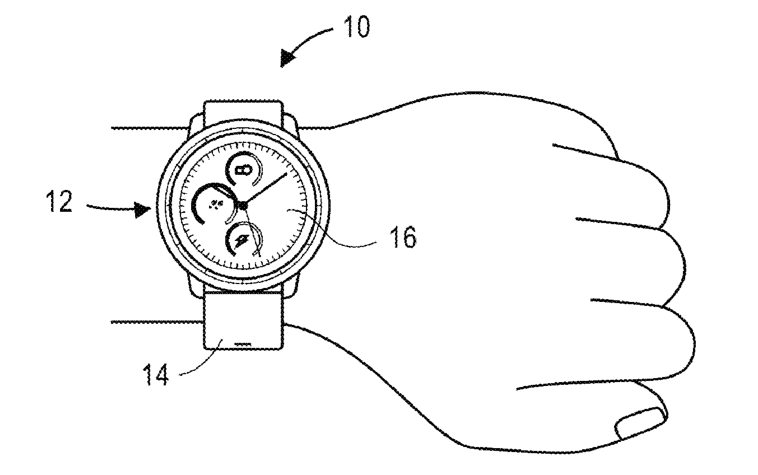
Pulse spectroscopy technology appears similar to traditional PPG, utilizing optical sensor design, but its core technical principles are fundamentally different.PPG measures heart rate using green light and estimates blood oxygen (SpO₂) with red and infrared light, primarily relying on fluctuations in blood flow signals, which limits monitoring depth and accuracy, making it difficult to capture more complex blood characteristics..
Unlike PPG technology, which mainly focuses on changes in blood volume, pulse spectroscopy analyzes the absorption characteristics of light at multiple wavelengths to detect specific components in the blood, such as hydration, hematocrit, and even glucose trends. The advantage of this technology lies in its ability to provide more comprehensive blood characteristic data, thus offering more possibilities for health monitoring.
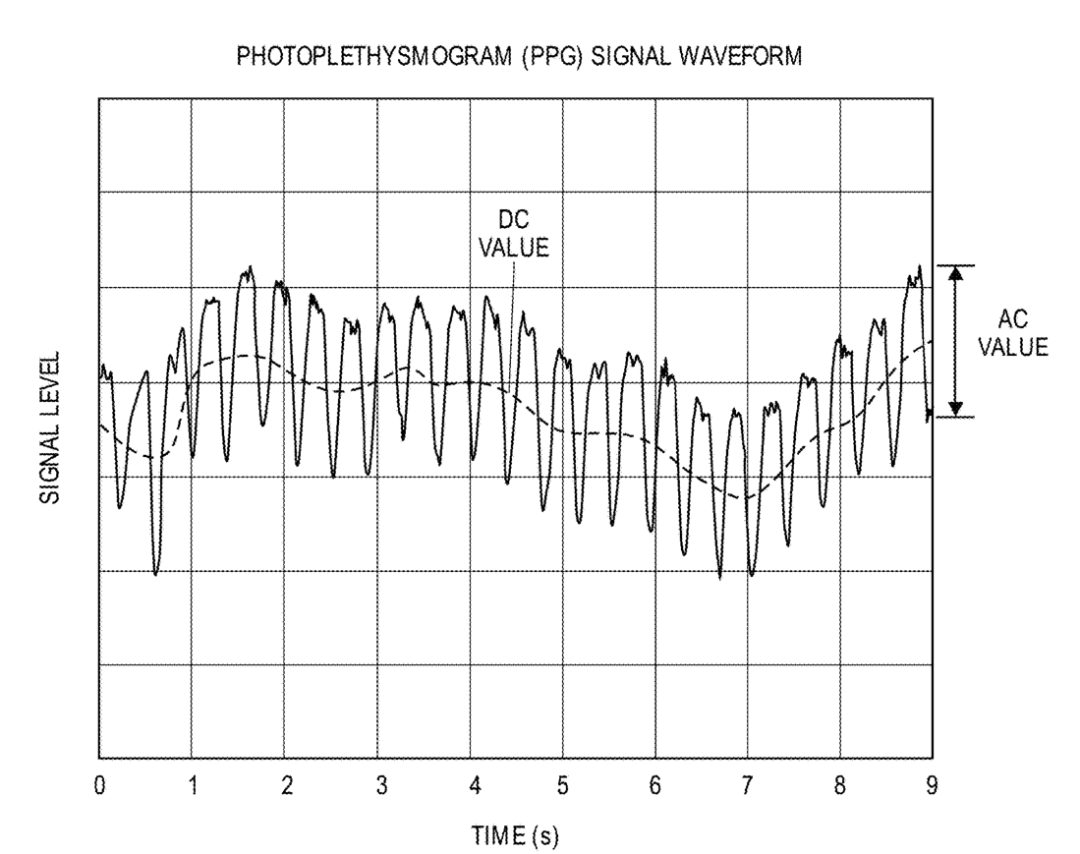
The figure presents the photoplethysmography (PPG) signal waveform generated by electronic fitness devices, which can analyze signal characteristics through the waveform, such as the included alternating (AC) and direct current (DC) components, for subsequent physiological information extraction.
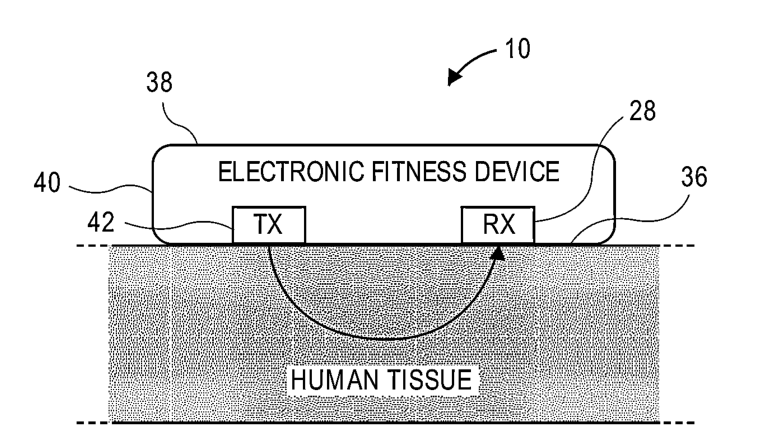
This diagram illustrates the positional relationship between the electronic fitness device and the user’s wrist, as well as the transmission path of optical signals through the skin and tissues, clearly presenting the propagation of optical signals during device operation.
The patent document describes the implementation of this technology. The device will be equipped with multiple arrays of optical emitters, each capable of emitting light signals at specific wavelengths.
Key wavelengths and their functions include:
- 520-580nm (Green): High-precision heart rate monitoring
- 620-660nm (Red): Blood oxygen saturation measurement
- 800-900nm (Infrared): Hematocrit analysis
- 950-1025nm (Infrared): Hydration detection
The patent emphasizes the use of “isobestic points” (isobestic points), such as wavelengths of 830nm and 1300nm, where the absorption rates of oxygenated and deoxygenated hemoglobin are the same, eliminating the influence of blood oxygen saturation on measurement results.
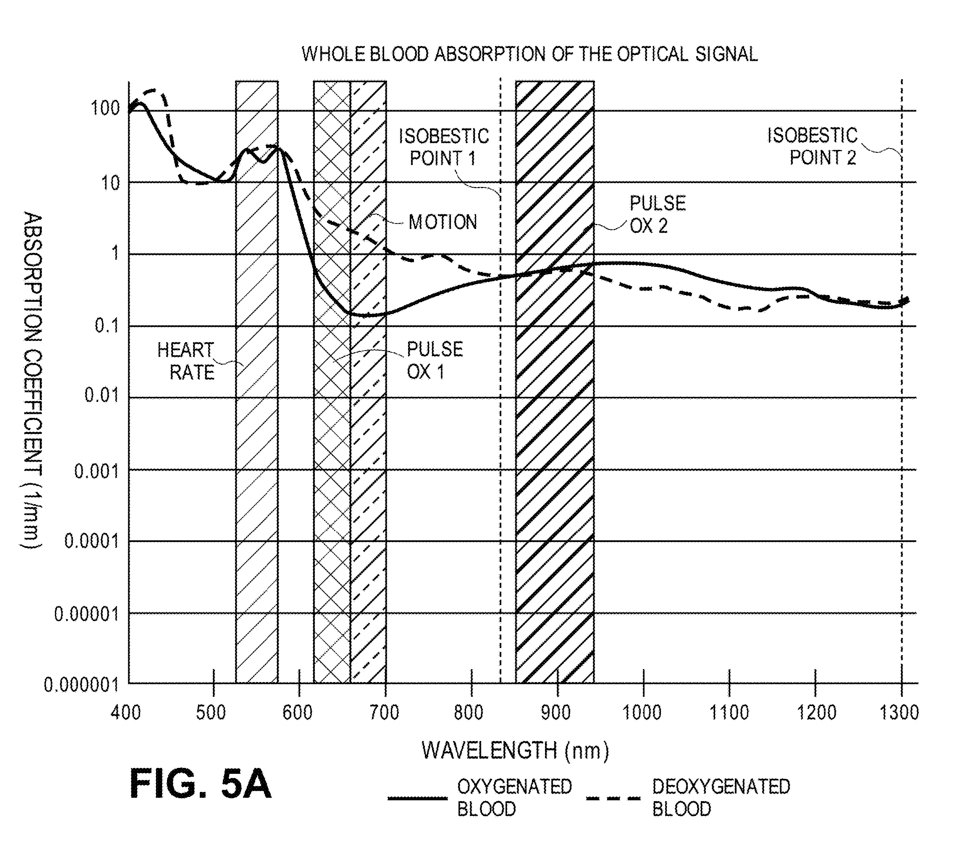
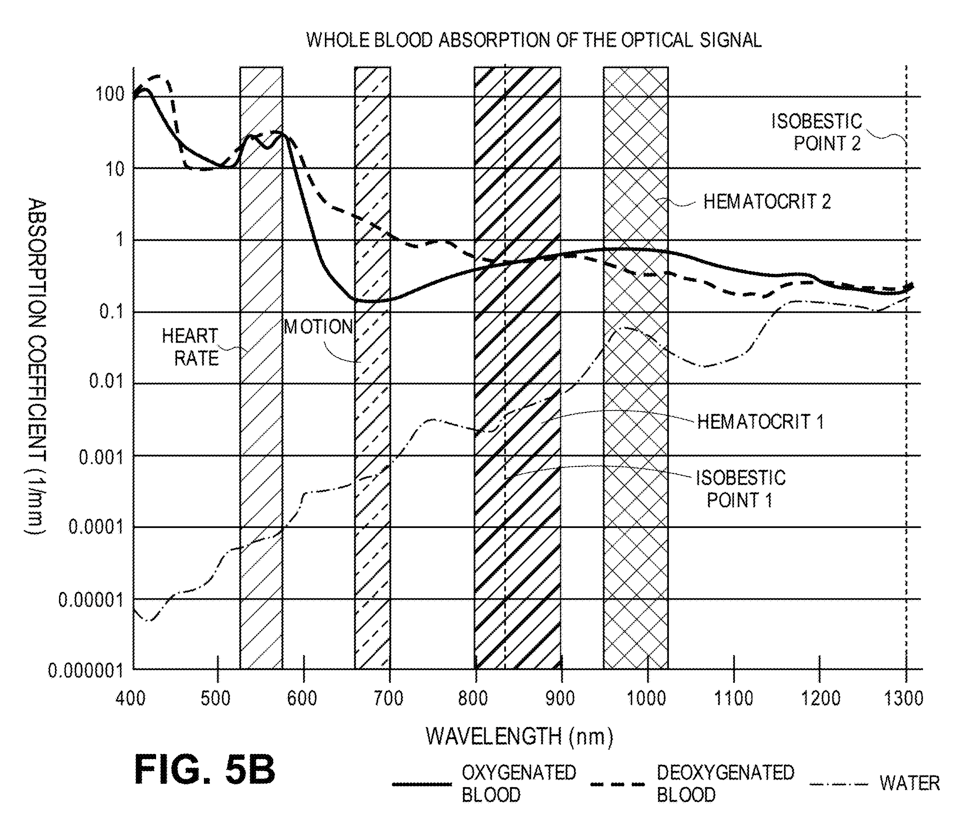
Patent figures 5A-5B show the changes in absorption coefficients or absorption levels of different wavelengths of light in blood components (such as oxygenated hemoglobin, deoxygenated hemoglobin, water, etc.). These charts provide a basis for selecting appropriate optical signal wavelengths to detect different physiological indicators, such as determining heart rate, blood oxygen saturation, and hematocrit based on the absorption of specific wavelengths of light.
The new indicators mentioned in the patent, particularly hydration monitoring, are noteworthy. Currently, most fitness trackers do not implement automatic hydration monitoring, and devices that can provide this function typically rely on sweat loss or user manual input, which limits accuracy. Garmin’s pulse spectroscopy technology aims to achieve more accurate hydration level calculations by analyzing changes in blood volume and the optical characteristics of tissue absorption.
Additionally, monitoring hematocrit is another highlight. Hematocrit reflects the percentage of red blood cells in whole blood, with normal values around 45-50%. This indicator is significant for assessing the user’s hydration status, anemia risk, and overall health condition.
Although the patent does not disclose specific implementation details, if Garmin can apply this technology to its wearable devices, it will provide a revolutionary experience for health-conscious individuals and professional athletes. Accurate monitoring of hydration and hematocrit will not only help users better understand their health status but also provide a scientific basis for optimizing athletic performance.
Of course, the commercialization of this technology still faces challenges. The power consumption issues brought by multi-wavelength LEDs and complex algorithms need to be balanced, and the accuracy of new indicators such as hematocrit requires strict clinical validation. How Garmin ensures data accuracy while maintaining device battery life may become the key to the technology’s implementation.
About Us
Zhongke Shengzhi Intellectual Property was established in 2021 and is a knowledge property service company under the Suzhou Industrialization Base of the Institute of Acoustics, Chinese Academy of Sciences. It is committed to providing sustainable intellectual property services that create commercial value from the perspective of business operations. The team consists of intellectual property consultants, patent agents, and high-end talents from various fields, familiar with intellectual property laws and practices in regions such as China, the US, Europe, Japan, and South Korea, with a knowledge reserve in acoustic technology and an average of over 10 years of industry experience, providing comprehensive intellectual property strategic consulting and overall solutions for innovative teams.
Business Cooperation

Copyright Statement
All images and text in this article are copyrighted by Zhongke Shengzhi Intellectual Property.
If you need to reprint or cooperate with the media, please contact us. Contact us via QR code or emailZhongke Shengzhi Intellectual Property[email protected]