

Author / Qian Yaguang
Editor / Zhang Nan
Designer / Chai Wenjing
Source / skild.ai, reuters
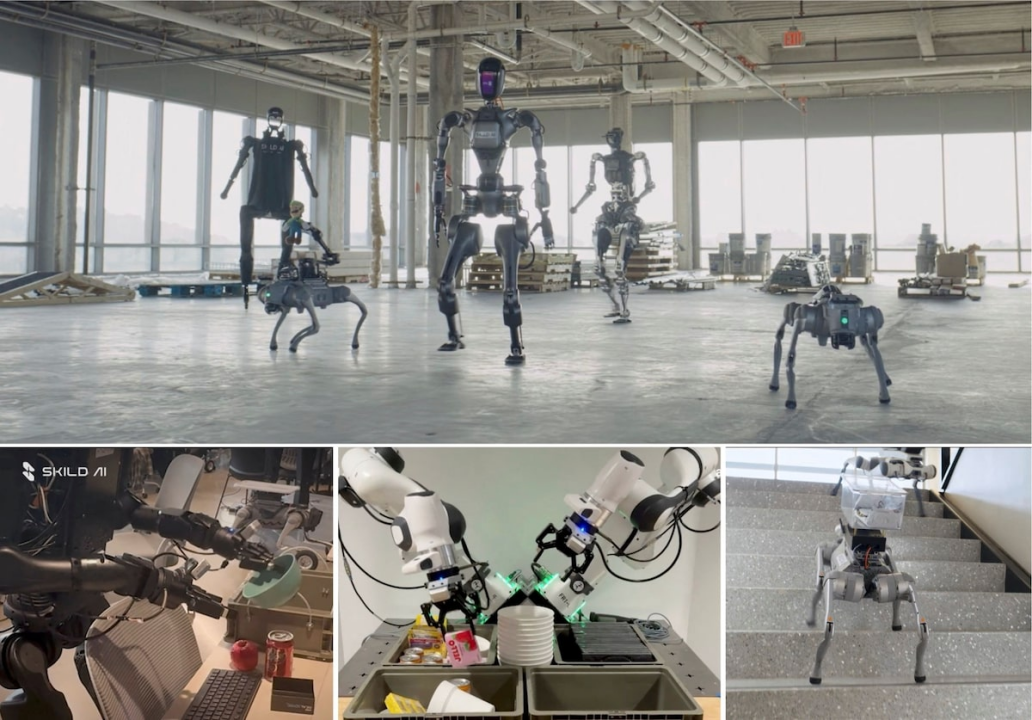
According to a report by Reuters, on July 29, 2025, Skild AI, a robotics startup funded by Amazon and SoftBank, launched a brand new AI model designed to be applicable to almost any type of robot.
The model is called “Skild Brain,” which enables robots (from humanoid robots to desktop robotic arms) to think, operate, and respond more like humans, moving, balancing, and reacting to their surroundings in a manner closer to human operation.
At the launch of Skild Brain, an increasing number of companies are attempting to create humanoid robots capable of handling multiple tasks rather than being limited to a single function, as is the case with today’s factory machines, which typically perform a single function.
The company stated, “One of the biggest challenges in building a foundational model for robots is the lack of large-scale robot-related data. Moreover, the process of using hardware to collect real-world data is slow and extremely costly.”
This has led many researchers and competitors to choose to circumvent this issue by first building a “robot foundational model” based on existing visual and language models (VLM) and then adding less than 1% of real robot data. However, Skild AI believes that such models are not true foundational models for robots.
01Universal AI Applicable to Any Robot
A key feature of the Skild Brain foundational model is its ability to generalize across tasks and hardware. It does not focus on specific hardware or a single form specification but trains models that can work across different forms (including human data), greatly expanding the available training set to build a truly universal foundational model.
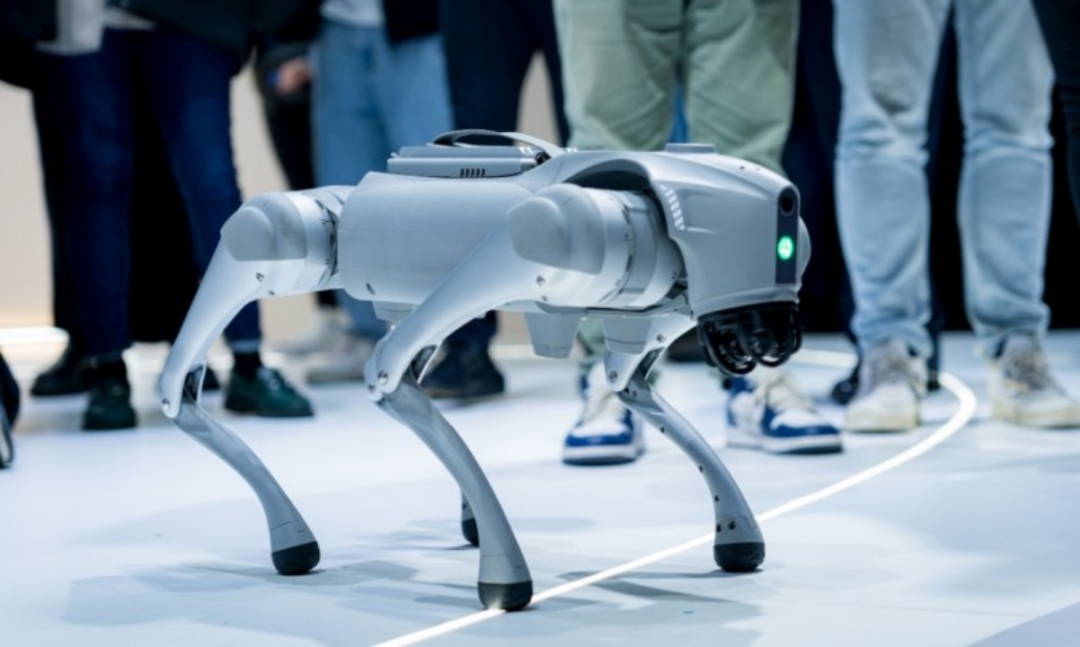
It can be used for quadrupeds, humanoid robots, desktop devices, mobile manipulators, and more. By using various different morphological structures, it not only allows for the acquisition of more training data but also makes the model more adaptable to changes or failures in hardware.
Skild robot dog▼
The company stated, “Large language models contain a wealth of semantic information. However, they lack practical and meaningful content. This is why most ‘robot foundational models’ exhibit semantic generalization capabilities in tasks like grasping and placing but lack true physical common sense.”
Team members have previously attempted to explore other methods, such as using online videos and large-scale simulations, but later found that “scale does not mean millions or billions of examples; to achieve scale, trillions of examples must be collected.”
02Unique Training Method
However, in the short term, relying solely on real-world data will not achieve this scale. Skild AI states that the development of Skild Brain features new behaviors, addressing this challenge through “large-scale simulations and internet video data” to pre-train our “omni-bodied brain” and enhance robustness and generalization capabilities through the use of an ever-expanding dataset.
Skild humanoid robot reaching for bread▼
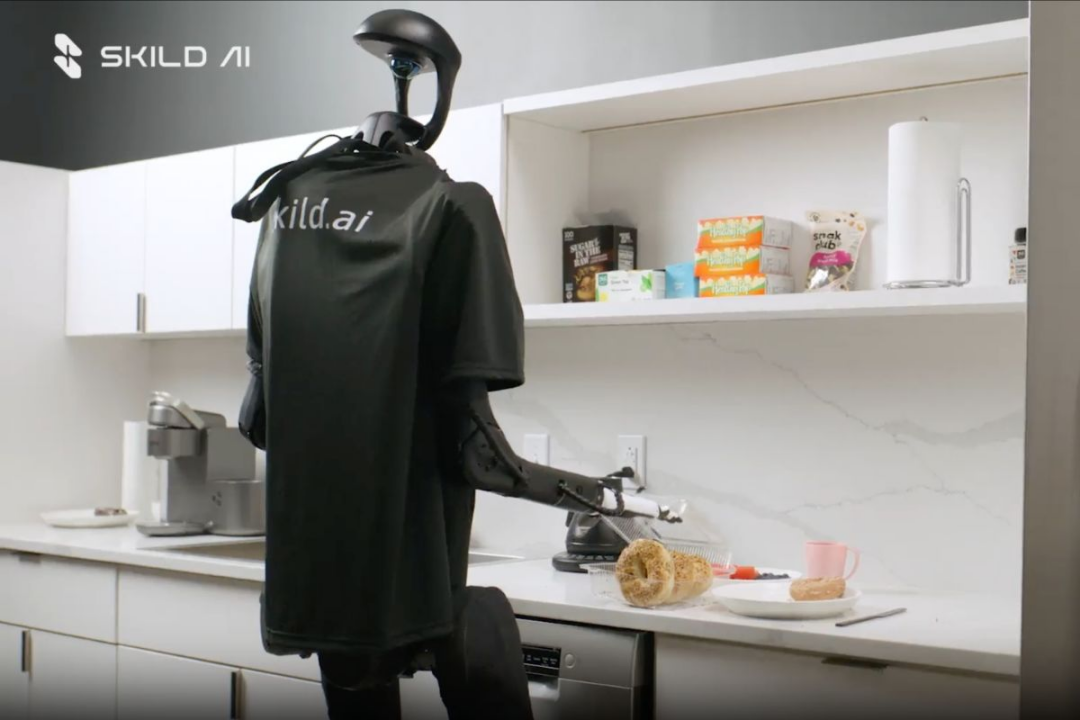
The company added, “We use targeted real-world data to fine-tune this foundational model to provide practical solutions for our clients.”
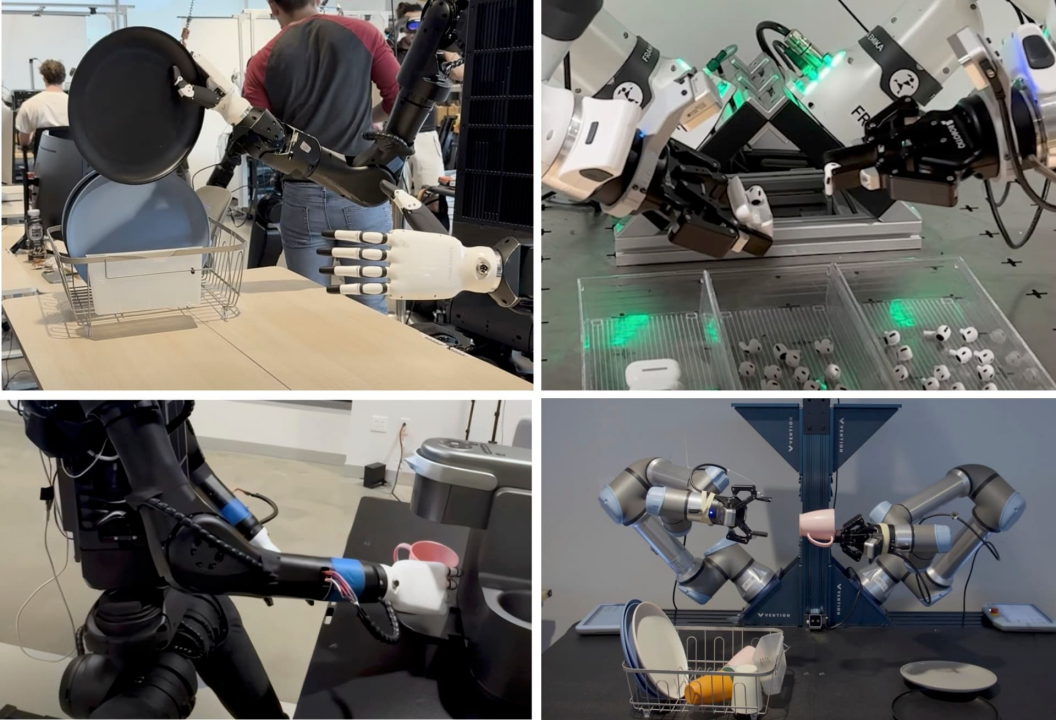
Recently, Skild AI released video clips of its AI model completing various tasks in humanoid robots, robotic dogs, and desktop robotic arms.
According to President and Co-founder Abhinav Gupta, Skild Brain can adapt to various tasks, from washing dishes to climbing slippery slopes. This technology is also very safe when interacting with humans, as it is trained to apply minimal force and is highly adaptable to human interaction, which is limited or absent in other AI models.
Robotic arm sorting earplugs▼
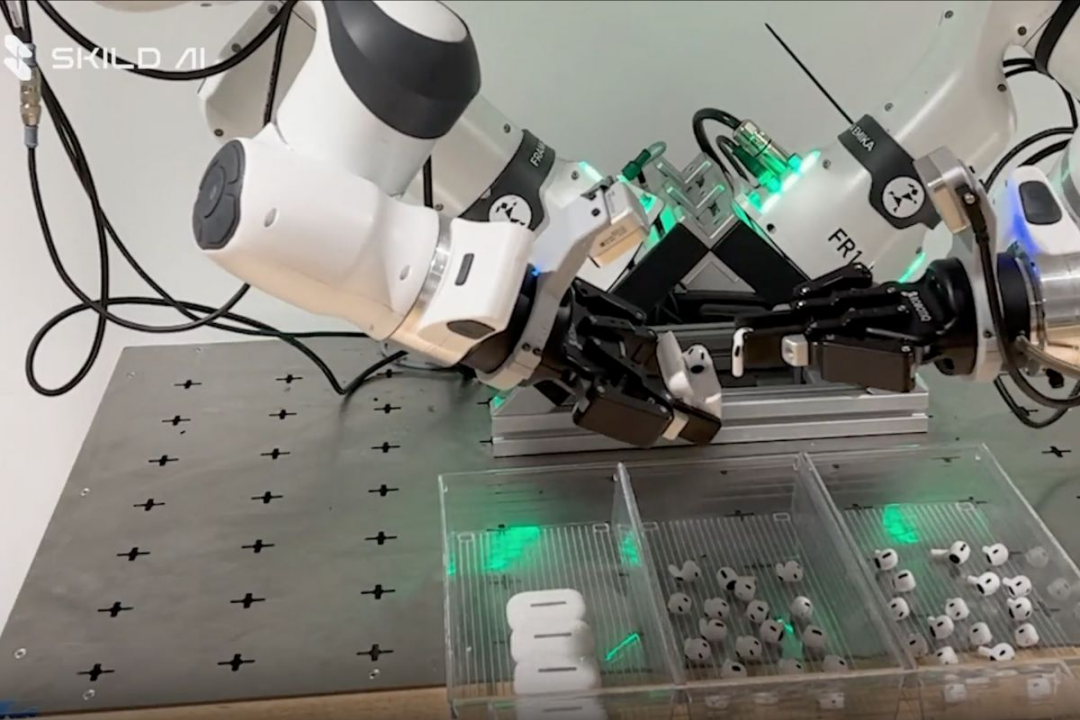
Deepak Pathak, CEO and Co-founder of Skild AI, stated in a recent statement, “Currently, many robotic models focus on tasks that are easy for robots but difficult for humans: such as dancing or martial arts, because these are movements in free space that do not require any generalization. Skild AI’s model can not only solve these simple tasks but also tackle everyday complex tasks, such as climbing stairs under adverse conditions or assembling delicate items, which require visual reasoning and reasoning about contact dynamics.”
In demonstration videos, robots using Skild Brain can climb stairs, remain upright after being pushed over, and pick up objects in cluttered environments. The company stated that the model also has a built-in power limit feature to ensure that robots do not apply excessive force, thus avoiding danger.
Skild robot demonstrating its technology in a kitchen scene▼
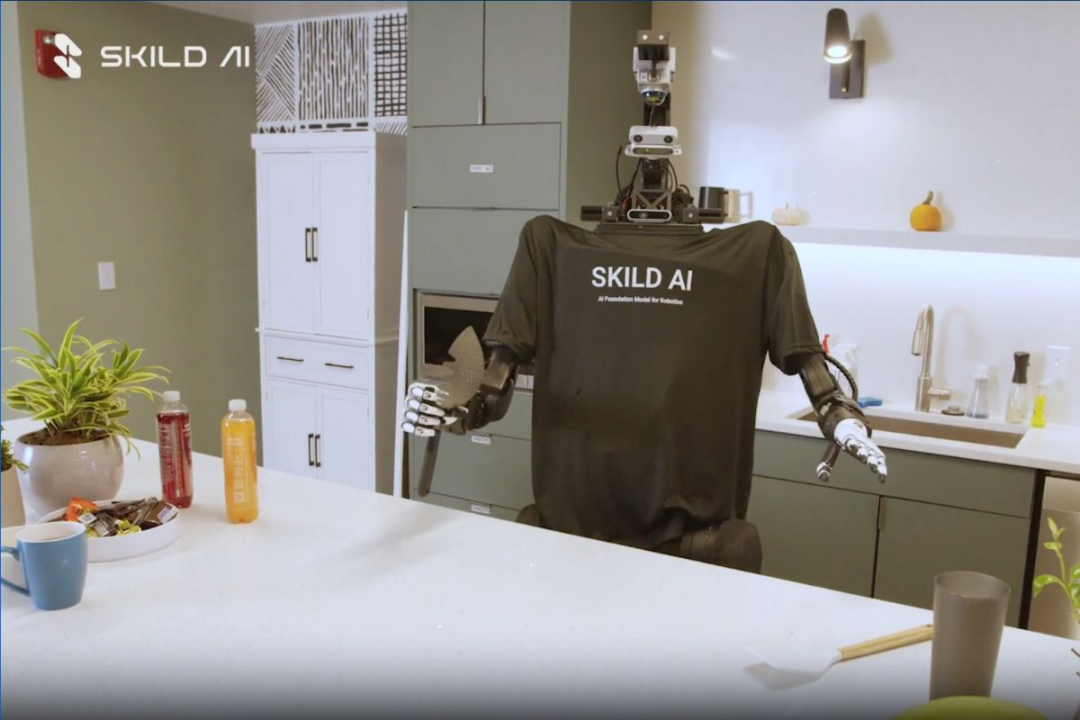
The company’s website states that this achievement is another step towards its goal of “building a unified, omni-directional intelligent brain to control any robot to perform any task.”
Interestingly, to train this system, Skild AI used a variety of methods, including simulated events, human action videos, and data collected from robots already running the software.
Deepak Pathak and Abhinav Gupta told Reuters that this addresses a significant issue in the field of robotics: unlike language or visual AI, there is very little training data available on robots on the internet.
Skild AI introduced that its uniqueness lies in its ability to obtain sufficient data to train such a complex AI model. By acquiring a large amount of human-simulated scenarios and videos from the internet, the company pre-trained the foundational model on a large scale. Subsequently, it fine-tuned the model with targeted real-world data.
As a result, robots deployed by clients will send performance data back to Skild AI, which helps improve the model, creating a “shared brain” to help all robots using the model enhance their skills. Although the time required for robot deployment is longer than for software, as actual deployment is needed, Skild AI’s approach helps robots quickly acquire new skills across different industries.
03Over $500 Million in Funding
Skild AI was founded in 2023 by two pioneers in self-supervised and adaptive robotics, Abhinav Gupta and Deepak Pathak, with the goal of building intelligence based on the physical world.
To date, Skild AI has completed three rounds of funding. In 2023, the company raised $14.5 million in seed funding from Lightspeed Venture Partners and Sequoia Capital.
In July 2024, Skild AI successfully raised $300 million in Series A funding, with the company valued at $1.5 billion. This round of funding was led by prominent investors, including Lightspeed Venture Partners, Coatue, SoftBank Group, and an investment from Amazon founder Jeff Bezos through Bezos Expeditions.
In June 2025, Skild AI secured Series B funding from investors, including $100 million from SoftBank, $25 million from Nvidia, and $10 million from Samsung, totaling $230 million, further increasing the company’s valuation to approximately $4.5 billion.
Skild robot sorting tableware▼
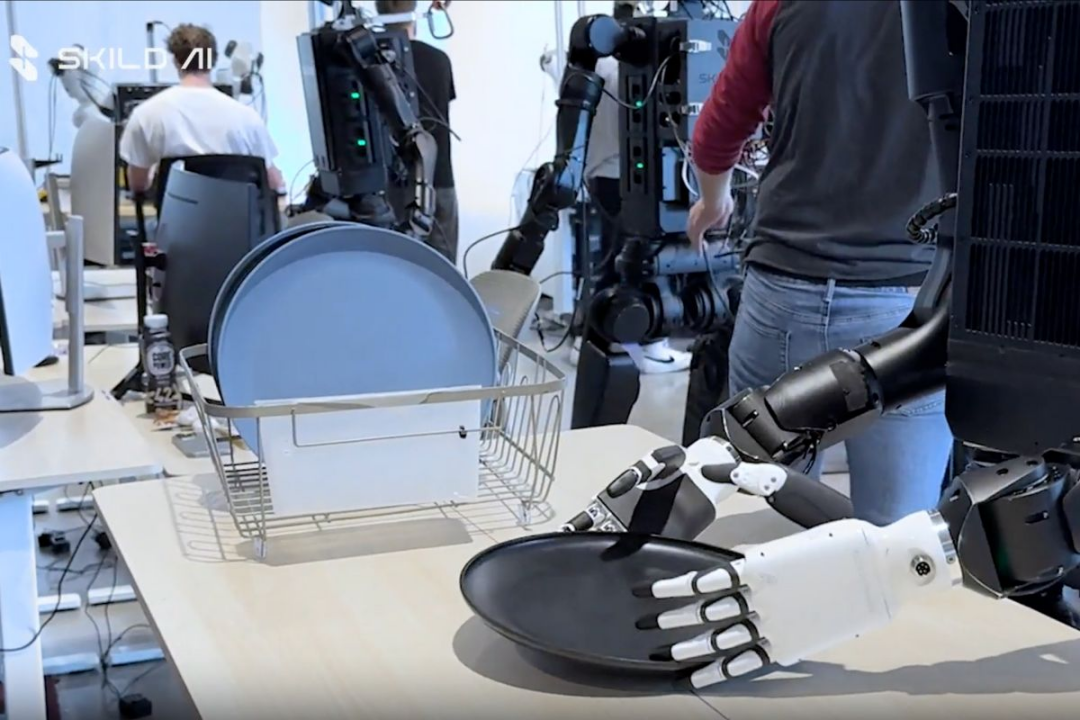
Skild AI is headquartered in Pittsburgh, Pennsylvania, USA, with 24 employees, and opened an office in San Francisco earlier this year, with other recruitment locations including San Mateo, California, and Bangalore, India.
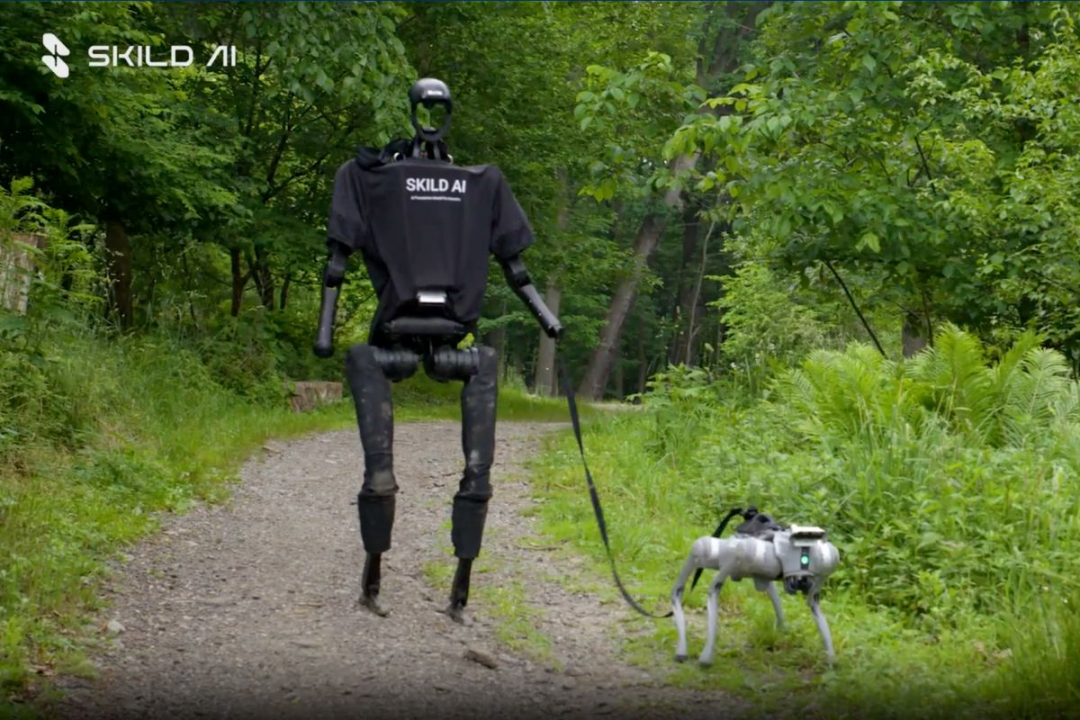
Skild robot comfortably sitting on a concrete step next to a lush green lawn▼

 RecommendedRECOMMEND1
Business investigation tour across six countries and nine cities in Europe-North Africa is about to start, first stop Munich
2
AI Father Hinton: Will humans be replaced by AI?
3
FAW Audi Q6L e-tron enters the market, “New Energy F4” reshapes the luxury pure electric value standard
4
Ultraman: Running an AI company is like building a nuclear bomb
5
Audi and Huawei join forces to “unleash a big move”, starting at 353,000 yuan to bring a new choice of luxury pure electric vehicles
 Follow our public account for more content