Following Samsung is No Opportunity: South Korean Small and Medium Semiconductor Enterprises Turn to NVIDIA and TSMC
Hello everyone, I am Lao Chen. A few days ago, I saw some interesting news that small and medium semiconductor enterprises in South Korea have collectively started to ‘defect’! It might be a bit strong to say defect, but that’s the reality. These companies that originally followed Samsung are now turning to embrace NVIDIA and TSMC.
This situation is quite ironic. Samsung is the big brother in the semiconductor industry in South Korea, and logically, the younger brothers should be loyal followers. But now? These enterprises see the wave of AI coming and realize that following Samsung seems to offer no opportunities. Instead, NVIDIA is calling out every day, and TSMC has so many orders that they can’t keep up.
Samsung’s ‘Big Brother’ Status Begins to Waver
To be honest, Samsung has indeed struggled in the semiconductor field in recent years. Although they are still number one in memory chips, they have clearly fallen behind TSMC in AI chips and advanced processes. What’s worse is that Samsung’s foundry business has not been performing well, with yield rates lagging far behind TSMC.
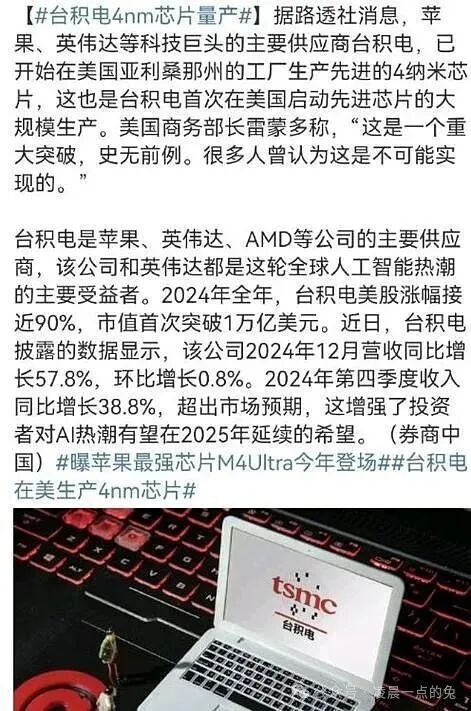
The small and medium enterprises in South Korea are not foolish; they see clearly: in the AI era, the most profitable chips are not memory but computing power chips! NVIDIA’s GPUs are like money printing machines. Whoever can supply NVIDIA can earn a fortune. As for Samsung? They are basically just spectators in this area, occasionally claiming they want to enter the AI chip market, but their actual actions do not follow.
NVIDIA Becomes the Hot Commodity
Currently, NVIDIA is truly in the spotlight! The H100 and A100 AI chips are in short supply, and tech companies around the world are queuing up for orders. The South Korean companies involved in packaging, testing, and supporting components see this as a windfall and quickly turn to work for NVIDIA.
As far as I know, there are now more than a dozen small and medium semiconductor companies in South Korea actively connecting with NVIDIA’s supply chain. Some are involved in advanced packaging, some in high-frequency connectors, and others in thermal solutions. The owners of these companies all say the same thing: ‘Following NVIDIA means there is meat to eat, while following Samsung only means drinking soup.’
TSMC is Also Recruiting
Not only NVIDIA, but TSMC is also vigorously recruiting South Korean suppliers. After all, TSMC is currently the most advanced foundry in the world, with 3nm and 2nm processes unique to them. South Korean companies involved in equipment maintenance and chemical materials are rushing to Taiwan to set up factories or offices.
A boss of a South Korean equipment company told the media: ‘The order volume from TSMC is more than three times that of Samsung, and the technical requirements are higher, with greater profits. Why shouldn’t we go?’ This is indeed the truth; as businessmen, it is only natural to go where the money is.
The South Korean Government is Also Anxious
Seeing this situation, the South Korean government is also getting anxious! Their biggest concern is that the local semiconductor industry chain will be hollowed out, leaving Samsung as the only player, and if other companies leave, the entire semiconductor ecosystem in South Korea will collapse. Therefore, the South Korean government has recently been offering subsidies and tax reductions to try to retain these companies.
But to be honest, relying solely on government subsidies cannot solve the fundamental problem. What enterprises need are long-term stable orders and opportunities for technological advancement, not one-time subsidies. If Samsung does not step up and establish a foothold in the AI chip field, these small and medium enterprises will eventually seek new masters.
Lessons for Us
Looking at the situation in South Korea, it actually provides some insights for us in China. Technological leadership equates to power and attractiveness! Why can TSMC attract suppliers from all over the world? Because their technology is the most advanced. Why is NVIDIA so powerful? Because they have seized the core of the AI era.
Although there is still a gap in the semiconductor field in China, the momentum is getting better. Huawei’s Kirin chips are back, SMIC’s advanced processes are breaking through, and BYD’s automotive chips are thriving. As long as we persist in independent innovation, one day we will also be able to attract suppliers from around the world to seek cooperation with us, just like NVIDIA and TSMC.
The ‘defection’ of South Korean small and medium enterprises is ultimately a manifestation of market rules at work. Whichever company has strong technology, many orders, and a bright future, enterprises will follow. This reminds us: to dominate the global industrial chain, it is not about emotions or history, but about real technological strength and market performance!