RK Processors
Rockchip, abbreviated as RK, is a SOC design company headquartered in Fuzhou, Fujian.
RK has designed a series of SOCs based on the Arm Cortex-A core, shining like stars in the industry and among enthusiasts, with a popularity that exceeds many expectations.
By visiting the Rockchip official website, we can see their historical chips.
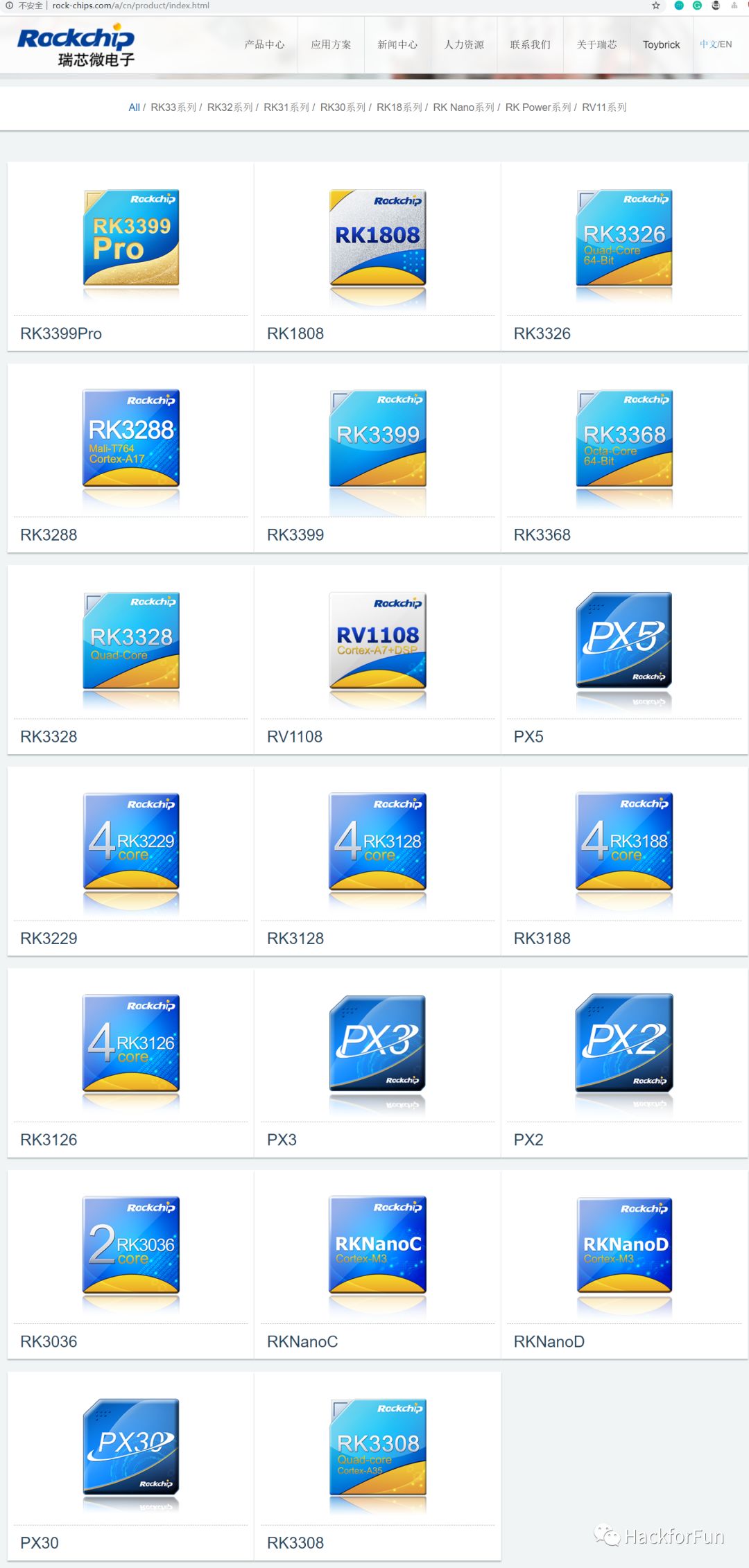
From the main line, they are divided into seven series: RK30, RK31, RK32, RK33, RV11, PX, and RKNano.
The RKNano series is based on the Arm Cortex-M core, commonly used in speakers, story machines, music players, and other fields.
The PX series is based on the Arm Cortex-A core, primarily used in automotive industry designs.
The RV1108 is based on the Arm Cortex-A7, featuring an ISP, and is mainly aimed at the video surveillance field.
The RK30 series mainly includes dual-core specifications of Arm Cortex-A7 and Cortex-A9, with the flagship product being the RK3066.
The RK31 series mainly includes quad-core specifications of Arm Cortex-A7 and Cortex-A9, with the flagship product being the RK3188.
The RK32 series is best known for its flagship chip RK3288, a quad-core Arm Cortex-A17, which was favored by Google for use in Chromebooks.
The RK33 series is best known for its flagship chip RK3399, which adopts a big.LITTLE architecture with dual-core Cortex-A72 and quad-core Cortex-A53, where the A72 can run at a maximum frequency of 2GHz, also being the chip of choice for Google Chromebooks.
The RK30, RK31, RK32, and RK33 series come with GPU image acceleration and powerful video codec capabilities, providing excellent support for the Android system. They are widely used in products such as tablets and TV boxes.
The RK1808 and RK3399Pro are new chips recently launched by RK, featuring NPU and focusing on AI capabilities.
Popular Development Boards
Thanks to RK’s increasingly open attitude in recent years (RK officially established an open-source website that provides technical reference manuals and related documents for mainstream chips) and the high cost-performance ratio of RK chips, RK’s chips have gained widespread application in the industry and have also become popular among enthusiasts, leading to a surge of development boards based on RK SOCs, which have garnered a large following both domestically and internationally.
Below is a list of some well-known development boards:
-
RK3288 Series
-
Firefly-RK3288: Designed by Firefly, their boards are very popular among domestic players, and their forum documentation is quite detailed.
http://www.t-firefly.com/product/rk3288.html
-
Tinker-Board: Designed by ASUS, it competes with the Raspberry Pi.
https://www.asus.com.cn/Single-Board-Computer/Tinker-Board-Series-Products
-
Rock2: Designed by Raxda, this development board has a wide audience among overseas users.
https://wiki.radxa.com/Rock2
-
RK3399 Series
-
Firefly-RK3399: Designed by Firefly, there is also another model ROC-RK3399-CC.
http://www.t-firefly.com/product/rk3399.html
-
NanoPC-T4: Designed by FriendlyARM, they also have NanoPi-M4 and NanoPi-NEO4 based on RK3399.
http://arm9.net/nanopc-T4.asp
-
EDGE-RK3399: Designed by Khadas, their boards are visually stunning.
https://www.khadas.com/edge
-
Leez-P710: Designed by Lenovo’s Leez team.
https://leez.lenovo.com/#/p710
-
ROCKPro64: Designed by Pine64, this company’s development boards have a wide audience abroad.
https://www.pine64.org/rockpro64/
-
ROCK PI 4: Also designed by Raxda, it competes with the Raspberry Pi and offers great value.
http://rockpi.org/rockpi4
-
Rock960: Designed by vamrs, this board’s main feature is that it is designed based on the 96boards specification.
https://www.96boards.org/product/rock960/ai/
-
RK3328 Series
-
ROCK64: Like ROCKPro64, it is also designed by Pine64, and this board has a wide user base.
https://www.pine64.org/devices/single-board-computers/rock64/
-
RK3399Pro RK1808 Series
-
TB-RK3399ProD
-
TB-RK1808S0
-
TB-96AI
These three development boards are officially launched by Rockchip, focusing on AI applications.
http://t.rock-chips.com/portal.php?mod=list&catid=1
The development boards listed above have a wide user base both domestically and internationally, thus receiving good support in the open-source community, with U-Boot and the Linux kernel mainline branches providing comprehensive support for them.
Officially Opened Resources
As mentioned earlier, Rockchip has adopted a proactive embrace of open-source policies in recent years. They not only actively submit code to the U-Boot and Linux kernel mainline branches to increase support for RK processors but also established an official open-source website that provides TRMs and datasheets for important chips, and they have also hosted various codes from U-Boot to the Linux kernel and userspace on GitHub.
-
Rockchip Official Open Source Website
http://opensource.rock-chips.com/wiki_Main_Page
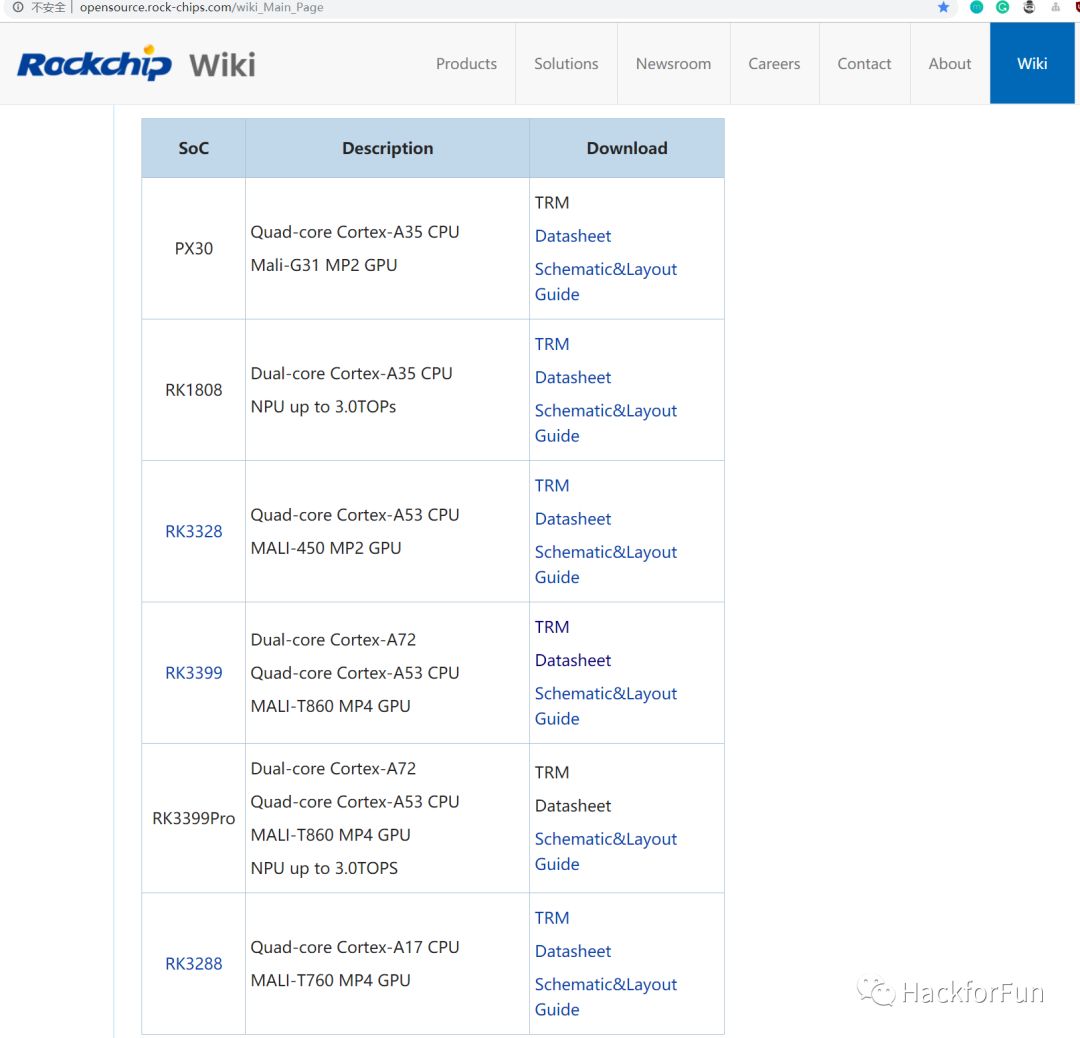
This site provides TRMs, datasheets, and hardware design guides for mainstream chips. The TRM is a technical reference manual that contains detailed information from chip modules to register levels, making it essential reading for low-level software development. The datasheet provides introductory information about the chip, which can be used as a reference when selecting solutions.
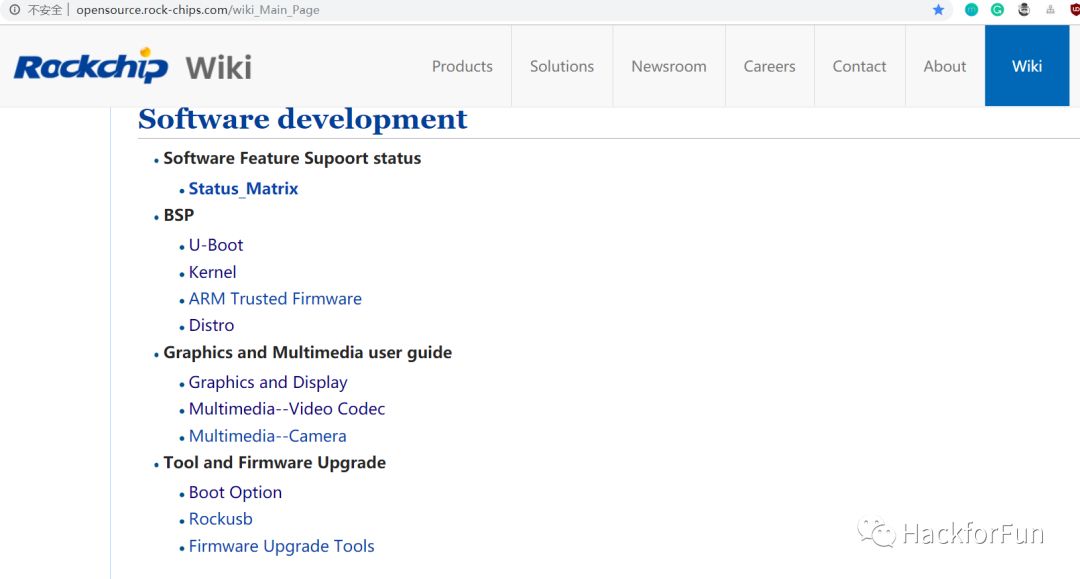
Among them, BSP describes the compilation and packaging methods for U-Boot, Linux kernel, and other codes.
Graphics and Multimedia describe the software framework for graphics and multimedia codec on the Rockchip platform.
Tools and Firmware mainly describe the processes related to chip booting and firmware flashing, which are very helpful for Bootloader-related development.
-
GitHub
https://github.com/rockchip-linux
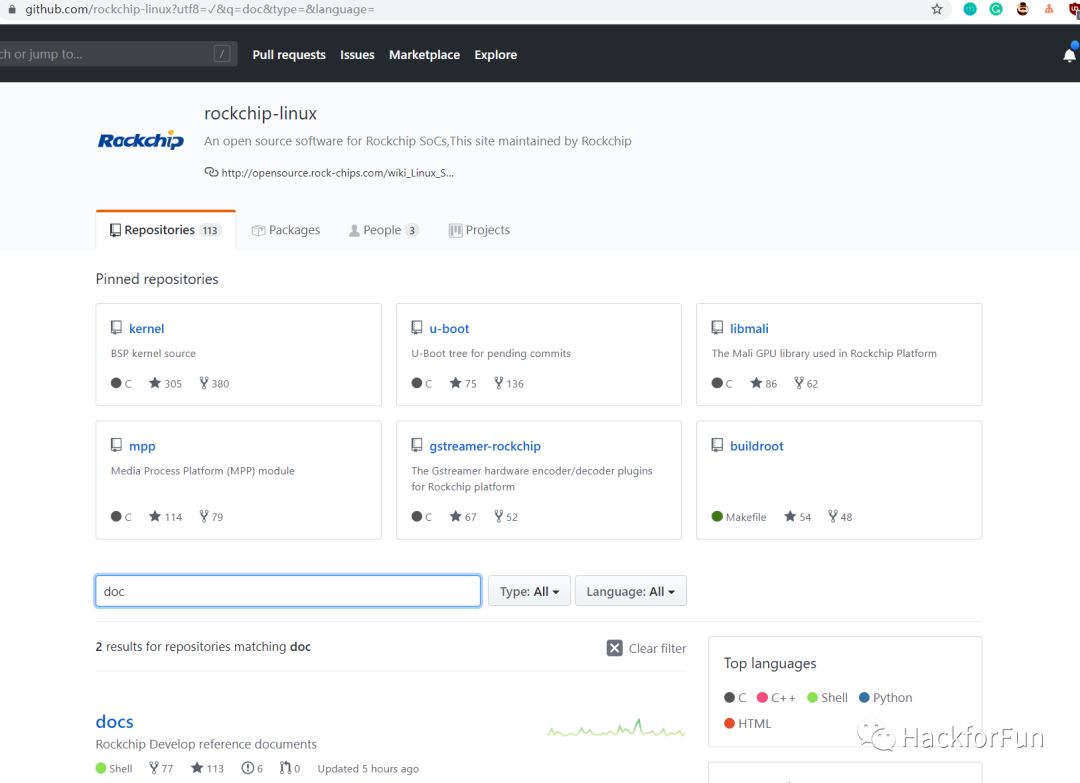
We can see that Rockchip has opened over 100 repositories under this account, including important modules such as U-Boot, Linux kernel, MPP (multimedia), and libmali (GPU).
Among them, the doc repository is particularly worth paying attention to, as it contains detailed design and usage documentation for various modules on the RK platform, making it an important reference for understanding the RK platform.
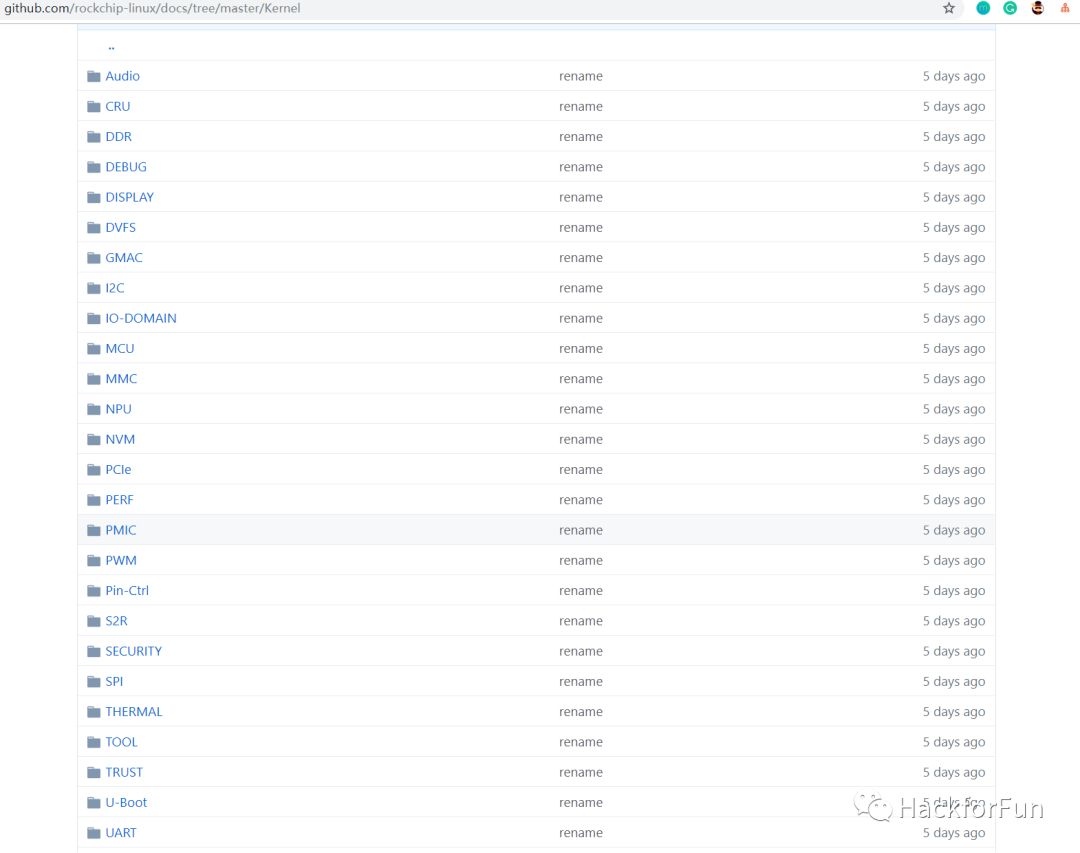
Support for Rockchip Platform from Notable Open Source Projects
-
U-Boot
https://gitlab.denx.de/u-boot/u-boot
-
Linux Kernel
https://git.kernel.org/pub/scm/linux/kernel/git/stable/linux.git
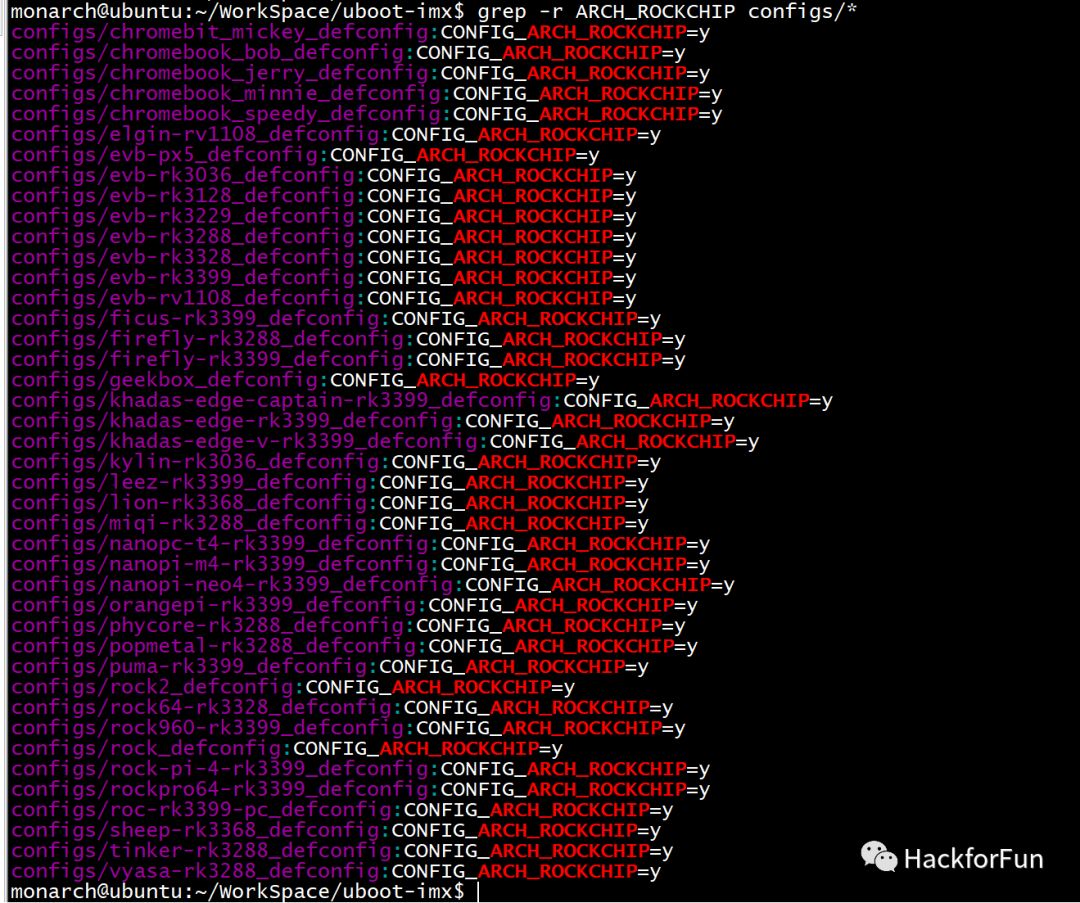
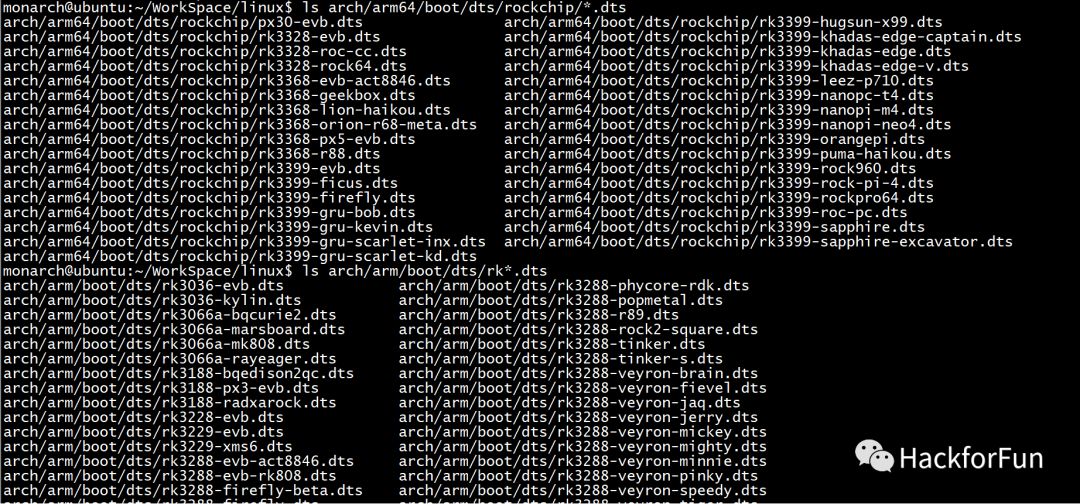
From the git commit records, both RK itself and some overseas open-source enthusiasts have been very active in supporting the RK platform, with a large number of code submissions for RK platform support in almost every version. Many development boards based on the RK platform can be directly booted using the mainline U-Boot and Linux Kernel.
Especially with the recent release of Linux 5.3, which added support for Arm Mali GPU, it is now possible to use the Mali GPU on the Rockchip platform with the mainline Linux kernel.
-
Armbian
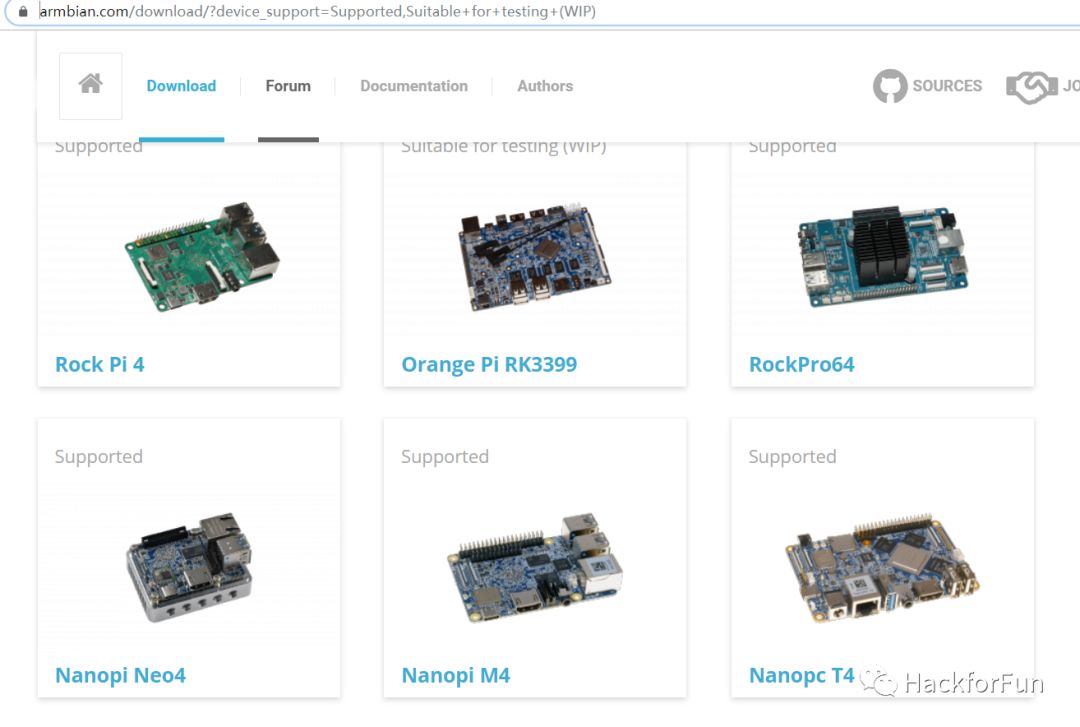
Armbian provides Debian and Ubuntu compatible images for various Arm development boards, supporting a large number of development boards based on RK chips.
Players can directly download the pre-compiled images released by Armbian or download the Armbian code to compile it themselves.
-
Libreelec
https://libreelec.tv/
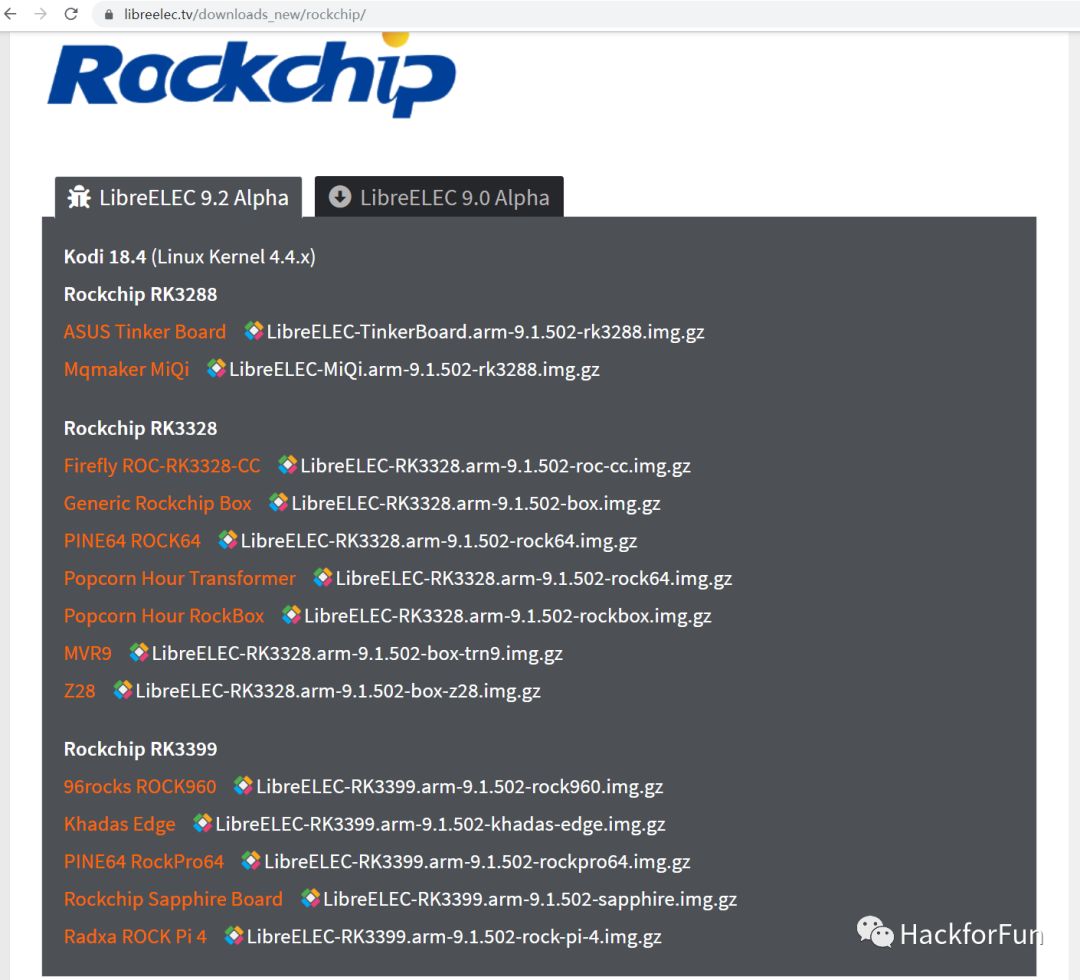
Libreelec is a TV OS focused on multimedia playback based on Kodi, allowing you to turn your development board into a smooth and user-friendly TV box. It also provides good support for many development boards based on RK chips.
-
Lakka
https://www.lakka.tv/
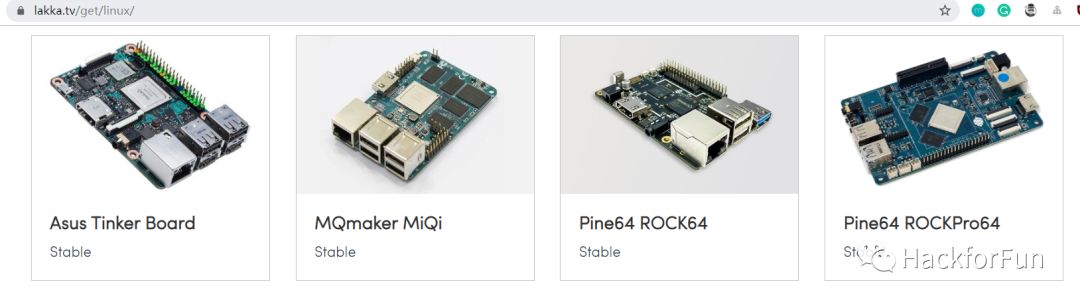
Lakka is an open-source OS aimed at game console emulation, allowing you to turn your development board into a powerful game console.
You can directly download the firmware provided on their official website or download the source code to compile it yourself.
-
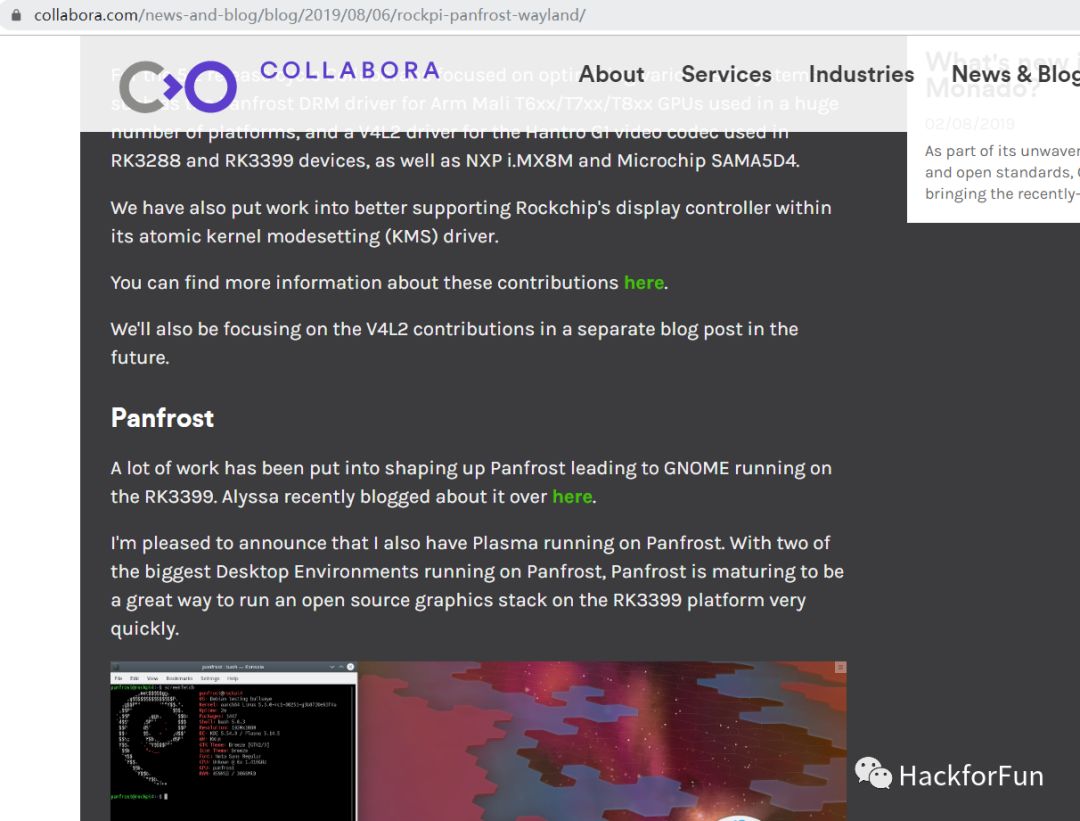
Collabora
Collabora is a well-known open-source organization that has submitted a large amount of code to the Linux Kernel mainline for the Rockchip platform, providing significant support for GPU graphics acceleration and multimedia on the Rockchip platform. Reading their blog can keep you updated on the latest technical trends in the Linux open-source community.