In today’s rapidly advancing technology landscape, emerging technologies are surging like a tide, with the AI embedded + robotics field standing out as a highly regarded golden path. According to relevant predictions, the talent demand in the intelligent manufacturing sector will reach 9 million by 2025, with an estimated talent gap of 4.5 million.

In the consumer electronics sector, products such as smart speakers and smart cameras are continuously iterating and upgrading, integrating more advanced AI interaction features. In the automotive industry, autonomous driving technology relies on AI embedded systems for environmental perception and decision-making control, while the trend of smart technology in new energy vehicles has significantly increased the demand for related technical talents. In the medical field, the application of surgical robots and rehabilitation robots brings higher precision and efficiency to medical services. The comprehensive explosion of these market demands has prompted companies to continuously increase their R&D and production efforts, leading to a shortage of relevant talents.
Edge computing allows devices to process data locally, reducing dependence on the cloud and improving response speed. The deep integration of large AI models and robots endows robots with more powerful autonomous decision-making capabilities, such as Tesla’s Optimus, which can already perform precise operations like threading a needle.
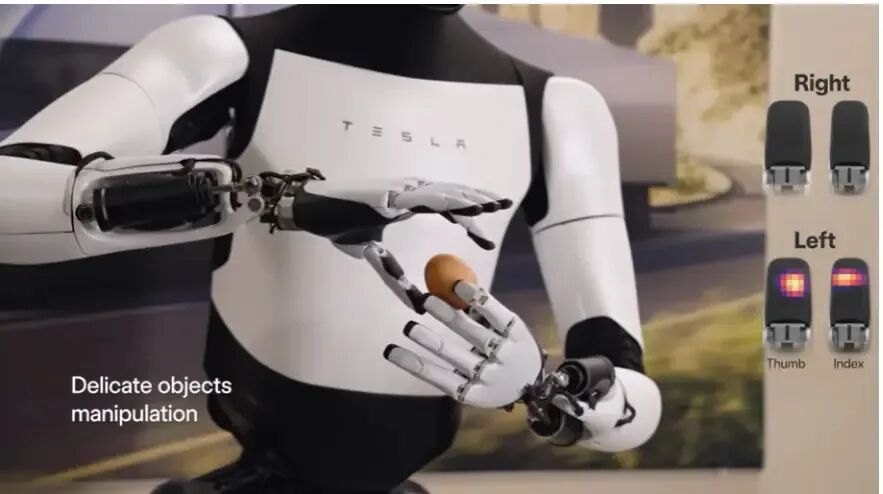
So, how can those who want to enter this field get started?
Programming Language
The C language, with a solid understanding of pointers, memory management, and structures, is key to deeply understanding the underlying principles of embedded systems. Classic books such as “C and Pointers” and “Expert C Programming” can be read.
Fundamentals of Artificial Intelligence
Learn the basic concepts, principles, and development history of artificial intelligence, including machine learning, deep learning, and reinforcement learning. Understand the different methods in machine learning such as supervised learning, unsupervised learning, and reinforcement learning, and master common algorithms like linear regression, logistic regression, and decision trees. In deep learning, gain a deep understanding of the structure of neural networks, activation functions, loss functions, and become familiar with common models such as convolutional neural networks (CNN) for image recognition and recurrent neural networks (RNN) and their variants like long short-term memory networks (LSTM) for processing sequential data.
Fundamentals of Robotics Technology
Understand the basic structure of robots, including the composition and working principles of mechanical arms, chassis, sensors, and actuators. Learn kinematics and dynamics to understand how robots achieve movement through motor control and how to plan movement trajectories, such as using Dijkstra’s algorithm or A* algorithm to plan the robot’s movement path on a map. Master commonly used control algorithms for robots, such as PID controllers, to achieve precise control of robot movement through proportional, integral, and derivative adjustments.
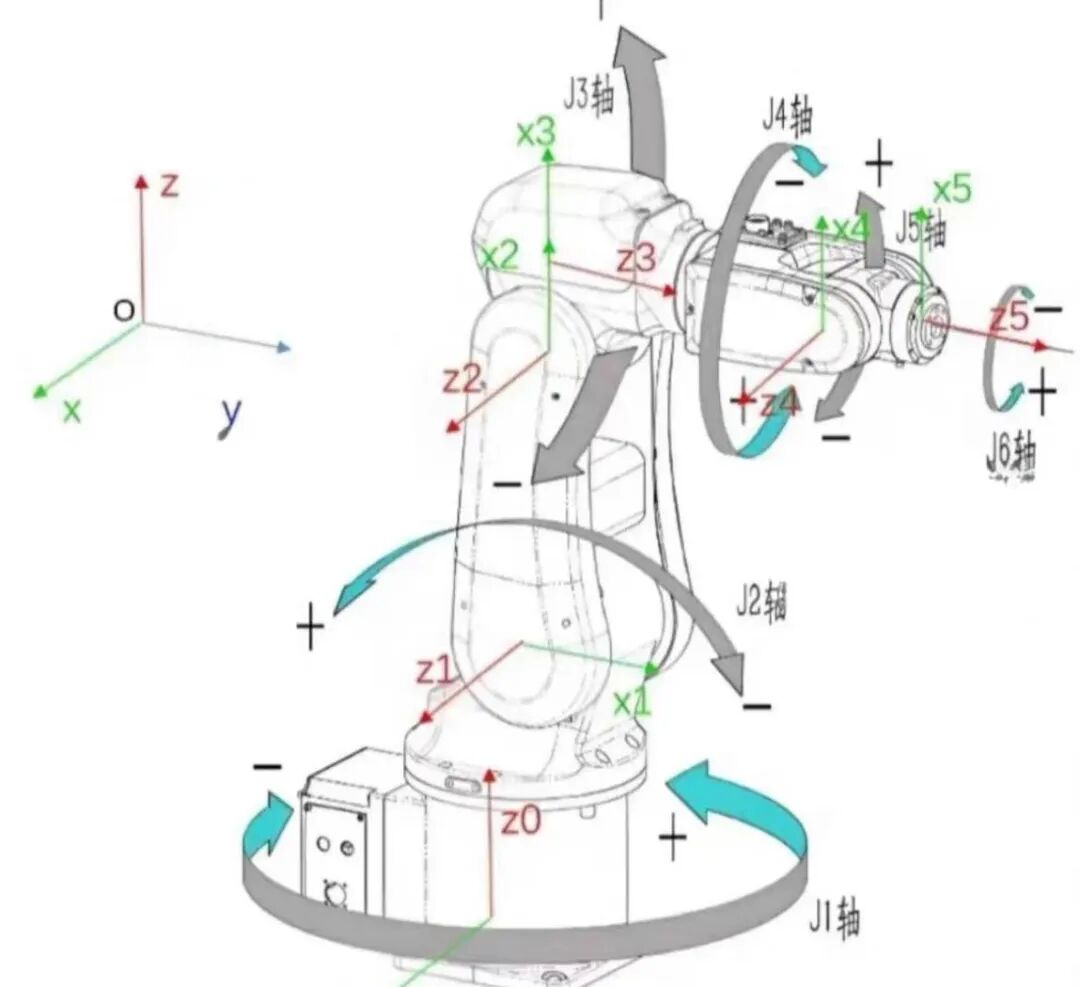
Hardware Knowledge
Familiarize yourself with common embedded hardware platforms, such as STM32 and ESP32. Taking STM32 as an example, learn its development process and master the use of common peripherals such as GPIO (General Purpose Input/Output), serial communication, SPI communication, and IIC communication.
Understand the working principles and application scenarios of various sensors, such as LiDAR for environmental perception and map building, cameras for visual recognition, inertial measurement units (IMU) for detecting an object’s acceleration and angular velocity, and ultrasonic sensors for distance measurement. Master the methods for collecting and processing sensor data, such as denoising and enhancing images captured by cameras. Additionally, become familiar with the control of actuators like motors and servos to achieve motion control of robots, such as controlling the speed and direction of motors to enable the robot to move forward, backward, and turn.
Projects
Beginner: Hardware: STM32F103C8T6 + 2 SG90 servos (two joints of a mechanical claw) + 2 potentiometers (manual control of servo angles).
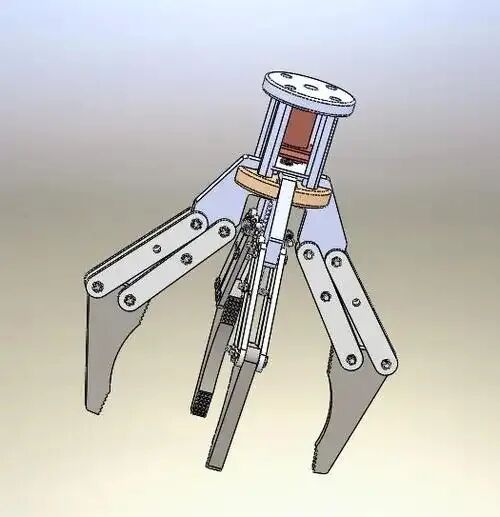
Control the servo using PWM interface (STM32 uses TIM timer to output PWM), read potentiometer data (ADC sampling), to achieve “turn potentiometer → mechanical claw follows the movement”; add a “button” to make the claw “grab” when pressed and “release” when pressed again, practicing “GPIO input, PWM output, and simple logic judgment”.
Intermediate: STM32F407 + 2 DC motors with encoders + tracking module (5 TCRT5000 infrared sensors to detect black lines on the ground) + motor driver board (TB6612FNG).
Read encoder data (calculate actual motor speed), use “incremental PID” to control the motors (goal: both motors have the same speed, the vehicle moves in a straight line); read tracking module data (black line reflects infrared weakly, sensor outputs high level), use “PID to adjust steering” (for example, when the middle sensor presses the black line, go straight; when the left sensor presses the black line, turn left) — practice “PID parameter tuning + closed-loop control” (correcting speed errors based on encoder feedback).
Epic: Jetson Nano visual recognition car, Jetson Nano + camera (CSI interface IMX219) + chassis with ROS (such as TurtleBot3 mini) + Wi-Fi module.
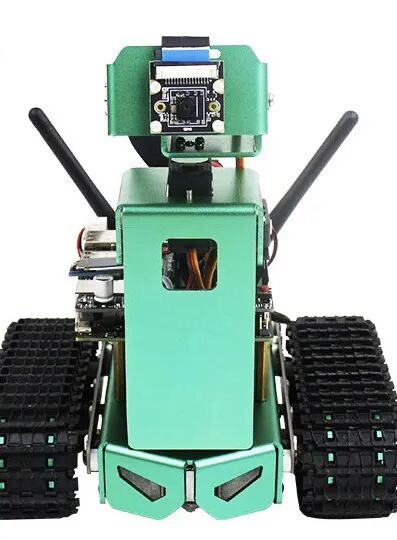
Run “YOLOv5 lightweight version” on Jetson (train a simple dataset, such as recognizing a “water bottle”); write ROS nodes: camera node sends images → YOLO node processes images → if “water bottle” is recognized, send movement commands to the chassis (“move towards the bottle”); use RViz to view the camera feed and recognition results — practice “AI algorithm deployment + ROS multi-module collaboration” (close to real scenarios: robot visual navigation/grabbing).
Beginner’s Pitfalls to Avoid
1. Don’t buy expensive hardware right from the start.
2. Prioritize “parameter tuning” over “writing algorithms”.
3. Spend time in the community.