Does your community have fitness venues? August 8th is “National Fitness Day”. Recently, reporters visited over ten communities in Xi’an and found that the concept of “embedded” fitness venues is making exercise a part of residents’ daily lives, transforming the need for “long-distance” travel to fitness locations into “zero-distance” exercise right at their doorsteps.
From “Long-Distance” to “Zero-Distance”
Integrating Fitness into Daily Life
On the morning of August 7th, the activity center on the third floor of the Traffic Community in Zhangjiacun Street, Beilin District, Xi’an was bustling with energy, with cheerful sounds of badminton echoing. On the badminton court, two coaches were guiding four students in their swings and movements. Nearby, two residents were engaged in an intense table tennis match.
“Fitness at ‘zero distance’ is indeed very convenient!” said 70-year-old Yuan Mengxi, swinging his table tennis paddle with vigor. As a regular here, he no longer has to travel back and forth to the city park for exercise. “I save 50 minutes on the commute, and when it’s hot, I can work out indoors with air conditioning,” he laughed. Similarly, resident Ms. Liu benefited as well; after a family member fell ill, she realized the importance of health: “This venue has helped me develop a habit of exercising.”
Huang Xiaoyong, a graduate student at Xi’an Sports University, often comes here to work out due to its proximity and even teaches part-time during the summer. “More than 20 students are children from the community and surrounding areas,” Huang said.
Looking through the glass windows, the fitness area in the Zhongjiao Yigongyuan community was equally lively—children were playing in the sandpit while the elderly exercised and chatted in the equipment area.
According to Dong Ting, the community party secretary and committee director, the community’s “embedded” sports fitness facilities will be operational by November 2024, divided into indoor and outdoor categories. The indoor area will feature a 600-square-meter professional space equipped with badminton, table tennis, and other facilities. To facilitate residents’ “grab-and-go” workouts, changing rooms and showers for both genders have been set up. Outdoors, seven fitness sites have been established in the Zhongjiao Yigongyuan community, equipped with 72 multifunctional sports facilities covering strength training, aerobic exercise, and rehabilitation, catering to the fitness needs of residents of all ages.
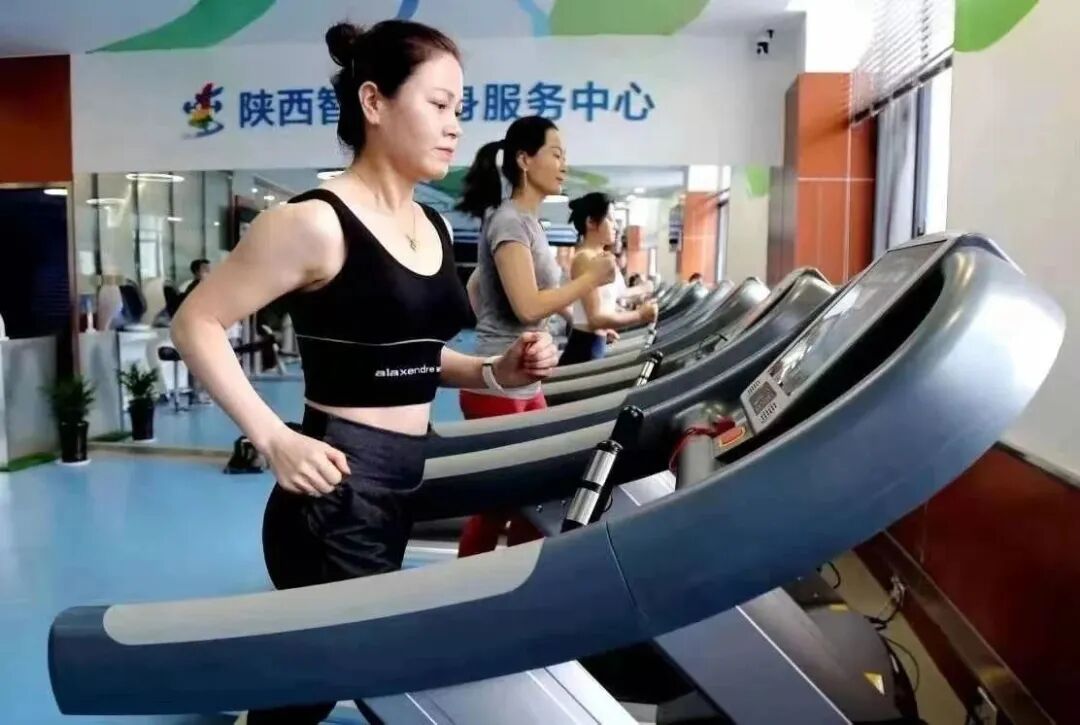
Today, this “embedded” concept is blossoming in multiple communities in Xi’an. The Zhuque North District community in Chang’an Road Street, Beilin District, has integrated a fitness room into the elderly service station, equipped with treadmills, spinning bikes, and other professional equipment, which is open for free to provide residents with convenient “at-the-door” exercise space. The first community on Jiu’an Road in Guodu Street, Chang’an District, has set up 20-square-meter children’s play facilities in four residential areas, with community party secretary Wu Erlin stating: “During the upgrade, we laid rubber flooring in the children’s playground of the Guose Tianxiang community to meet the play needs of children right at their doorstep.”
Innovative Transformations Based on Local Conditions
Creative Uses of Rooftops
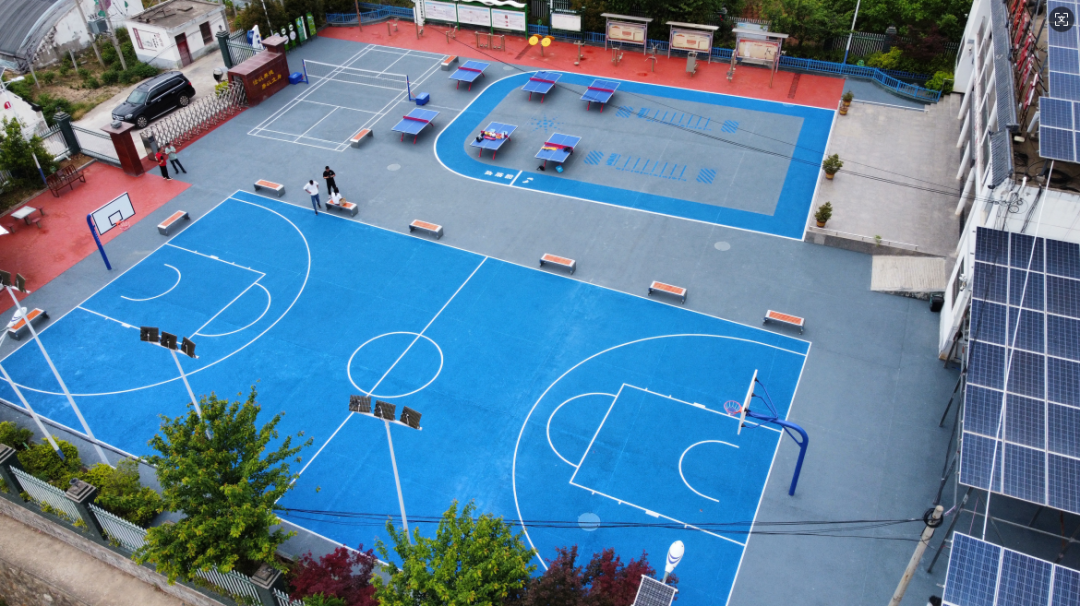
On the morning of August 8th, climbing the stairs beside the multi-story parking garage of the Huangzu Mingju community in the Beihuo Lane neighborhood of Lianhu District, Xi’an, one is greeted by a vibrant scene: on the colorful running track, a coach is leading four children in physical training; at the table tennis table, a grandmother and her grandson are playing, while a grandfather records the moment; in the caged basketball court, a grandmother is playing with her grandchildren…
“I come here to work out every day at 8:30. I just go upstairs without leaving the community, it’s very close and free,” said 65-year-old resident Dong Airong, using a combination exercise machine for leg raises and abdominal workouts. Wiping her sweat, she smiled, “I used to have frequent back pain, but now I exercise for an hour and a half every day, and I feel healthier than before retirement.” Since the rooftop fitness venue was established in 2019, she not only persists in her workouts but has also encouraged many neighbors to join the fitness team. “Riding the spinning bike here makes me sweat, and I feel energized,” said her companion, Ms. Zhang.
Cheers erupted from the outdoor table tennis area. 70-year-old Zhang Shutang was in a fierce match with 80-year-old neighbor Shi. “Since this venue opened, I come to play every day,” Zhang said, noting that exercising has not only improved his physical fitness but also helped him meet many neighbors.
These scenes are all thanks to the clever transformations of fitness venues. Hua Gang, a staff member of the Beihuo Lane community, explained that the rooftop fitness venue is an innovative solution to address the lack of public fitness facilities in the central urban area of Lianhu District. In 2019, the community fully utilized the third-floor open platform, following the principles of “scientific layout, highlighting key points” and “adapting to local conditions, being economical and practical,” to create a comprehensive fitness venue that integrates ten types of fitness projects, including fitness trails, badminton courts, children’s play areas, chess areas, basketball courts, football training centers, and indoor gyms. “We pay special attention to all-age design, ensuring that it meets the exercise needs of young people while also considering the activity characteristics of the elderly and children,” Hua said.
In recent years, many communities in Xi’an have been exploring ways to address the shortage of sports and fitness spaces and facilities. The Hangyuan community in Yanliang District is an old residential area, and community party secretary Liu Xiaoxiao admitted that there were previously no fitness venues or equipment. Since 2021, after two rounds of upgrades, the community has installed complete fitness equipment, and through the national fitness benefit project, six table tennis tables and ten fitness devices have been added to the community square, meeting residents’ daily leisure and exercise needs.
Where to Go in Extreme Heat and Cold
Shared Sports Venues Solve Problems
In light of the insufficient indoor fitness spaces in communities, especially during high temperatures or inclement weather, how can residents’ fitness needs be met? The Lifeng City community in Yanta District, Xi’an, has provided an innovative answer.
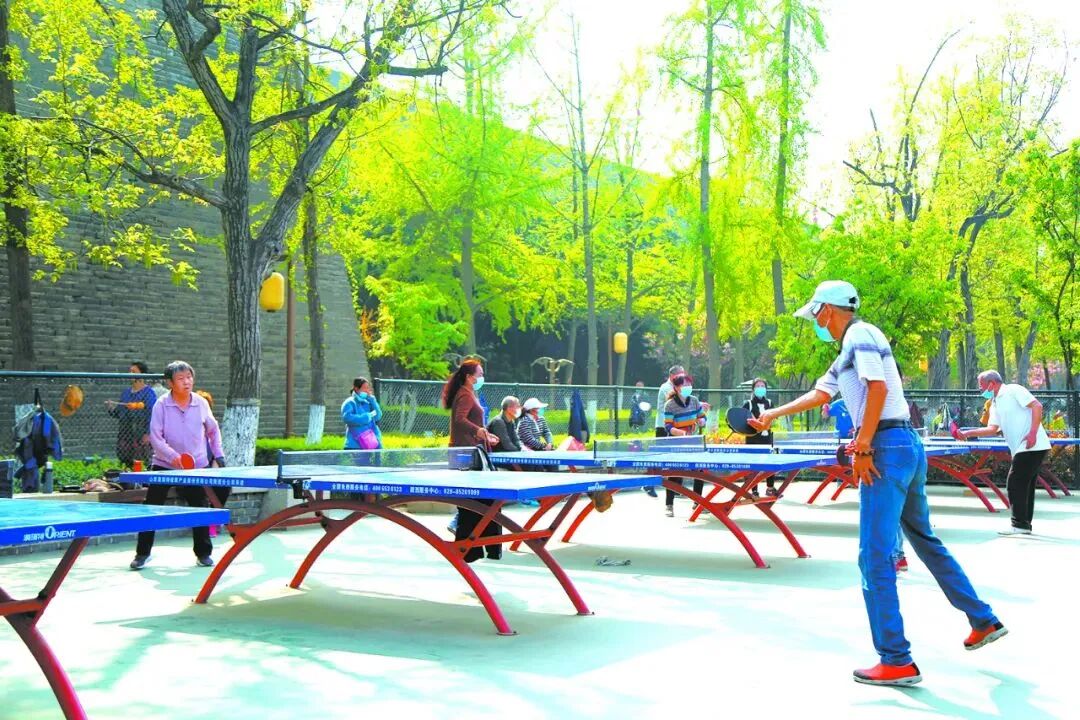
On August 8th, entering the Lifeng City shopping mall on the fourth floor, a specialized shared table tennis room stands out. An intense table tennis match is underway. “Good shot!” As the white ball hits the table, the crowd erupts in cheers.
Mr. Hao, 72, is a regular here, coming to play five times a week. “This free shared table tennis room is close to home and not as hot as outdoors, providing an excellent exercise opportunity for community residents,” Mr. Hao said, wiping his sweat. Through playing, he has made several like-minded friends. That day, he and his friends, Mr. Zhang and Mr. Duan, played for hours, completely immersed in the joy of exercise.
“Our community has 3,380 residents, and there are nearly 20 sets of outdoor fitness equipment,” said Zhao Jialin, deputy director of the Lifeng City community committee. Considering the need for indoor exercise during high temperatures and rainy periods, last September, the community innovatively collaborated with the local shopping mall to open this shared table tennis room. The indoor facility is equipped with three professional tables and is open for free from 10 AM to 10 PM daily. “We adopted residents’ suggestions to add barriers to prevent balls from flying out of the area,” Zhao Jialin said. These improvements are all aimed at better meeting the requirements of the “15-minute fitness circle,” allowing residents to enjoy exercise regardless of weather conditions.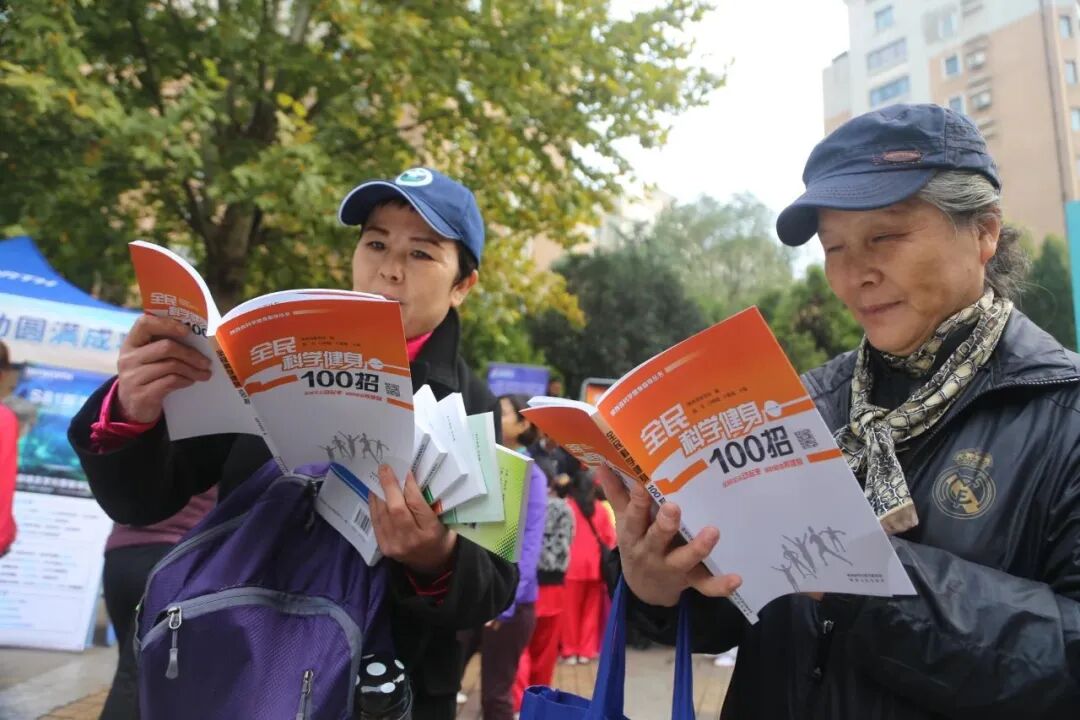
Community Sports Teams
Fostering Harmonious Neighborhood Relations
In addition to hardware, during interviews, reporters found that some communities have established dedicated teams to conduct a variety of sports competitions. Sports teams are becoming a “lubricant” for enhancing neighborly relations.
The Ziwei Hope City community in Tanjiashijie, Weiyang District, has set up outdoor fitness venues equipped with 15 fitness devices. To compensate for the limitations of outdoor venues affected by weather, an indoor fitness room has been added, equipped with four smart fitness devices such as treadmills. They also frequently hold fun sports events and physical training to bring residents closer together through exercise.
Since 2022, the Guangjiao community in Yanta District has focused on the fitness needs of seven residential areas, upgrading and renewing fitness equipment to cover all age groups. Now, the community has fitness teams for Tai Chi, table tennis, and more, and by organizing parent-child sports events and senior fun sports events, they not only enrich residents’ fitness options but also foster more harmonious neighborly relations.
The Beihuo Lane community has not only established badminton and chess teams but also conducts a series of cultural and sports activities, and has set up a national physical fitness monitoring station to issue “exercise prescriptions” to guide the public in scientific fitness, integrating sports with sub-health recovery and chronic disease management.
Transforming Fitness into
A Vehicle for Community Cultural Development
According to reports, by 2024, Xi’an will have implemented 7,853 sets of national fitness paths, 114 multifunctional sports fields, 241 community football fields, and 72 community gyms.
“Currently, the development of community sports can be deepened and enhanced from four dimensions,” said Professor Liang Zhongxiao from Shaanxi University of Science and Technology. The spatial dimension: by integrating fitness facilities into the community living circle through the “embedded” construction model; the transformation dimension: addressing the limitations of old community spaces by functionally transforming idle rooftops, underground spaces, etc., while establishing a “resident demand-oriented” transformation mechanism to ensure the practicality and usage rate of facilities; the operational dimension: introducing professional forces such as social sports instructors to enhance facility usage efficiency and avoid the phenomenon of “heavy construction, light management”; the cultural dimension: cultivating community-specific sports teams, making fitness an effective vehicle for community cultural development.
Liang Zhongxiao emphasized that the construction of community sports in the new era should break away from the traditional thinking of merely building facilities, developing towards a direction of “spatial accessibility, operational sustainability, cultural integration, and community uniqueness” in a “four-in-one” approach, truly making sports a community public product that enhances residents’ happiness. At the same time, it is essential to strengthen policy support and promote the formation of a virtuous development pattern guided by the government, supported by society, and participated in by residents.
Source: Sanqin Metropolitan Daily