Recently, the team led by Director Xu Zhiwei of the Cardiothoracic Surgery Department at Huai’an First People’s Hospital (Chief Physician Huang Su, Associate Chief Physician Pan Quanhua, Attending Physician Gao Yang, and Resident Physician Xu Chuanzhang); Extracorporeal Circulation Supervisor Nurse Zhang Lijuan; along with the nursing team led by Head Nurse Ma Yan and Sun Huimin, successfully performed the first Da Vinci robot-assisted heart tumor resection (left atrial myxoma) in Jiangsu Province without thoracotomy, supported by Professor Zheng Donghui, the Party Secretary. This marks the fourth hospital in Jiangsu Province to successfully conduct robotic heart surgery, signifying a new era of minimally invasive surgery for the Cardiothoracic Surgery Department at Huai’an First People’s Hospital.
When it comes to heart surgery, many people envision thoracotomy, a large incision, and the heart being temporarily stopped, which are quite graphic images. Traditional cardiac surgery requires sawing through the sternum and freeing the ribs, with bone healing taking a long time and possibly accompanied by sequelae. The postoperative recovery time is also lengthy. However, with the rapid advancement of technology, the Da Vinci surgical robot is one of the most representative surgical robots in the medical field today, and it can be safely applied to suitable heart surgeries, avoiding the major trauma of thoracotomy and sternum sawing.
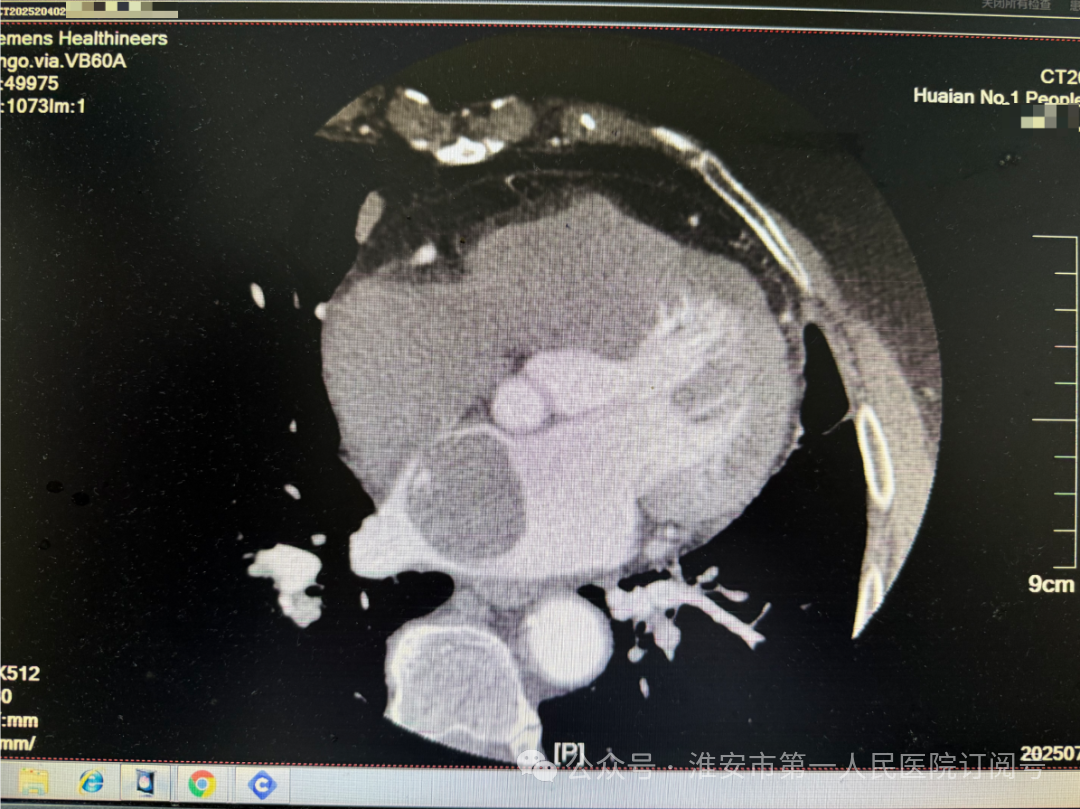
CT image of the patient’s myxoma
The patient experienced severe chest tightness and shortness of breath for nearly twenty days, leading to a cardiac ultrasound in our outpatient department, which revealed a left atrial myxoma. The presence of a cardiac tumor is like a “time bomb” that could threaten the patient’s life at any moment. Faced with this severe condition, the patient and their family chose the team led by Director Xu Zhiwei at Huai’an First People’s Hospital’s Cardiothoracic Surgery Department. During the surgery, Director Xu operated the robotic arms remotely using the Da Vinci robot’s handle. Through several tiny incisions, the robotic arms were inserted to accurately locate and successfully remove the cardiac tumor. The entire surgical process was smooth, took a short time, and resulted in small incisions that were not only aesthetically pleasing but also caused minimal postoperative pain.
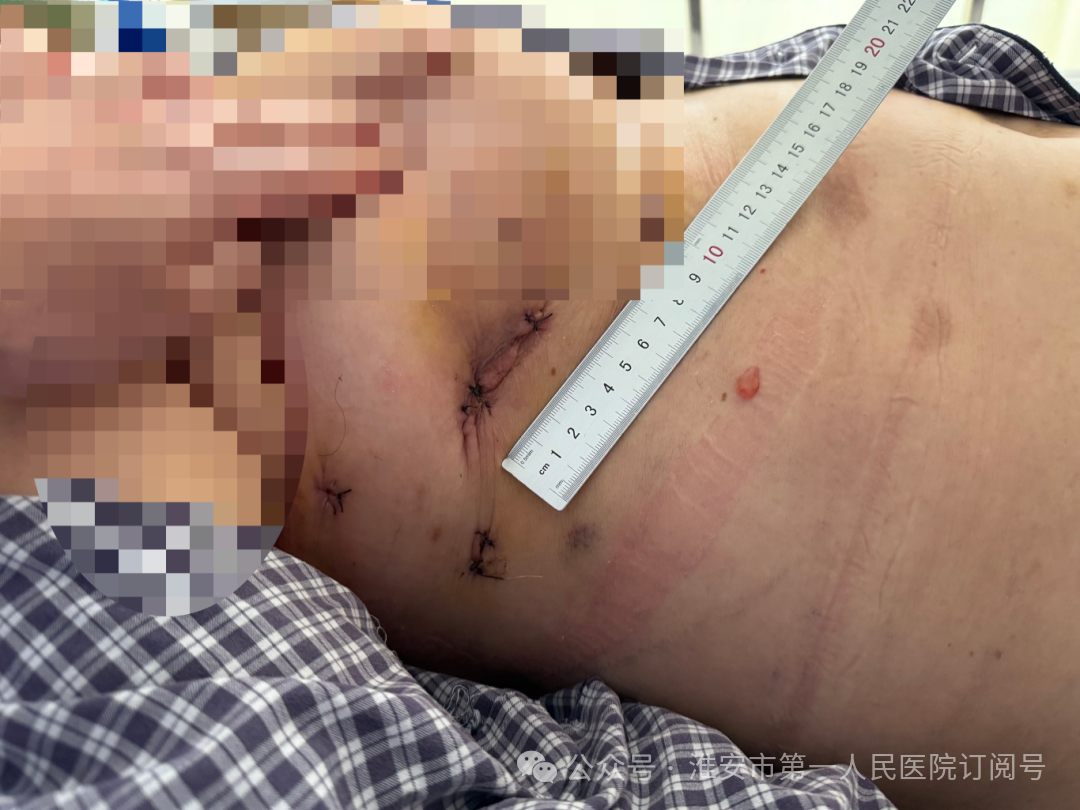
Small incision, only 4cm
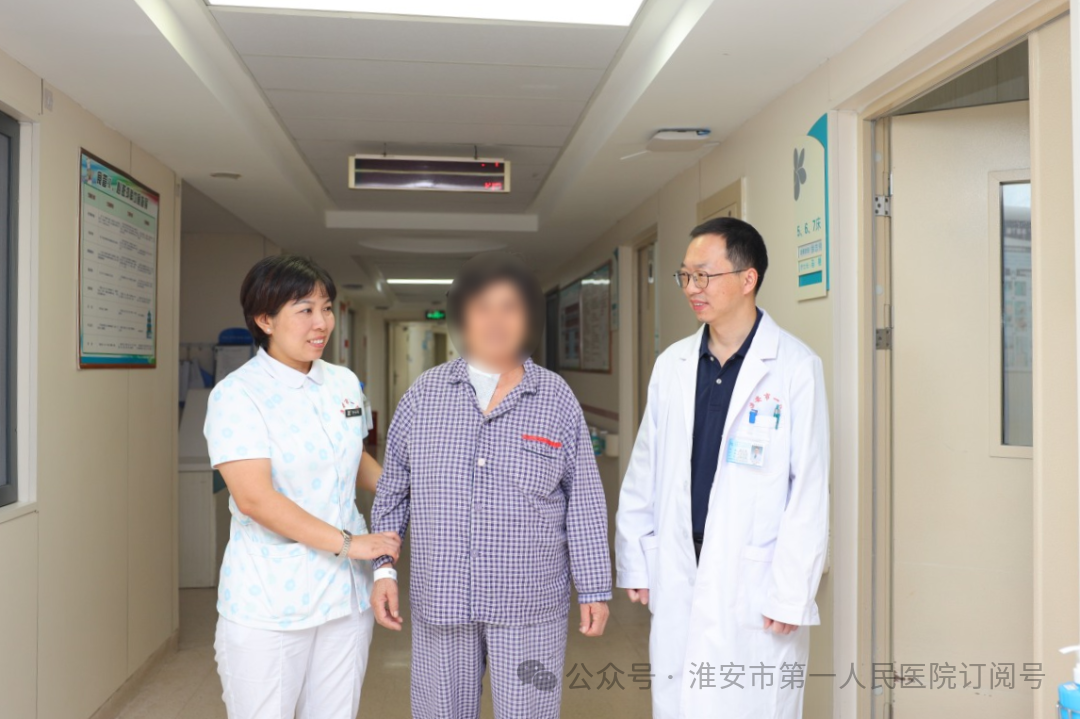
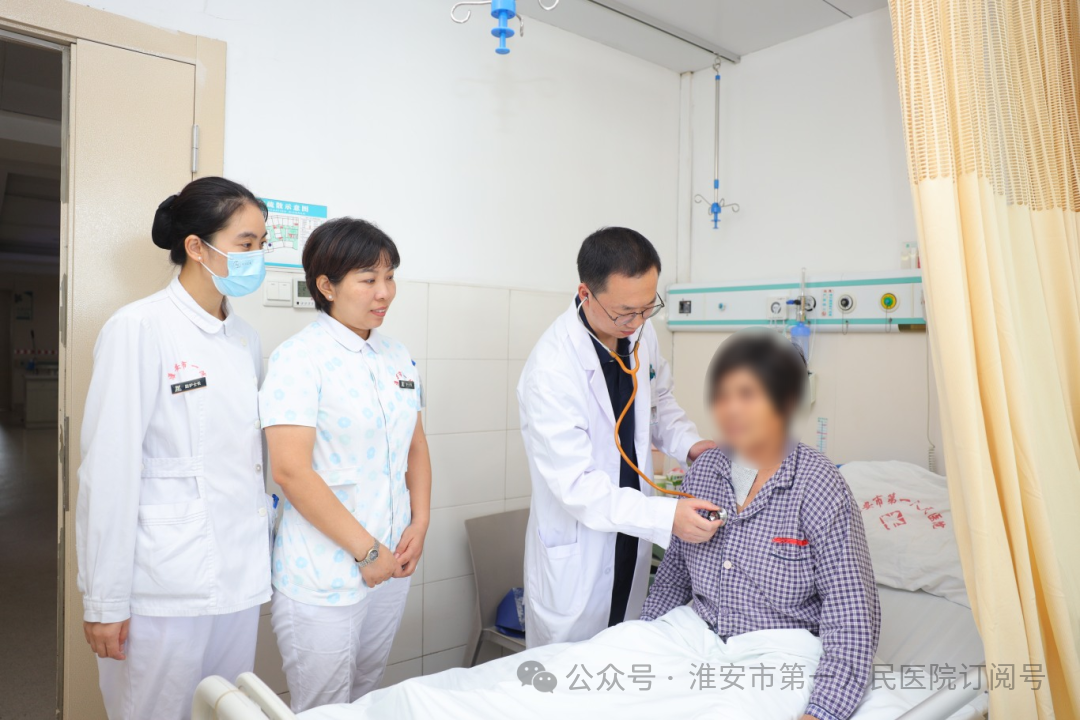
Post-surgery, the patient recovered well and was soon able to get out of bed and gradually return to normal life.The successful application of the Da Vinci robot in heart tumor resection not only marks an important step for Huai’an First People’s Hospital in the field of cardiothoracic surgery but also means that heart disease patients will have the opportunity to enjoy safer, less invasive, and quicker recovery minimally invasive surgical treatments. The introduction and promotion of this innovative technology will help more heart disease patients avoid the pain of thoracotomy and bone sawing, improve the safety and efficiency of surgeries, and further enhance the overall medical level and service quality of cardiothoracic surgery in the region. In the future, the Da Vinci surgical robot will be able to play its unique advantages in more fields, safeguarding patients’ health.
 Huai’an First People’s Hospital Publicity Department
Written by: Gu Rui
Images/Editor: Xu Jiayi
Reviewed by: Wang Shuwen, Wang Yuling, Chen Fengli