$320 billion! Google and Microsoft Invest Heavily in AI, Where Are China’s Breakthrough Points?
Behind the 50 Robots Dancing at WAIC, Only 2 Models Enter Factories
Community Elderly Use Robots to Buy Medicine: The Importance of AI’s Practical Impact Over Technical Flashiness
Wang Xingxing, Hu Houkun, and JD All Present, AI Industry Welcomes a Pragmatic Turning Point
Behind the Boom of Embodied Intelligence: Out of 800 Exhibitors, Only 2 Robots Can “Work in Factories”
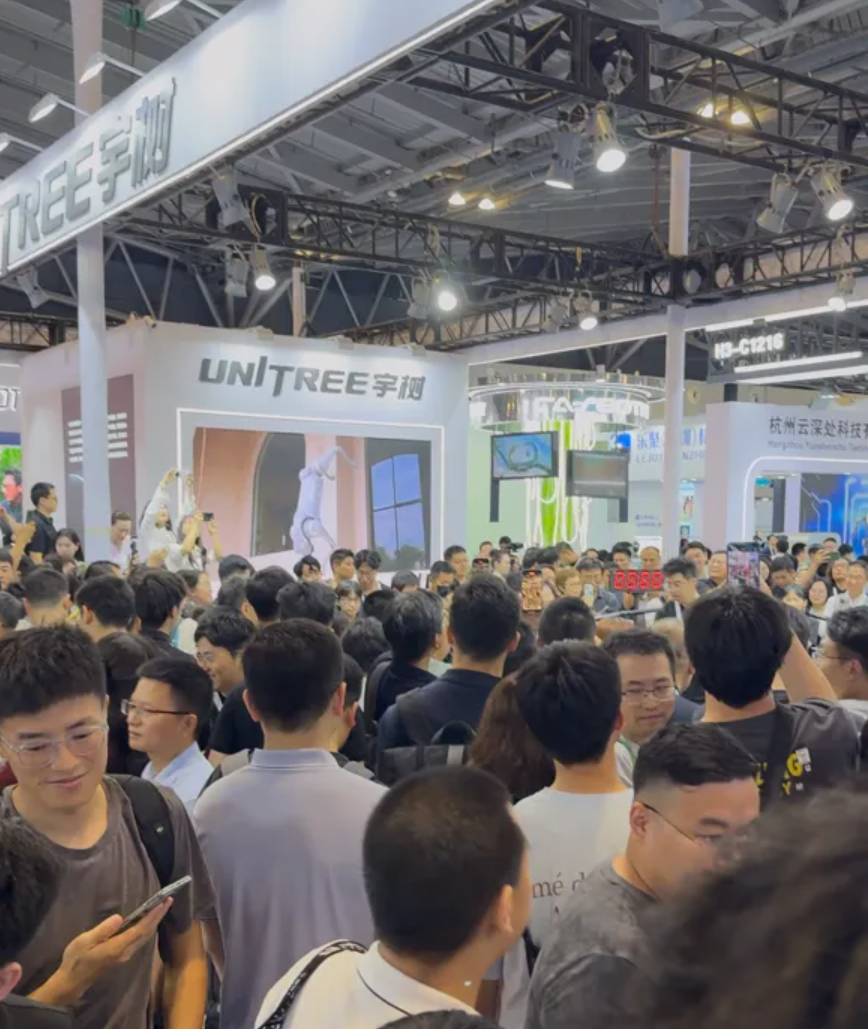
At the World Artificial Intelligence Conference (WAIC), the combat robot from Yushu Technology received applause, while the industrial robot next door skillfully sorted parts. Behind this tech feast gathering 800 companies lies the most realistic challenge for the commercialization of embodied intelligence:Less than 5% of the 3000 exhibits have achieved industrial application.
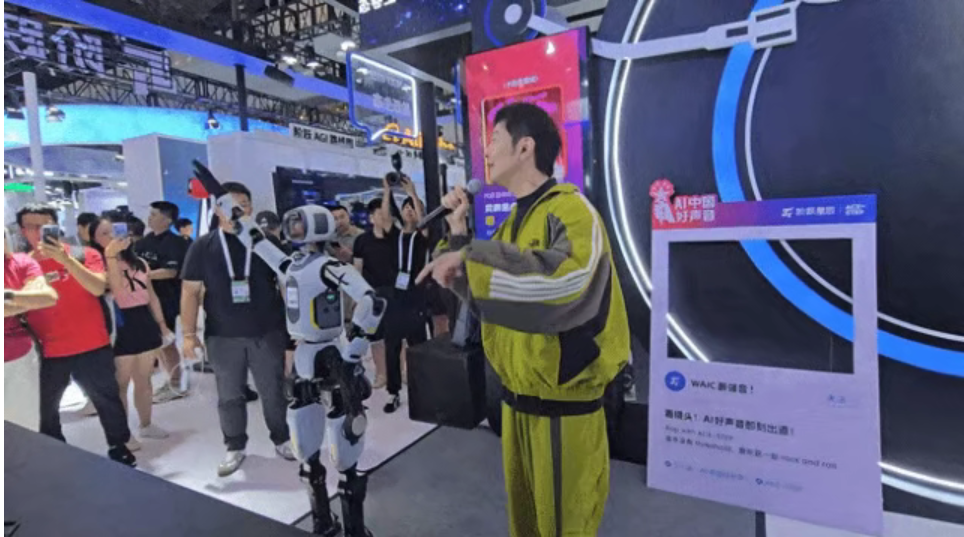
The WAIC exhibition area has broken records, exceeding 70,000 square meters. Innovative products like Huawei’s Ascend super node, Alibaba’s Quark glasses, and Ant Group’s health manager have attracted attention. However, focusing on the field of embodied intelligence, the gap between excitement and effectiveness is alarming.
Wang Xingxing, founder of Yushu Technology, candidly stated during an interview at the conference: “The industry’s growth rate exceeded 50% in the first half of the year, but consumer acceptance remains the biggest bottleneck.” Although the humanoid robot exhibited can perform dance routines, it still has limitations in adapting to practical scenarios like household cleaning. According to the “Robot Industry Blue Book” released by the China Electronics Society,the cost of adapting to industrial scenarios is 300% higher than for entertainment displays.
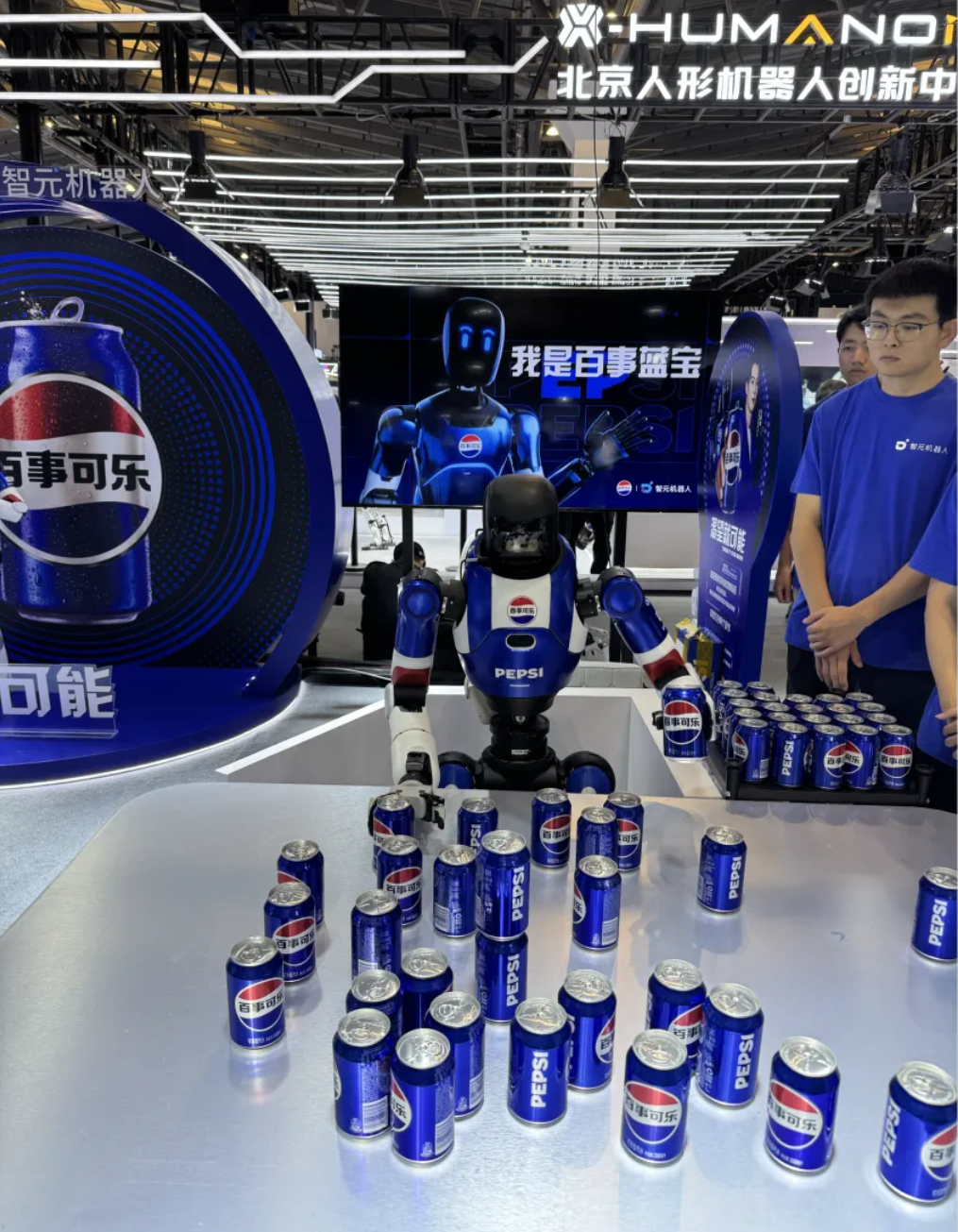
Commercialization data is more persuasive. The “Pepsi Cool Treasure” developed by Zhiyuan Robotics in collaboration with PepsiCo has achieved deployment in retail scenarios, but there are fewer than 20 commercial cases across the industry. Li Zhenfeng, the digitalization director of Chongqing Machinery and Electronics Holding Group, pointed out in an interview: “Production lines prefer to use industrial robotic arms priced around 80,000 yuan, while the material cost of humanoid devices remains a hard threshold at 500,000 yuan.”
The data paradox also constrains development. A study conducted by Renmin University of China in collaboration with MIT shows that the cost of obtaining quality industry data accounts for 62% of the total investment in AI projects. Medical AI requires millions of labeled images for training, while the digitalization rate of grassroots medical institutions is only 34.7%. The National Industrial Information Security Development Research Center disclosed that less than 11% of enterprises have self-built databases covering core processes.
In the face of real challenges, Feixi Technology’s solutions provide new ideas. Their adaptive robotic arm demonstrated fine actions like making oden and carving eggshells at the WAIC, targeting the repetitive strain issues in the food processing industry. This equipment has been applied in the central kitchen of Hangzhou Zhiweiguan,reducing human participation by 45%, with a yield rate increased to 99.8%.
At the Taiyuan Industrial Hospital in Shanxi, an AI ethics review platform is monitoring the diagnostic system in real-time. This platform automatically marks algorithmic biases based on the framework released by the National New Generation Artificial Intelligence Governance Professional Committee. Director Zhao Minghui introduced: “The system has corrected 127 misjudgments in three months, with the accuracy of intestinal polyp recognition improving from 92% to 97.5%.”
Local government-guided model innovation is also worth noting. The Chongqing Economic and Information Commission released a list of 28 key AI scenario demands, clearly requiring applying enterprises to submit cost-benefit models. The first selected project, the pickled vegetable industry brain project, links soil monitoring with market analysis,helping Fuling farmers reduce unsold rates by 18%, and has been selected as a typical case for digital assistance in rural revitalization by the National Rural Revitalization Bureau.
Technological cost reduction has also made substantial progress. Huawei’s Ascend AI cluster adopts a super node architecture, reducing the training time of large models by 40%. According to the Ministry of Industry and Information Technology’s “Qiming” test results, power consumption is reduced by 37% under the same computing power. In the chip field, Moore Threads’ domestic GPU adapts to localized training platforms, and in tests at the Zhejiang Robot Industrial Park,comprehensive operational costs have been compressed to 63% of imported equipment.
The workshop of Chongqing Hongjiang Machinery is witnessing a new model of human-machine collaboration. Workers awaken the intelligent data system through voice commands, improving equipment parameter query efficiency by 40%. Chief Engineer Liu Jianbo emphasized: “The robotic arm is responsible for repetitive welding, allowing workers to focus on process debugging, resulting in a more significant efficiency improvement than full automation transformation.”
This transformation requires a concerted effort from multiple parties. The National Standardization Management Committee has newly established 11 standards, including “Safety Requirements for Service Robots,” focusing on resolving communication protocol conflicts between devices. The Chinese Association for Artificial Intelligence has initiated the “Qizhi” open-source plan, releasing the first batch of 3.5 million industrial quality inspection datasets to alleviate data anxiety for small and medium-sized enterprises.
Cases that return technology to practical value are encouraging. The stroke imaging system jointly developed by Beijing Tiantan Hospital and Tsinghua Technology has covered 283 county-level hospitals with the support of the medical insurance directory. System operation data shows that the grassroots diagnostic compliance rate has jumped from 68% to 91%,with an average treatment time reduced by 27 minutes.
A community practice in Longgang, Shenzhen, is closer to people’s livelihoods. The elderly assistance robot developed by Zhizhi AI has been integrated into the community service system, completing 16,700 services such as medicine delivery and utility bill payments. A 68-year-old resident, Zhang Jianguo, exclaimed: “I used to have to trouble my children for mobile payments, but now I just talk to the machine.”
Data from the New Generation Artificial Intelligence Development Research Center of the Ministry of Science and Technology confirms the industry’s transformation: In the first half of 2025, the customer acquisition cost for AI startups will decrease by 32%, and the product iteration cycle will shorten to 4.2 months. Huawei’s rotating chairman, Hu Houkun, pointed out in his speech at the conference: “The next three years will be a critical period for industrialization, where pragmatism is more important than flashy technology.”
The global technology competition has already shifted to depth. Google’s latest financial report shows that its R&D budget will increase to $85 billion by 2025, focusing on vertical scenarios such as medical imaging analysis and educational intelligent agents. After the EU passed the “Artificial Intelligence Act,” Siemens’ industrial Copilot system became one of the first productivity tools to pass safety certification.
These changes are profoundly reshaping the industry ecosystem. SenseTime Technology’s embodied intelligence platform, launched at the conference, focuses on scenario adaptation and has integrated 400 logistics and warehousing robots. JD’s JoyAI large model system has been deployed in service robots, completing 12,000 product guides in pilot supermarkets in Jiangsu, increasing customer dwell time by 60%.
Zhang Wenjun, chairman of the Artificial Intelligence Association, emphasized while summarizing the conference results: “All technologies must ultimately return to solving practical problems. The increase in production for Chongqing pickled vegetable farmers and the convenience of payment for community elderly are more measurable indicators of technological progress than applause at the exhibition stands.”