Have you ever had a moment like this: scrolling through your social media, seeing someone mention “multimodal large models”, you give a thumbs up to pretend you understand, and the next second you rush to Baidu—“What is modality? Is it related to motorcycles?”
Don’t worry, you’re not alone in this confusion. In today’s article, we won’t delve into technical jargon or convoluted formulas; instead, we’ll use anecdotes, metaphors, and everyday language to clarify the plethora of bewildering terms in the AI community. By understanding these key concepts, you’ll be the most knowledgeable person about AI at dinner parties, able to boast without revealing your ignorance and communicate without missteps.
01
Generative AI: Is it AI that can “give birth”?
If traditional AI is like a librarian who can only flip through books to find answers, then generative AI is like an author who can write books on its own, even paint, compose music, write scripts, and discuss life philosophy with you.
In simple terms, it doesn’t just find answers from existing knowledge; it generates new content “out of thin air.” For example, if you say, “Draw a Shiba Inu in a Hanfu,” it will immediately create an image for you, with the eyebrows perfectly arched.
Representative examples: ChatGPT, Midjourney, Suno, Sora, Wenxin Yiyan.
 02
02
Large Language Models (LLM): The “Strongest Brain” in AI
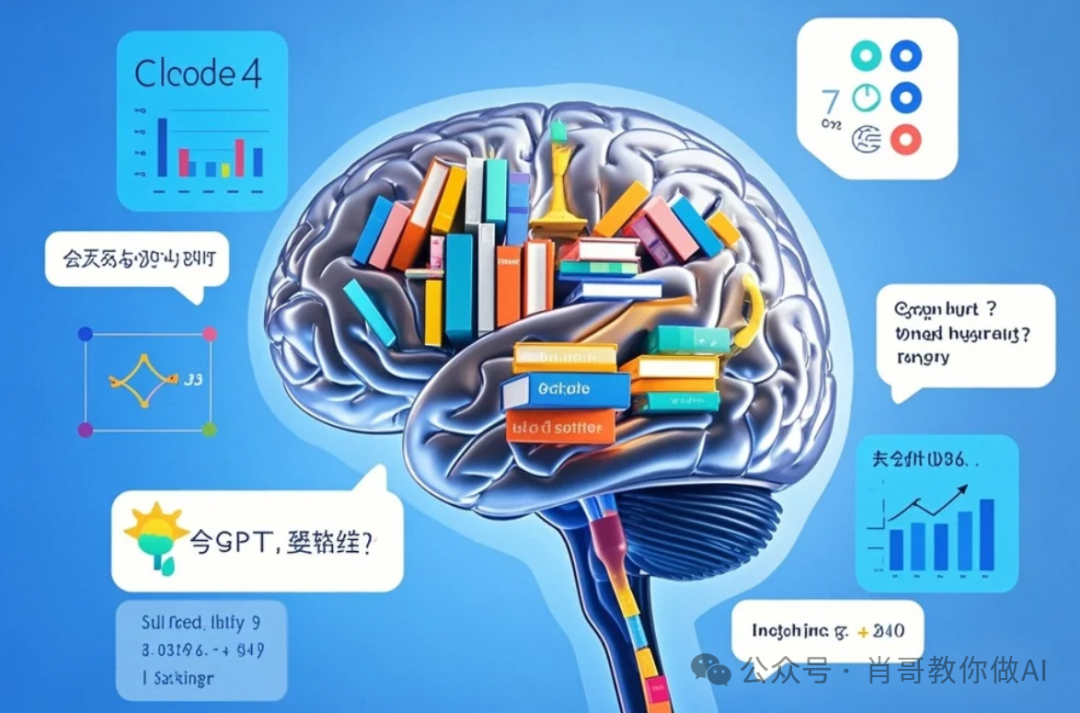
LLMs are like brains that have consumed millions of books, specifically trained to understand and generate language.
When you input a sentence like “How’s the weather today?”, it can understand your context, intent, and even emotions, responding with something like, “The sunshine is nice, perfect for airing out human worries.”
It doesn’t just memorize books; it transforms knowledge into mathematics, language sense into statistics, and learns human language to its core.
Representatives: GPT-4, Claude, Gemini, Tongyi Qianwen.
 03
03
AI Agents: Not 007, but the “Workers” in AI
An AI Agent is like a robot secretary that can “schedule its own tasks”; it doesn’t just answer a single question but can complete an entire process.
For example, if you say: Help me book a flight, hotel, and arrange an itinerary. A regular AI might tell you which flight is cheaper, but an AI Agent will: search for flights, compare prices, place orders, generate an itinerary, and even remind you to bring your ID.
It’s like a versatile assistant that understands planning, executes tasks, and can make “autonomous decisions.” In the future, many jobs will be replaced by Agents.
 04
04
Multimodal AI: The Hexagonal Warrior in AI
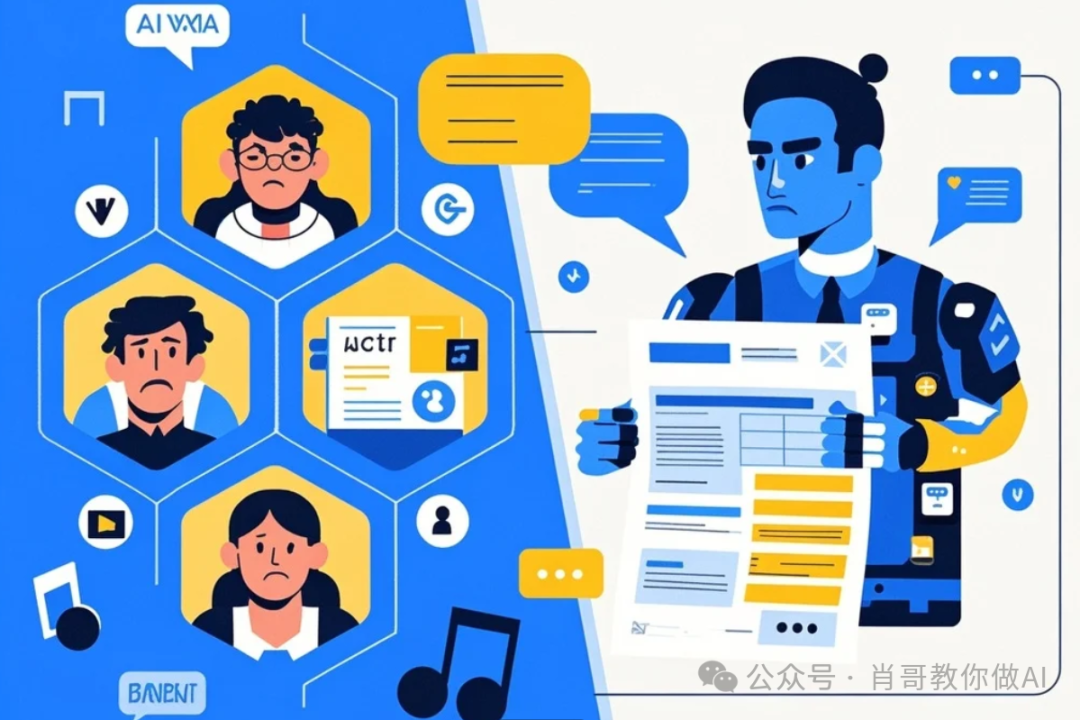
Unimodal AI: can only see images, only hear sounds, or only process text… like a “specialist.”
Multimodal AI: can understand images, text, sound, video, and motion signals, making it a “985 academic prodigy.”
For instance, if you upload a photo and ask, “Why is this person frowning?”, it can recognize facial expressions, analyze emotions based on the context, and respond, “They might have just seen the bill.”
Multimodal = a comprehensive imitation of human senses. Representatives: GPT-4o, Gemini 1.5 Pro.
 05
05
AI Ethics & Safety: Don’t Let AI “Cross the Line”
This is not a technical issue; it’s a “bottom line” issue.
If AI can spread rumors, commit fraud, invade your privacy, or alter history… it’s no longer a tool; it’s a “bomb.”
The core of AI ethics and safety is to ensure it “doesn’t lose its conscience,” and that AI has power but no boundaries.
It’s like putting a GPS and handcuffs on Superman; it needs to save people but also be prevented from flying off uncontrollably.
 06
06
AI Chips & Edge AI: One Inside, One Outside, Both Are Essential
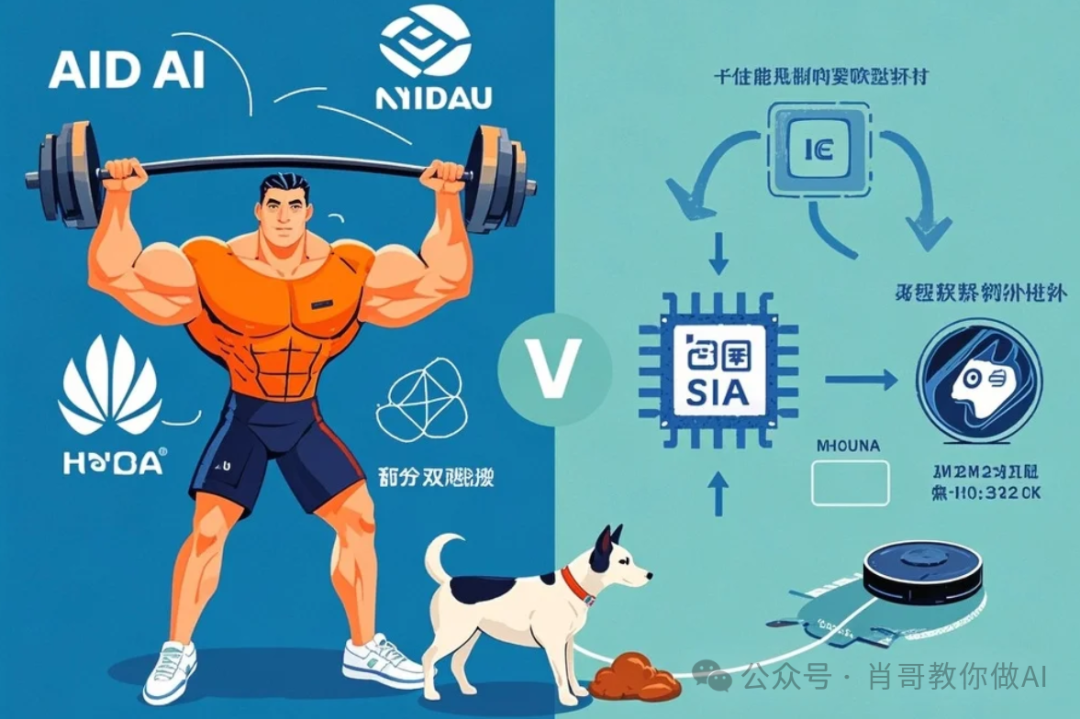
AI chips are like the brain of AI, providing “computational muscle”; edge AI is about deploying the brain “on the front lines,” making decisions without waiting to return to headquarters.
For example: your robot vacuum encounters dog poop.
Traditional AI: takes a photo, uploads it to the server for analysis → returns result → too late, it stepped in it. Edge AI: makes a local judgment, avoids it in 1 second, perfectly dodging the mess.
The combination of chips and edge AI is a “quick response, long-distance” one-two punch.
Representatives: NVIDIA GPUs, Apple A-series, Huawei Ascend, Horizon chips, etc.
 07
07
Quantum AI: The Most Mysterious and Ambitious AI Dream
Quantum AI is currently in the “cultivation” stage, more in the laboratory than in application.
In simple terms, it attempts to give AI the superpower of “quantum computing,” which means… completing tasks that would take 100,000 years in just one second.
But the problem is, quantum computing is still in its early stages of being “fragile, hard to stabilize, and extremely expensive.”
It’s like building a spaceship, but the landing pad hasn’t even been constructed yet.

Conclusion: Don’t let terminology discourage you. In fact, you’ve already been using AI: ordering takeout with Siri, scrolling through Douyin to listen to AI voiceovers, letting WeChat’s input method change your tone… all of these are examples.
Understanding these terms isn’t for an exam; it’s to ensure that in the future AI-driven life, you won’t be “blind with your eyes open.”
Save this article, and if one day you see someone post “The combination of edge AI and multimodal agents is the AI Agent 3.0 form,” don’t hesitate. Smile, share, and then gently comment: “Got it, thanks for the popular science.”