The Centralian bluetongue skink (Tiliqua multifasciata), commonly known as the Centralian bluetongue, is also referred to as the multi-striped bluetongue skink, multi-striped skink, or multi-striped bluetongue skink. It belongs to the Scincidae family, the Scincinae subfamily, and the Tiliqua genus.
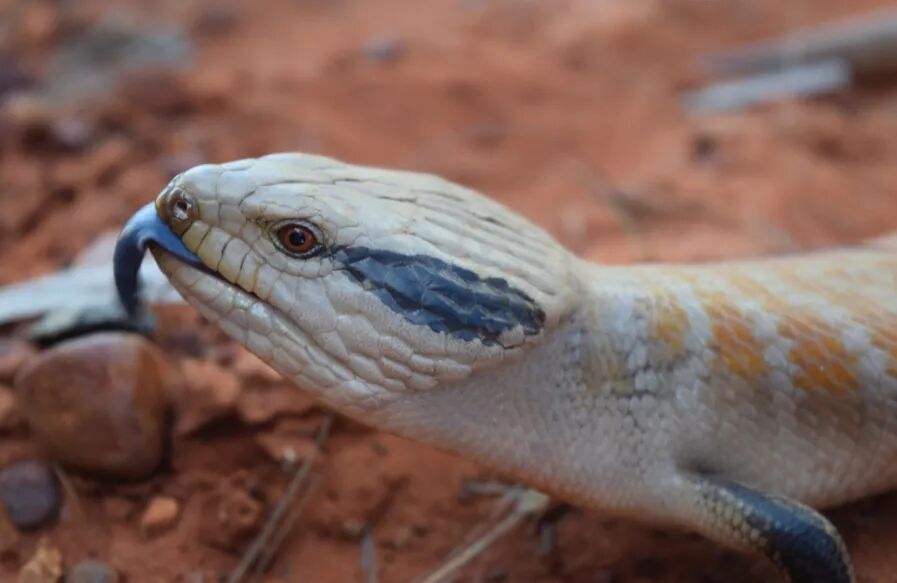
Photo by lavgs
This species is primarily distributed in the northwestern region of New South Wales, South Australia, and throughout central Western Australia. In summary, their habitat includes arid and semi-arid rocky and red sand vegetation areas. In inland regions, they are more likely to use grass tussocks as shelters rather than trees.
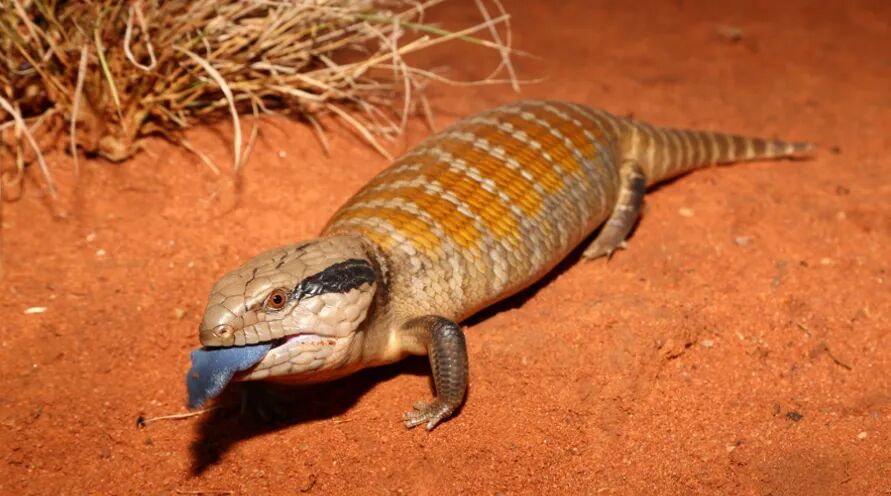
Photo by r_o_b27
They have a robust body, a relatively short body length, and a long tail, with five toes on both the forelimbs and hindlimbs. Their coloration is primarily light brown to gray, with nine or more orange-brown stripes distributed across the body and tail. These darker stripes are narrower, being the narrowest on the back. There is a distinct black stripe around the eyes that extends above the ears, and the upper limbs are also black, while the belly is a light cream to white color.
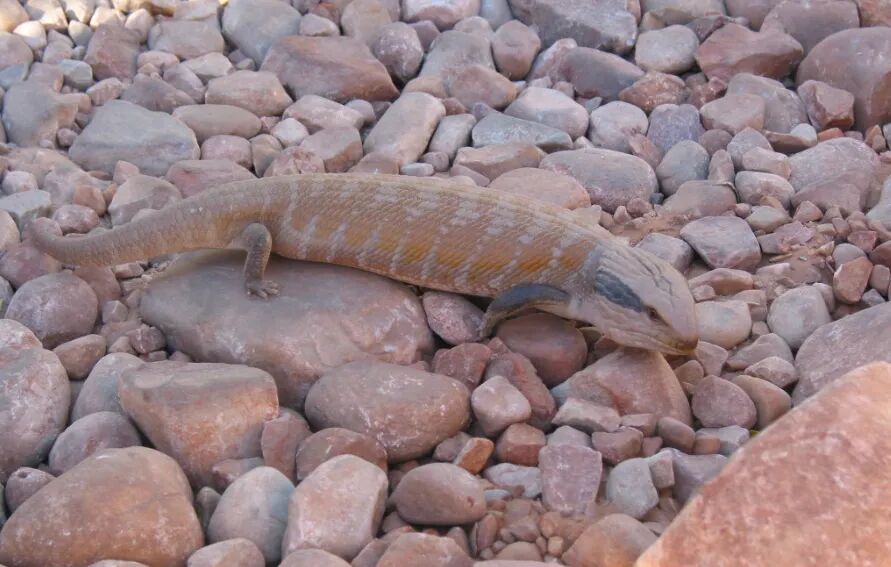
Photo by Loxley Fedec
The Centralian bluetongue skink is a burrowing species. The average daily distance they walk ranges from 122 to 245 meters. They primarily feed on fruits or seeds of plants (rather than the plants themselves), insects, some vertebrates, and the remains of invertebrates; researchers have also found cow dung in their stomachs. Like other bluetongues, they are viviparous, giving birth to 2 to 10 young at a time.
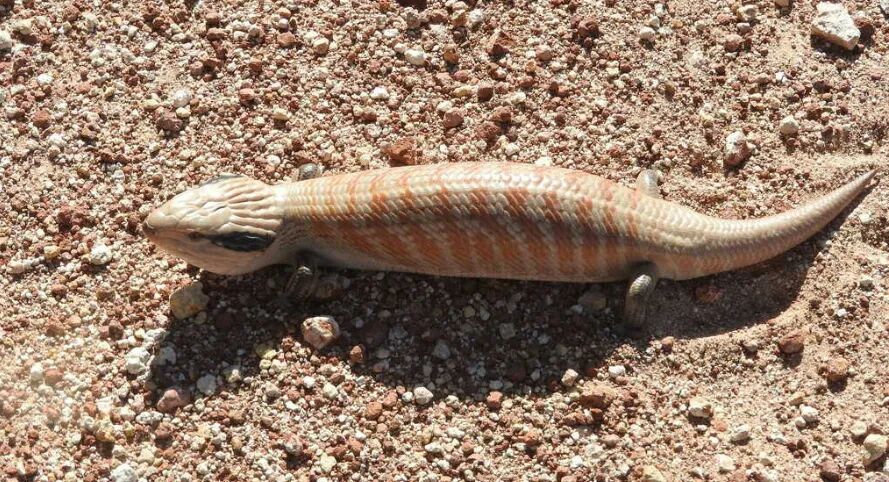
Photo by Fiona L
They are diurnal in spring and summer, but become crepuscular or even nocturnal during midsummer. Compared to the western bluetongue, the Centralian bluetongue has a larger head proportion, wider and blunter teeth, a relatively shorter snout (affecting the mouth opening range), and a longer temporal region (the area of masticatory muscle activity).
References:
Shea G. Diet of two species of bluetongue skink, Tiliqua multifasciata and Tiliqua occipitalis (Squamata: Scincidae)[J]. Australian Zoologist, 2006, 33(3): 359-368.
Price-Rees S J, Brown G P, Shine R. Habitat selection by bluetongue lizards (Tiliqua, Scincidae) in tropical Australia: a study using GPS telemetry[J]. Animal Biotelemetry, 2013, 1(1): 7. doi:10.1186/2050-3385-1-7
Related Articles:
Skin Characteristics of Reptiles
Enrichment: Paying Back the Freedom Debt to Animals

Feeding Behavior of Bluetongue Skinks in the Wild
Snake Mites (Ophionyssus natricis) and Current Effective Medications

Hatching from Eggs or Born Alive?