In the intense confrontations of the Russia-Ukraine conflict, the Russian military’s “Cineraria-2” kamikaze drone has quickly become a new favorite of warfare due to its unique combat methods and significant battlefield effects. This drone, with its low cost, high efficiency, and powerful destructive capability, has changed the face of traditional warfare and has had a profound impact on the tactics and strategies of modern warfare. The design philosophy, performance parameters, and battlefield applications of the “Cineraria-2” drone are worth exploring in depth.According to a report by The New York Times, Russia has begun using its self-replicated Iranian kamikaze drone, the “Cineraria-2”, on the battlefield, which plays an important role due to its low cost and long range. It features a tailless delta wing layout, utilizes readily available civilian market model aircraft parts, is powered by a 50-horsepower two-stroke gasoline engine, has a maximum flight speed of 185 kilometers per hour, and carries 50 kilograms of explosives. The deployment of this drone has not only caused substantial damage to Ukrainian military facilities but has also exerted significant psychological pressure on Ukrainian forces.Technological Evolution: From Imitation to Independent InnovationThe “Cineraria-2” drone is derived from Iran’s “Witness-136”, but it has undergone significant technological upgrades during its localization improvements in Russia. This improvement process involves multiple core components of the drone, reflecting the deep strength and innovative spirit of the Russian military-industrial sector. Firstly, in terms of material application, Russia has adopted fiberglass composite materials, replacing the original lightweight honeycomb materials. This change not only enhances the structural strength of the drone but also reduces overall weight, improving maneuverability and survivability. Secondly, in the electronic module aspect, the Russian military has equipped the “Cineraria-2” with domestically produced B-105 satellite navigation units, B-101 flight control units, and B-103 launch units. The integrated design of these modules reduces the internal complexity of the drone while improving system reliability and anti-jamming capabilities. Additionally, the Russian military has introduced the “Kometa” satellite navigation module, enhancing the drone’s navigation accuracy and stability. The integration and innovation of these technologies have enabled the “Cineraria-2” to maintain low costs while achieving higher combat effectiveness and adaptability. B-101 Flight Control Unit of the Cineraria-2The “Witness-136” kamikaze drone first appeared in conflicts in the Middle East and was later introduced and replicated by Russia. In actual applications on the Ukrainian battlefield, the Russian military has conducted extensive testing, continuously collecting data and analyzing the drone’s performance in various battlefield environments to inform targeted technological iterations. Through the accumulation of these combat experiences, the Russian military has not only optimized the flight performance of the “Cineraria-2” but has also enhanced its attack accuracy and battlefield survivability.Battlefield Advantage: Cost-EffectivenessThe design and use of the “Cineraria-2” drone reflect the importance of cost-effectiveness in modern warfare. Its greatest advantage lies in its low manufacturing cost, allowing the Russian military to mass-produce and deploy this drone in a short time, creating a numerical advantage on the battlefield. The low-cost characteristic stems from its use of civilian market parts and simplified manufacturing processes, which together result in the “Cineraria-2” being far cheaper than traditional military equipment. This cost advantage enables the Russian military to adopt saturation attack tactics on the battlefield, maintaining sufficient attack strength even if some drones are intercepted or shot down, thereby continuously applying pressure on the enemy.The low manufacturing cost of the “Cineraria-2” is one of its most notable features. According to reports from American theater websites, the cost of this drone is less than fifty thousand yuan, which is extremely rare in modern military equipment. The low cost allows the Russian military to rapidly expand its drone fleet without imposing a significant economic burden. Furthermore, due to the extensive use of civilian parts and mature manufacturing technologies, the production cycle of the “Cineraria-2” is short, enabling a quick response to battlefield demands and large-scale production. On the Russia-Ukraine battlefield, this rapid production and deployment capability has allowed the Russian military to launch multiple waves of attacks on key Ukrainian targets in a short time, greatly enhancing combat efficiency.
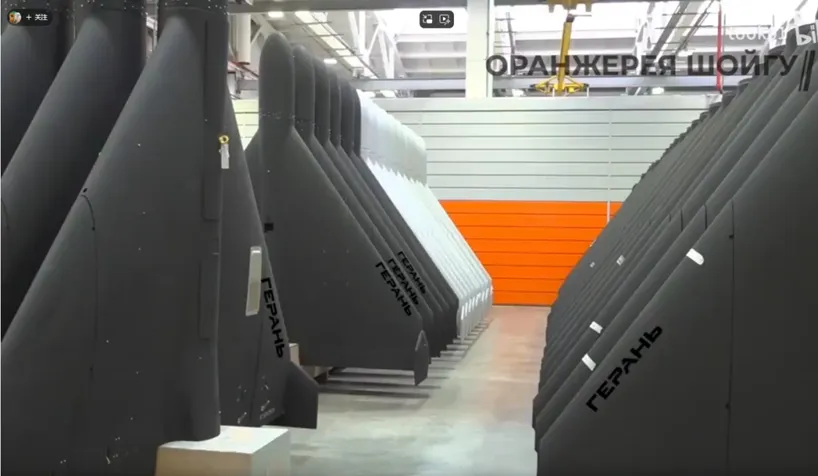 Production Workshop of the Russian Military’s Cineraria-2 DroneAnother significant advantage of the “Cineraria-2” is its rapid deployment and ease of operation. The design of this drone emphasizes practicality and convenience, allowing it to be quickly deployed and execute missions on the battlefield. Operators only need basic training to master its flight and attack operations, significantly lowering the usage threshold. In actual combat, this ease of operation allows the “Cineraria-2” to quickly respond to battlefield changes and strike enemy targets in a timely manner. For example, on the Ukrainian battlefield, the Russian military has successfully targeted Ukrainian rear infrastructure multiple times using the “Cineraria-2”, effectively weakening the combat capability of Ukrainian forces.
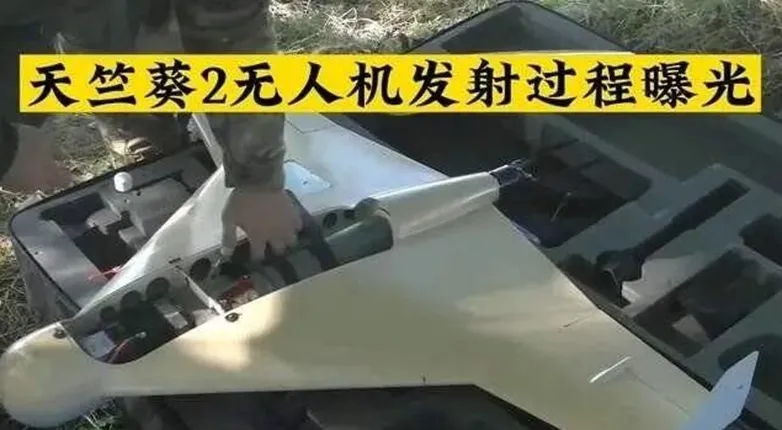 “Cineraria-2” Drone Ready for LaunchThe rapid deployment capability of the “Cineraria-2” makes it a formidable asset on the battlefield. This drone can be launched using a simple launch vehicle, with a short preparation time, allowing for quick responses to enemy targets. In the Russia-Ukraine conflict, the Russian military has utilized this advantage to precisely strike key infrastructure such as energy facilities, substations, and power plants in Ukraine, causing significant losses to the Ukrainian side. The rapid deployment capability of the “Cineraria-2” also allows for more flexible applications on the battlefield, enabling quick adjustments to attack strategies and target selection based on changing battlefield conditions. This advantage of rapid deployment and ease of operation provides the Russian military with more tactical options, enhancing its operational flexibility and unpredictability.“Swarm” Tactics: A Nightmare for Ukrainian ForcesThe clustered use of the “Cineraria-2” kamikaze drone, known as the “swarm” tactic, demonstrates its potential to convert numerical advantages into qualitative advantages on the Russia-Ukraine battlefield. This tactic poses a significant challenge to enemy air defense systems through the concentrated use of numerous low-cost drones, while also posing a serious threat to infantry.
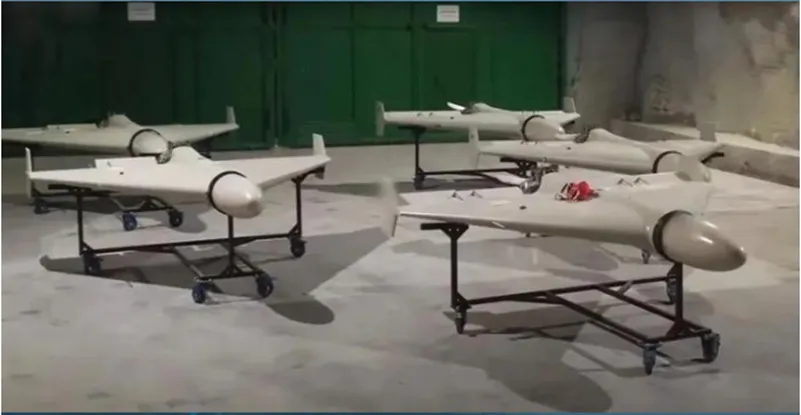 Swarm of “Cineraria-2” DronesThe use of swarm tactics makes it difficult for a single air defense system to simultaneously track and intercept all targets, thereby increasing the probability of the drones penetrating defenses. The effectiveness of this tactic has been validated on the Ukrainian battlefield, where the Russian military has successfully targeted key objectives such as energy facilities, substations, and power plants in Ukraine through clustered attacks with the “Cineraria-2”, causing significant losses to the Ukrainian side.
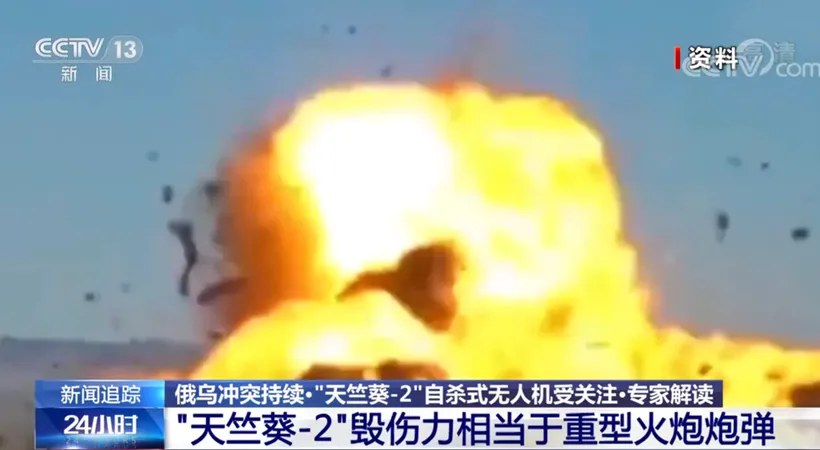 The Destructive Power of the “Cineraria-2” is Comparable to Heavy Artillery ShellsThe “swarm” tactic not only causes physical damage to enemy forces but also exerts tremendous psychological pressure on enemy soldiers. The persistent threat of drones keeps soldiers in a state of tension and fear, severely affecting their morale and combat effectiveness. Moreover, the low-cost nature of the drones means that even if some are intercepted or shot down, the Russian military can absorb these losses while maintaining high-pressure tactics against Ukrainian forces.ConclusionThe widespread application of the “Cineraria-2” kamikaze drone in the Russia-Ukraine conflict not only demonstrates its tactical value in modern warfare but also provokes deep reflection on the future forms of warfare. The successful use of this drone embodies the combat philosophy of low cost and high efficiency, while also highlighting the dual pressure that “swarm” tactics impose on the enemy both psychologically and physically. With the advancement of technology, future wars will increasingly rely on unmanned combat platforms and intelligent systems. This also presents a clear development direction for our military: we need to analyze the application experiences of drone systems like the “Cineraria-2” to explore more efficient combat modes and defense strategies. Accelerating the development of drones and related anti-drone technologies is essential to meet the demands of future warfare, ensuring national security and maintaining military superiority. We need to analyze the application experiences of drone systems like the “Cineraria-2” to explore more efficient combat modes and defense strategies.
 Source: Ward Public Opinion ObservationEditor-in-Chief: Wu MinDeputyEditor: Yu WenjingDuty Editor: Sun DuomingEditor: Su Yue Proofreader: Sun Yiwen