







Digital Transformation of SMEs
“Secret Weapon”
In today’s rapidly developing manufacturing industry, small and medium-sized enterprises (SMEs) face numerous challenges, including labor shortages, the need to improve production efficiency, and uncertainties in global supply chains.
In North America and globally, the number of SMEs far exceeds that of large enterprises. Most SMEs are still unaware of the advantages of automation and robotics, continuing to hire more personnel instead. Rising raw material and labor costs, increasing competition, quality issues, shortages of skilled workers, worker safety concerns, and limited resources hinder growth and profitability. With advancements in technology and decreasing costs, robotics is becoming a key tool for SMEs to achieve digital transformation and enhance competitiveness.
From Hesitation to Innovation
What is the breakthrough for SMEs?

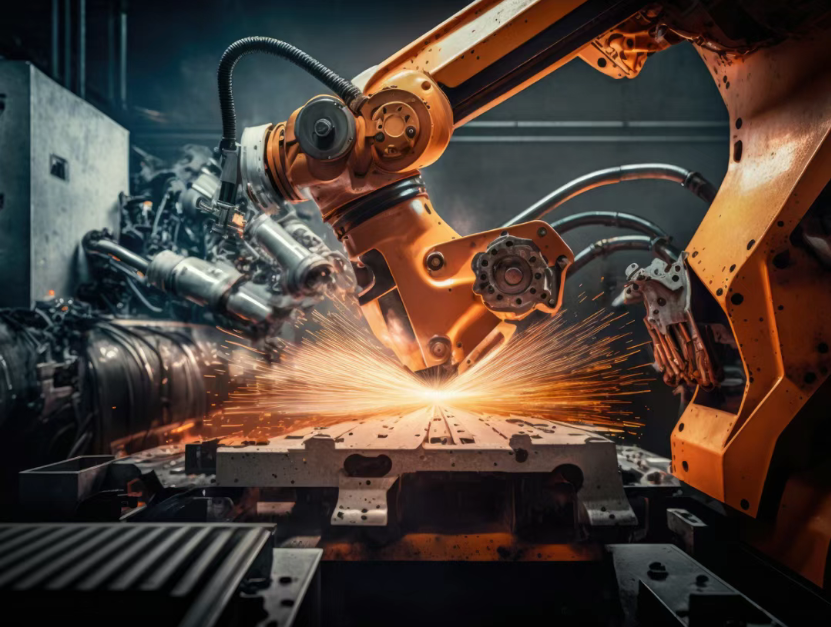
In traditional production models, SMEs mostly rely on manual operations. Entering a traditional factory, you will see workers busily moving along the assembly line, their eyes fixed on the products, their hands constantly operating machines. However, humans are not machines, and fatigue and errors are inevitable. This leads to low production efficiency and unstable product quality. For instance, in an automotive parts company, before transformation, the automation rate of its production line was less than 50%, and the defect rate was as high as 3‰. This means that for every 1000 products produced, 3 had issues. These defective products are like “pests” in the company, wasting raw materials and increasing rework costs, further compressing the profit margins.
However, in recent years, this situation has been rapidly changing. According to a white paper published by ROBO Global, the global robotics market is expected to grow from $65 billion in 2021 to $180 billion by 2027, with a significant portion of this growth coming from the SME sector. With technological advancements, robots are becoming more affordable, flexible, and easier to operate, accelerating the pace of robot deployment in SMEs.

The Evolution of Automation Technology
Robots Can Be “Versatile”
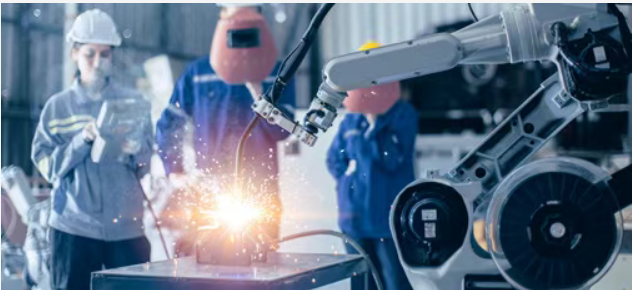
Modern robotic systems and automation solutions have become more versatile, efficiently handling product variations. For example, robotic arms equipped with vision recognition systems can adapt to different product sizes, shapes, and orientations, identifying and locating objects through cameras and sensors, thereby adjusting grip strength and maneuverability. Collaborative robots (Cobots) can work alongside human operators, easily programmed and quickly reconfigured to handle different production lines. Automation robots can assist researchers in experimental operations, data collection, and analysis, improving R&D efficiency and accelerating the launch of new products and technologies. In pharmaceutical companies, robots can perform drug synthesis, experimental testing, and other operations, supporting new drug development.
Modular automation systems, adaptive grippers, end effectors, and flexible conveyor systems provide SMEs with greater flexibility and adaptability.

Cost Reduction and Efficiency Improvement
Entering the field of robotics

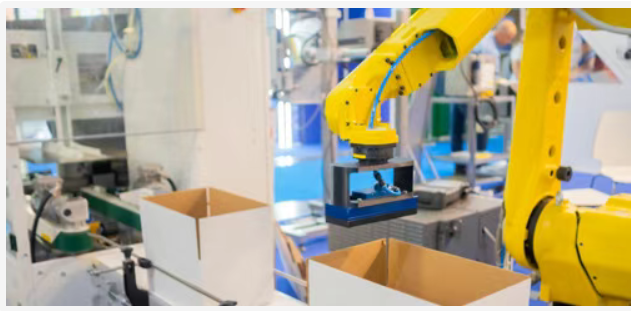
In recent years, the use of robotics technology has become easier and more feasible. Technological advancements, economies of scale, and improvements in integration have significantly reduced the costs of robots. By 2025, the cost of industrial robots is expected to drop below $11,000 per unit, a nearly 60% decrease compared to 20 years ago. The emergence of no-code and low-code programming platforms has simplified robot programming and integration, allowing SMEs to customize robot behaviors without specialized programming skills. Plug-and-play solutions further reduce the complexity and time required for implementation, enabling small manufacturers to quickly deploy robotic systems.
“Robots as a Service” (RaaS): As a flexible and cost-effective solution, is becoming increasingly important. RaaS allows businesses to access robotic capabilities as needed without the burden of long-term ownership or investment in infrastructure. Subscription or pay-per-use models enable manufacturers of all sizes to integrate automation solutions based on demand and scale up or down as needed. This model not only reduces implementation complexity and costs but also allows businesses to access industry expertise and innovative outcomes.

Accelerating Evolution
The Driving Force Behind

To encourage SMEs to adopt robotic automation, the U.S. government established the Advanced Robotics Manufacturing Institute (ARM Institute), a public-private partnership dedicated to accelerating the application of robotics in manufacturing. It provides funding, expertise, and resources for R&D projects in robotics technology, promoting technological innovation in the field of robotics. Additionally, the U.S. government has introduced tax incentives to encourage companies to actively procure industrial robots, such as the 30% tax credit mentioned in the National Robotics Initiative 3.0, which has stimulated market demand for robots and assisted SMEs.
The European Union has also taken similar measures. Through the “Industry 4.0” strategy, the EU provides funding support to SMEs to help them develop and apply robotic automation technologies, improving production efficiency and competitiveness. This program offers substantial research funding to support innovation and application in the field of robotic automation among SMEs. In March 2025, the European Commission released the Digital Europe Program (2025-2027 Work Plan), investing €3.2 billion in special funding, focusing on strategic areas such as AI and high-performance computing, providing financial support for SMEs to adopt robotic automation.
These initiatives aim to promote innovation, enhance productivity, and create new business opportunities for SMEs in the automation and robotics sector.
About Wankun
Wankun Information Technology Co., Ltd. is a specialized marketing and technical service company focused on the high-tech field, and is the officially authorized value-added distributor for Dassault Systèmes SOLIDWORKS in China. The company aims to plan and build an integrated platform for CAD/CAM/CAE/PDM/EDA for manufacturing enterprises, helping clients improve design efficiency, reduce costs, and enhance core competitiveness!