When the electronic screens on the streets of Pyongyang lit up with the image of a humanoid robot, this mysterious country once again threw a technological bombshell at the world. In an interview with Kim Kwang-hyuk, the director of the Artificial Intelligence Technology Research Institute at Kim Il-sung University, a delicately featured female robot smoothly completed tasks such as facial recognition and voice interaction—this is North Korea’s first public display of the tangible results of artificial intelligence, just three months after they announced breakthroughs in advanced drone technology.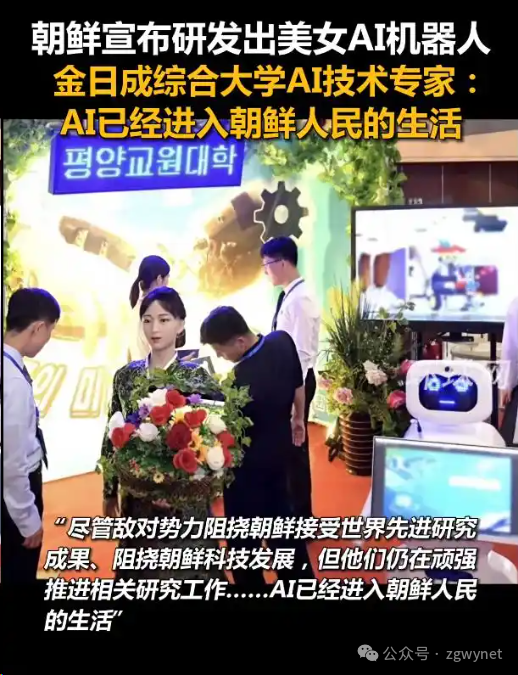
When AI Wears a North Korean Dress
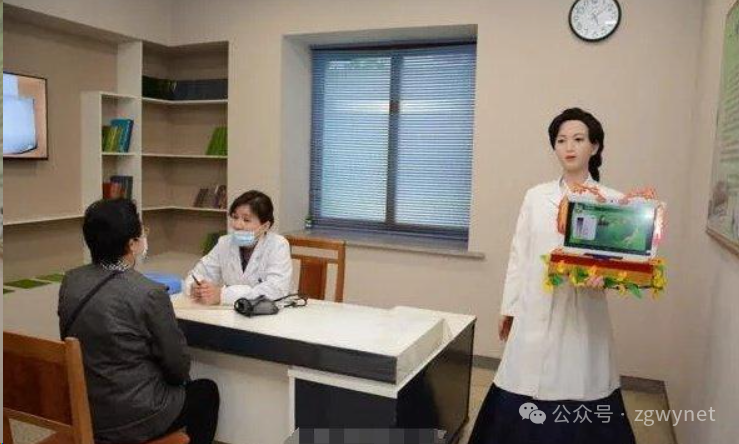
“Are hostile forces obstructing our access to the world’s advanced achievements?” When Director Kim Kwang-hyuk said this, there was a hint of dramatic indignation in his tone. However, the AI robot he showcased exuded pragmatism—it can converse, recognize commands, and is even hinted to assist doctors in consultations in the future. This brings to mind the salespeople on the streets of Pyongyang dressed in traditional attire, but now, they might be replaced by “digital colleagues.” Interestingly, the design of this robot clearly references East Asian aesthetics: fair skin, almond-shaped eyes, and long black hair, resembling an image straight out of North Korean propaganda. Some netizens joked, “Even AI must meet the ‘subjective aesthetic’ standards.”
“Curveball Diplomacy” Under Technical Blockade
Western experts’ first reaction was skepticism: “Where does North Korea get its chips? Where do its algorithms come from?” But looking back at history, one finds that this country is best at finding resources in the cracks. Just like their long-range rocket artillery uses commercially available guidance components from the international market, or they acquire dual-use electronic parts through third parties, AI technology may have taken a similar path. The “medical applications” mentioned by Kim Kwang-hyuk are particularly intriguing—after all, medical AI has relatively low computational requirements, and data is concentrated in state-run hospitals, making it a breeding ground for North Korean-style innovation. Some speculate that these technologies may come from “academic exchanges” or modified open-source code, much like assembling a working vehicle from second-hand parts.
Not Just a Pretty Face, But a Banner
Despite this robot having an idol-like face, its political mission is far more important than its appearance. North Korean state media specifically emphasized that the development process was “completely autonomous,” even pixelating the server cabinets in the background of the photos—both a sign of secrecy and a display of pride. This operation is familiar to us: in 2017, they showcased a missile system controlled by a knockoff tablet, and now they have simply changed the script to an AI version. Ultimately, the beautiful robot serves as a billboard, proclaiming: “Sanctions? We can create high technology using local methods.”
The International Community Under a Microscope
As soon as the news broke, think tanks in Seoul immediately began analyzing models, while lawmakers in Washington dug through sanction lists for any gaps. After all, if North Korea can indeed master AI, will the next step be to integrate it into drones? They have just announced acquiring technologies for the “Reaper” and “Global Hawk”—although the outside world generally believes these claims are exaggerated. But jokes aside, no one dares to completely ignore such signals. Just like the Soviet Union once used abacuses and hand-cranked computers to achieve space engineering, technological breakthroughs in extremely closed environments often come with unconventional methods that are hard for outsiders to understand.
Recently, a female internet celebrity in South Korea, named Luda, has been trending, with tens of thousands of followers on foreign social media.

Luda often shares some of her daily life photos:


Future? In the Ward or on the Battlefield
The medical scenarios mentioned by Kim Kwang-hyuk may be the closest to reality. Imagine this: in a hospital in Pyongyang, an AI nurse inquires about symptoms with a synthetic voice, while the backend system quickly matches data from the national medical database—this scene is much more plausible than “chatbots accompanying leaders on inspections.” But shadows also loom: can the same technology be used to analyze satellite images? Or control swarms of drones? A former Pentagon official’s sharp comment was, “What North Korea showcases is always just the tip of the iceberg, and beneath the iceberg often hides torpedoes.”
The “beautiful AI robot” of North Korea is not only a technological achievement but also a microcosm of psychological warfare and survival battles. To the West, it is a warning of the failure of sanctions; to North Korea, it is proof of the belief that “a spark can start a prairie fire.” In future games, North Korea may continue to adopt a “small steps, quick runs” strategy, carving out more technological tracks in the cracks of sanctions. And the international community must face a reality: technological blockades have never truly succeeded; they may instead become a catalyst for the rise of adversaries..
If you still feel uncomfortable, it means that this sadness has not yet ended. Forcing yourself to turn the page at this moment is merely suppressing your emotions. Take a moment to quietly sit with your unhappiness; once it passes, your heart will feel it too.