
An Agent is an application that integrates perception, decision-making, memory, and execution, with practical implementation and multi-Agent collaboration becoming core competitive advantages.
The AI Agent is an autonomous system with full-chain capabilities from environmental perception to decision reasoning to action execution. Its core features include: autonomy (closed-loop operation without human intervention, such as automatically adjusting air conditioning temperature), tool invocation (operating external systems via APIs/plugins, such as calling payment interfaces to complete transactions), memory mechanisms (short-term memory storing dialogue context, long-term memory connecting to vector databases), and goal orientation (driven by a reward mechanism to decompose complex tasks, such as planning travel routes). Unlike traditional AI’s passive responses (like Q&A bots), Agents can proactively plan execution paths: when a user issues the command “help me book a flight,” the Agent automatically completes the process of “price comparison → placing an order → sending itinerary,” marking a paradigm shift of AI from “information processing” to “goal achievement.”
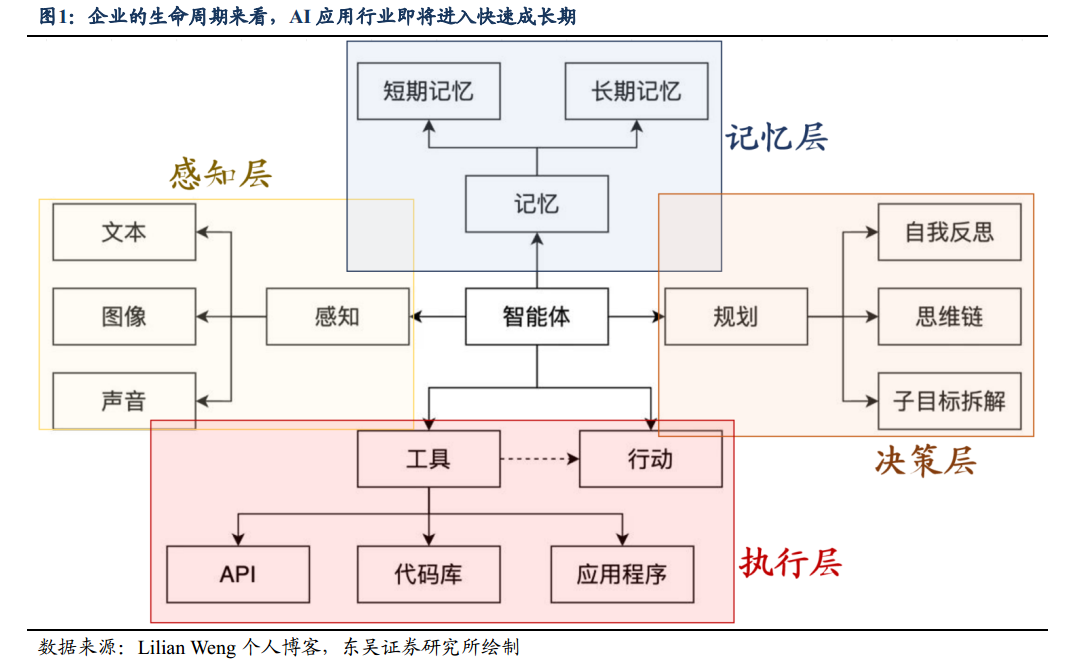
In the future, the practical implementation capabilities of Agents will become core competitive advantages, with multi-Agent collaboration becoming the mainstream development direction: (1) Practical implementation capabilities: its core competitiveness is reflected in task decomposition and automation, dynamic adaptability, and optimized human-machine collaboration. Only by embedding into actual business processes can the full potential of Agents be realized—future AI competitiveness lies in whether it can integrate into workflows like a “digital employee” and bring actual efficiency improvements; (2) Multi-Agent collaboration: from a human perspective, each person in a job represents a specific role, and future Agents will be similar. More advanced use cases will typically require collaboration among multiple intelligent agents, with each agent responsible for a specific role, forming a complex Agent collaboration network similar to human cooperation networks.
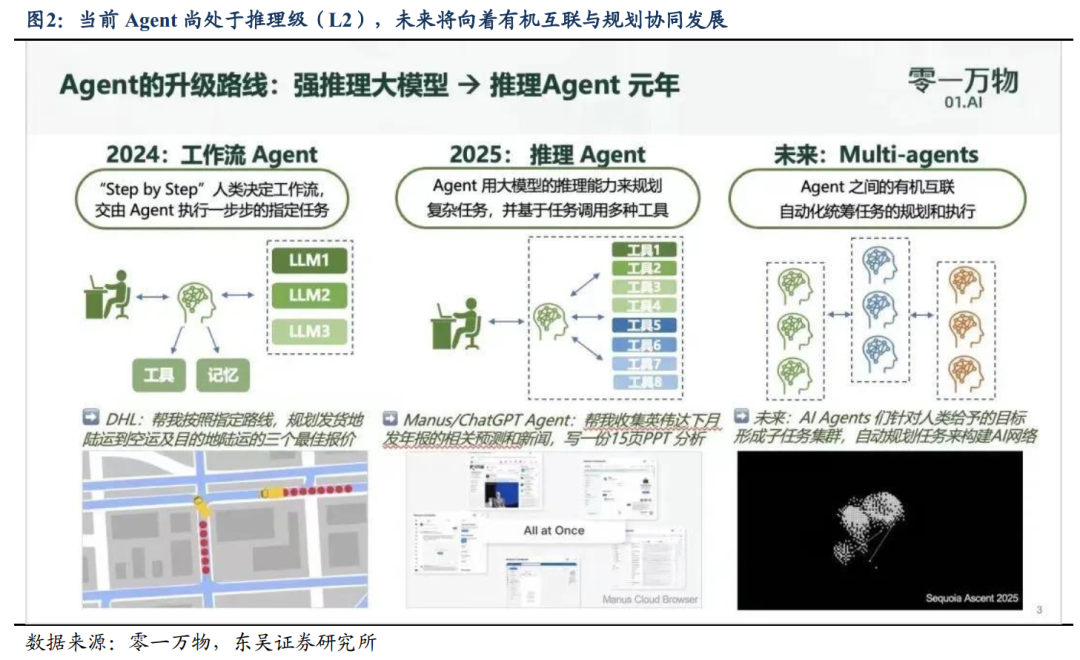
Why Agents have become a necessity:
The core logic of Agent empowerment in production comes from a new productivity model of efficiency, cognitive breakthroughs, and human-machine collaboration. (1) The underlying drive of the efficiency revolution: stemming from the unstructured data processing, dynamic decision optimization, and cross-system collaboration barriers of Agents, enterprise-level Agents have quantifiable significant efficiency improvements; (2) Cognitive breakthroughs and complex task reserves: the core breakthrough of Agents lies in their task decomposition and planning capabilities, while traditional RPA 1.0 can only execute preset repetitive operations. Agents achieve a full-chain closed loop driven by large models, capable of handling complex business processes that include branching logic; (3) Human-machine collaboration and new productivity models: Agents are driving the evolution of enterprise organizational structures towards a symbiotic network of “human employees – digital employees.” In this collaborative model, human roles shift from executors to strategic supervisors: humans begin to learn how to issue precise instructions to Agents and focus on high-value relationship management and transaction structure design.
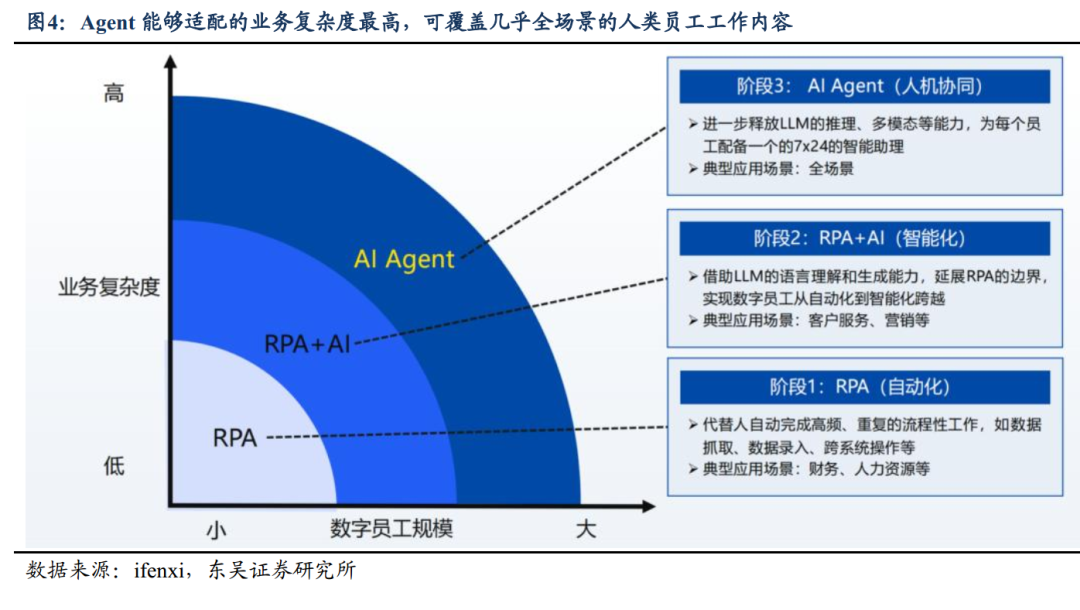
AI Agents will become an important lever for China’s intelligent economy, with necessary and feasible implementation.
1. Necessity: China has long faced efficiency bottlenecks, a labor-intensive service industry, and continuous pressure on labor costs; (1) Efficiency bottlenecks: China’s manufacturing industry has long faced pain points such as low manual operation efficiency and high isolation between systems. Agents can effectively enhance manual operation efficiency and utilize system data to break through the efficiency ceiling; (2) Labor-intensive reality: in fields like customer service and sales, repetitive tasks account for over 70%. Agents can significantly improve work efficiency, allowing human customer service to shift to high-value tasks; (3) Population structure and cost pressure: from 2020 to 2025, China’s manufacturing labor costs are expected to rise by an average of 8.2% annually, and Agents will effectively alleviate cost pressures.
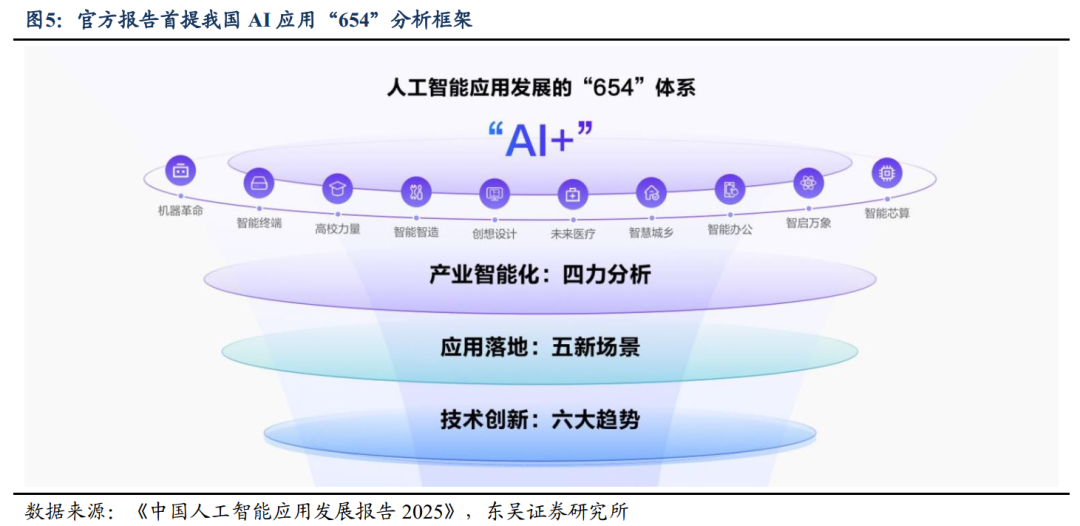
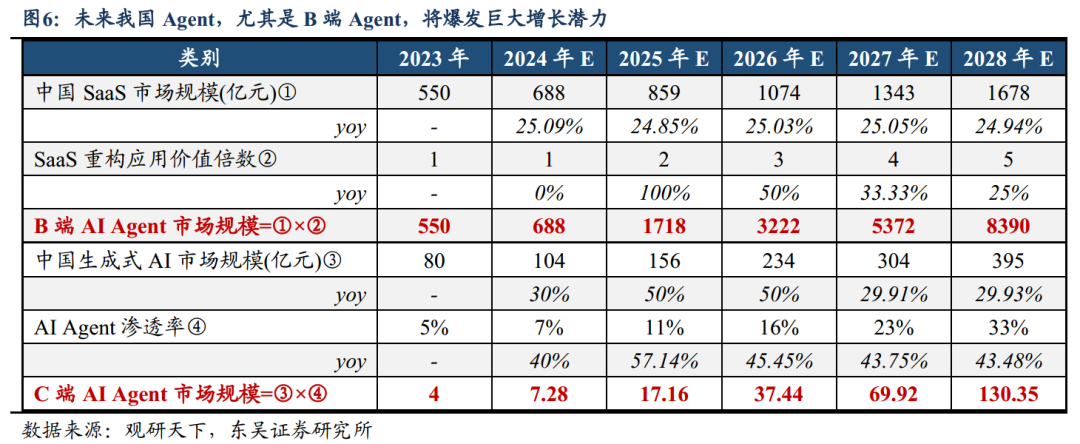
2. Feasibility: (1) Policies continue to promote AI applications and the development of AI Agents. In 2024, “Artificial Intelligence +” was first included in the “Government Work Report,” and in 2025, the “China Artificial Intelligence Application Development Report” released by the Central Broadcasting Station and Alibaba Cloud further clarifies support for large model industry applications, listing AI Agents as one of the six major technological trends; (2) Chinese teams are based on real application scenarios, with a practical application-oriented agent training framework: physical Agents complete cross-system operations, anomaly handling, data extraction, etc., using OCR (Optical Character Recognition), NLP (Natural Language Processing), and ISSUT intelligent screen semantic understanding technology, just like humans. They can also operate outdated systems without open APIs, and the training of Agents in real scenarios will seize the first-mover advantage in Agent implementation. The Agent market has great potential, and we believe that the future Chinese Agent market will experience strong growth momentum, especially in the B-end market, which will explode with huge potential.
Investment recommendations: As a form of AI application, Agents will ultimately return to the attributes of production tools, empowering various industries. Therefore, it is recommended to pay attention to leading companies in various industries.
AI + Data: Haitai Ruisheng, Shen Sanda A;
AI + Agriculture: Top Cloud Agriculture;
AI + Healthcare: Jiahe Meikang, Weining Health, Kaile Co., Ltd., Rundar Medical, Guoxin Health, Jiuyuan Yinhai, Saili Medical, Chuangye Huikang, Sichuang Medical, Donghua Software, Yimai Tong;
AI + Education: Keda Xunfei, Doushen Education, Jiafa Education, Jingye Da, Tuo Wei Information;
AI + Energy: Guoneng Rixin, State Grid Xintong, Langxin Group, Nanwang Technology;
AI + Transportation: Qianfang Technology, Yihualu, Wanjitech, Jinyi Technology, Information Development;
AI + Asset Management: Hengsheng Electronics, Dingdian Software;
AI + Banking: Yuxin Technology, Tianyang Technology, Boyan Technology, Jingbeifang, Changliang Technology;
AI + Insurance: Zhongke Soft, Xinzhizhi Software;
AI + Government Affairs: Taiji Co., Ltd., Nanwei Software, Xindian Software, Digital Government, Tuoershi;
AI + Justice: Jinqiao Information, Huayu Software, Tongda Hai;
AI + Finance and Tax: Shuiyou Co., Ltd., Zhongke Jiangnan, Boshi Software;
AI + Tobacco: Zhongke Information;
AI + Ports: Shengshi Technology;
AI + Enterprise Services: Kingsoft Office, Yonyou Network, Kingdee International, Inspur Digital Enterprise, Guangyun Technology, Zhiyuan Interconnection, Fanwei Network;
AI + Construction: Guanglian Da, Pinming Technology;
AI + Retail: Shiji Information, Jiaodian Technology;
AI + Embodiment: Dongtu Technology, Nengke Technology;
AI + Industrial Software: Zhongwang Software, Huada Jiutian, Zhongkong Technology, Suochen Technology, Baoxin Software.
This is an excerpt from the report; the original report:
“Information Technology – In-depth Report on the Computer Industry: AI Agent: The Productivity Uncompressor in the Era of Intelligent Economy – Dongwu Securities [Wang Zijing] – 20250728 [14 pages]“
Please click the “Read Original” button below to jump to the [Value Directory] computer site for download and reading.