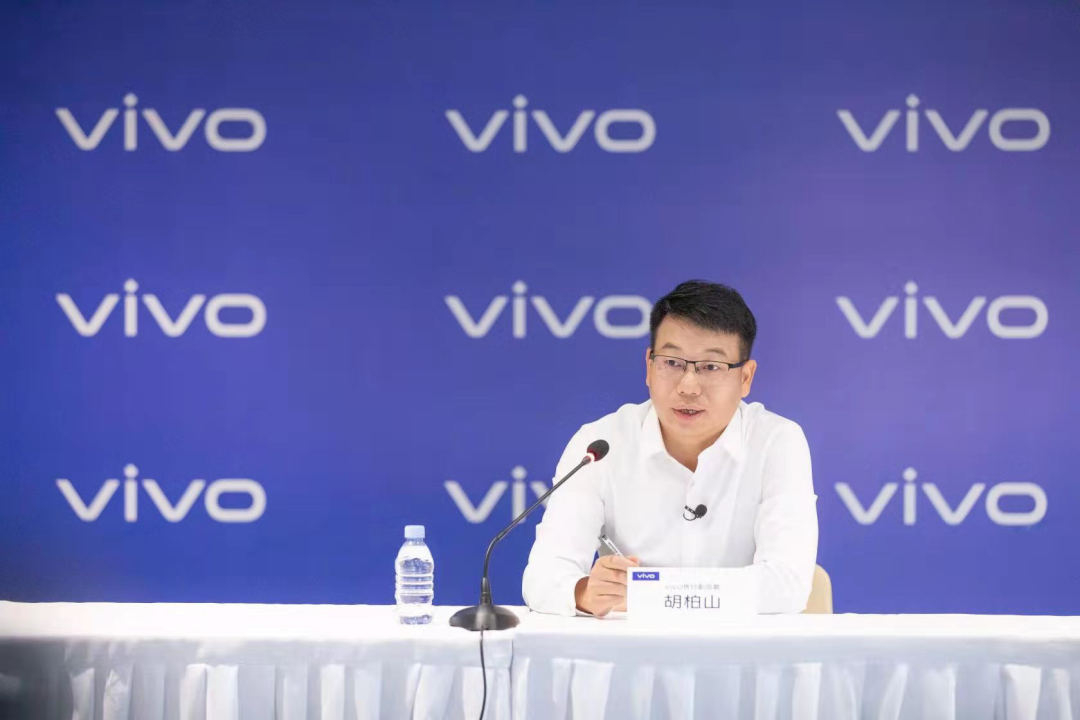
In the future, vivo’s chip layout will mainly focus on four long-term tracks: design, imaging, system, and performance.
After parking the car, Hu Baishan checked the time: 9:32. The drive from Dongguan along the Jiangyan Expressway to the interview venue in Shenzhen Baoan was smooth, arriving 28 minutes earlier than scheduled.
As the Executive Vice President and Chief Operating Officer of vivo, Hu Baishan’s last media interview was at the end of September 2019, focusing on the preliminary research of chips. Nearly two years later, the interview theme is still about chips and innovation strategy, but this time, vivo’s first self-developed chip is about to be launched.
Recently, the news of vivo’s first self-developed chip has sparked heated discussions in the industry. This was the first question thrown at Hu Baishan after he sat down. He straightforwardly stated that vivo is indeed developing self-researched chips, with the first result being a professional imaging chip named “V1,” which will debut with the X70 series on September 9.
In the current industry context of widespread “chip shortages,” addressing issues related to self-developed chips, chip supply chains, and production capacity has become one of the important tasks for industry manufacturers.
Why did vivo start with imaging chips for its self-developed chips? After nearly two years, Hu Baishan returned to the media to discuss the self-developed chip, unveiling the veil of vivo’s continuous innovation.

Smartphone Achievements Drive Chip Development
On August 26, Strategy Analytics’ latest research report showed that in the second quarter of 2021, vivo became the largest 5G smartphone supplier in the Asia-Pacific region for the first time, with a market share of 20%.
Among the top five 5G smartphone suppliers in the Asia-Pacific region, three are Chinese brands: vivo (20%), Xiaomi (19.3%), and OPPO (18.7%), while the other two are Apple (18.5%) and Samsung (6.6%).
vivo’s 5G smartphone shipments ranked first in the Asia-Pacific region, capturing a 20% market share. Strategy Analytics senior analyst Wu Yiwen stated that leading technology and affordable prices have made vivo’s smartphones, such as the iQOOO U3 5G and iQOOO 7 5G, the most popular 5G devices in the region.
Strategy Analytics director Ken Hyers noted, “OPPO is expected to have an exciting quarter in Q3 2021 as it launches three new 5G models in its Reno 6 series. vivo may have peaked in China in Q2 2021 and needs to look towards other 5G markets in the region, such as South Korea and Japan, to drive future growth.”
vivo brand general manager Jia Jingdong believes that consumer upgrades do not mean users spend more money on more expensive products, but rather how users’ actual needs can be better met. This is a process from product consumption to brand consumption. “From our company’s perspective, when making products, we first think about how to better meet users’ emotional and spiritual needs, rather than understanding users’ material needs as in the past. This is a significant shift in thinking,” said Jia Jingdong.
Products are the carriers of technology serving users, and the brand proposition more strongly drives what kind of technology vivo chooses to serve users. To this end, vivo connects technological innovation and consumers’ fundamental needs through design-driven and user-oriented approaches, clearly defining four long-term tracks in innovation: design, imaging, system, and performance, while recruiting advanced talents globally for long-term, sustained investment.
Among these, vivo’s layout in the chip field is particularly prominent. vivo has become a stable player in the Chinese smartphone market, with its low-key hard power based on the confidence and strength of its self-developed chips. It is understood that vivo’s chip layout mainly revolves around core tracks, with a strong demand for customized chips based on long-term track layouts. When the chips available in the market cannot meet product planning and technical planning, only then will they consider solidifying IP with partners.

vivo’s Long-Term Track Layout and Self-Developed Chip Journey
In fact, as early as two years ago, news about vivo’s “chip manufacturing” began to emerge. The latest official information shows that vivo’s first self-developed mobile chip is named “V1,” which will be launched with the X70 series in September.
During the interview, Hu Baishan reflected on vivo’s journey in self-developed chips, stating that vivo previously established a “Central Research Institute” internally, mainly to unify planning for technologies in the mobile phone industry over 36 months, serving as a “technology lighthouse” covering new product form tracking research, scanning of cutting-edge technologies in domestic and international industries, and technology layout in fields such as chips. In terms of short-term technology research and development, vivo mainly conducts product planning and realization over 12 to 36 months, a process internally referred to as the “product iron triangle.”
vivo’s self-developed “V1” is a special specification integrated circuit chip that can simultaneously serve users’ needs in photography and video applications within the overall imaging system design. Hu Baishan believes that future competition in the mobile phone industry will test manufacturers’ full-link technical capabilities, requiring not only parity with others but also consideration of unique aspects, transforming market demand into IP, with hardware serving as a carrier.
Strategically, vivo will focus resources on transforming consumer cognitive needs and core algorithm IP, rather than engaging in tape-out. Hu Baishan stated that the company will collaborate with partners to convert IP algorithms that serve consumer needs into hardware-embedded technologies, integrating demand, product planning, and third-party technologies. vivo will mainly focus on the stages of algorithm to IP transformation and design, leaving tape-out to partners, with funding not involving manufacturing or packaging stages.
“In the future, vivo does not rule out laying out chips in other long-term tracks, with the core logic still closely related to consumer insights and algorithm transformations, as well as types that industry partners currently lack resources to pursue,” Hu Baishan stated.
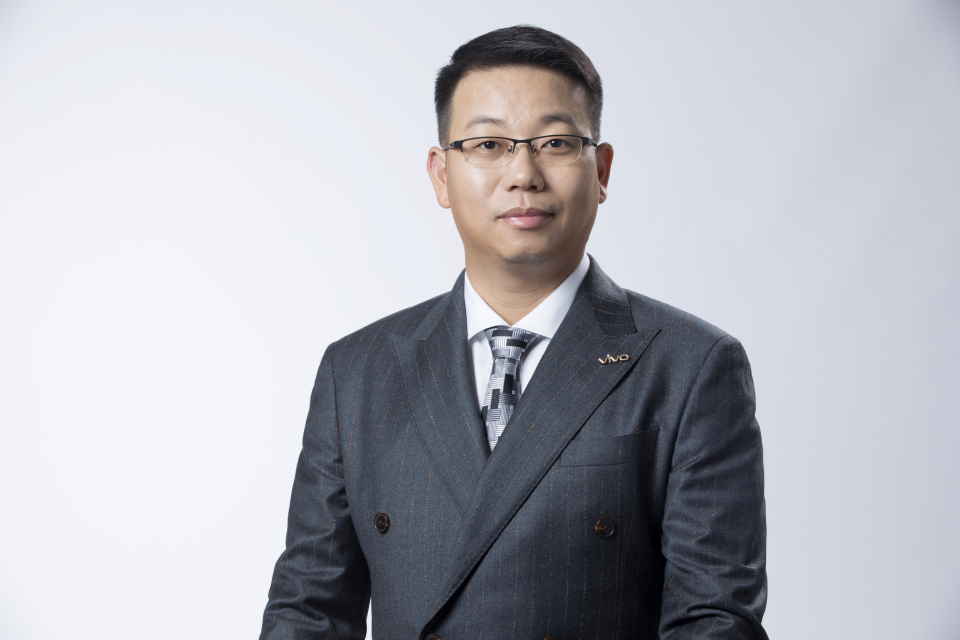
According to him, the V1 chip is a professional imaging chip developed over approximately 24 months by a team of 300 people. One of the characteristics of the V1 chip is that the imaging algorithm work is independently completed by the ISP. With the V1 independent imaging chip, vivo smartphones can process complex imaging data in real-time with low power consumption. For example, in night scene video shooting, traditional methods either forcibly increase the light intake, leading to more noise in the video, or extend the exposure time, which reduces the frame rate.
To address these issues, vivo internally discussed the possibility of embedding imaging algorithms into smartphones, allowing “multiple computational imaging algorithms” to be processed concurrently in real-time with low power consumption. After 24 months of “hard work,” the chip design has finally come to fruition.
Hu Baishan publicly disclosed vivo’s chip strategy for the first time—future chip layouts will mainly focus on four long-term tracks: design, imaging, system, and performance. Hu Baishan stated that only when there is a strong demand for customized chips in core tracks, and the chips available in the market cannot meet vivo’s product planning and technical planning, will they consider solidifying IP with partners.
In fact, several years ago, vivo collaborated with Samsung to jointly develop Exynos chips. With long-accumulated user insights and deep technical foundations, vivo has built strong capabilities in software and hardware R&D innovation. Whether collaborating with Zeiss to develop the Zeiss mobile imaging system or independently developing imaging chips, it is evident that vivo is accelerating its development in chips and imaging.

Detailed Explanation of vivo’s Innovation Methodology
The development of 5G technology has driven smartphone manufacturers to innovate and iterate at every level, and vivo, adhering to its innovation methodology, has taken the lead in various aspects, as mentioned earlier, the “product iron triangle.”
Specifically, the “product iron triangle” emphasizes the handshake between brand strategy and product strategy, as well as the handshake between product planning and technical planning. The “iron triangle” includes product planning, technical planning, and technology pre-research; while the “technology lighthouse” is established by vivo’s Central Research Institute to guide product planning and technical planning, focusing on domestic and international technology evolution, future technology scenario product research and incubation, and platform-level capability building and engineering research, including chips.
In terms of long-term planning for imaging, vivo’s Central Research Institute will implement a “ten-year imaging plan” strategy, based on consumer needs, industry technology trends, and scenario definitions, to lay out related areas such as perceptual interaction and human-computer interaction, allowing vivo to better occupy advantages in future development.
As early as 2016, vivo recognized that the era of full-screen was approaching. To innovate, vivo chose to take risks with orders to Huida and jointly developed new screen fingerprint technology. The screen fingerprint technology developed by vivo and Huida has met user needs in terms of recognition rate and unlocking time in scenarios such as wet hands, low-temperature dry fingers, and strong light exposure, making it one of vivo’s successful R&D cases.
vivo Senior Vice President Ni Xudong stated, “vivo’s innovation methodology seeks technological breakthroughs from consumers’ actual usage needs. What functions to develop and how to achieve these functions to the extreme is what vivo focuses on. Consumers do not need a large battery; they need long usage time. Consumers do not need high pixels; they need beautiful photos. Simply pursuing high parameters does not necessarily result in good products.”
Continuous investment in technology R&D is the core for every smartphone company to establish a foothold. Although vivo never actively promotes or responds to sales issues, under the guidance of its long-standing innovation methodology, the company is continuously innovating and upgrading in products, technology, and channels.
vivo fully absorbs and develops local talent resources, establishing a global R&D network covering ten cities, including Shenzhen, Dongguan, Nanjing, Beijing, Hangzhou, Shanghai, Xi’an, Taipei, Tokyo, and San Diego in the United States, encompassing cutting-edge fields such as 5G communication, artificial intelligence, industrial design, and imaging technology for various consumer electronics products and services. Additionally, there are seven global smart manufacturing centers located in China, India, Indonesia, Bangladesh, Pakistan, and Turkey.
Since 2017, vivo has established seven imaging R&D centers in various countries and regions, including Shenzhen, Taipei, Tokyo, and San Diego, with a team size exceeding 1,000 in imaging and related fields. This team undertakes technology R&D work in various directions, including optics, algorithms, hardware, and cognition, continuously enhancing vivo smartphones’ performance in imaging by leveraging local human resources, technology, and supply chain resources.
In summary, amid the wave of 5G, vivo is continuously leveraging its innovative methodology to reverse the market downturn, focusing on consumer pain points, refining products, and innovating technologies, thus welcoming broader development space on the world stage.