Abstract:
Based on the survey of the 2023 International Audio and Video Smart Integration Exhibition (Shenzhen), this report studies new products, technologies, and related trends in the professional audio field from three aspects: speakers and power amplifiers, main control mixing consoles, microphones, and peripheral equipment. It concludes that the research and production of professional audio products are increasingly integrated with actual application scenarios and system integration needs.
The 2023 International Audio and Video Smart Integration Exhibition (Shenzhen), hosted by the China Performance Equipment Technology Association (hereinafter referred to as the Association), was held from July 17 to 19, 2023, at the Shenzhen Convention and Exhibition Center (Futian). Audiences and exhibitors from 84 countries and regions came together to create a high-standard, strong lineup, and high-traffic industry event. Through the “collaboration” of relevant technologies and products based on specific application scenarios, the exhibition effectively bridged the relationship between market consumption needs and professional manufacturers and engineering companies through a “smart integration” approach.
In the professional audio field, the main companies (brands) participating in this exhibition include (in no particular order): Shanghai Guangyuan Electronic Technology Co., Ltd. (Meyer Sound), Shengyun Audio Technology Engineering Co., Ltd. (d&b), Guangzhou Huahui Audio Consulting Co., Ltd. (L-Acoustics, DiGiCo), BOSE PROFESSIONAL, Yinwang Electroacoustic Co., Ltd., Xiange International Audio-Visual Co., Ltd., Shenzhen Dis Acoustic Co., Ltd., Dongguan Sanji Audio Technology Co., Ltd. (β3), Guangzhou Ruifeng Audio Technology Co., Ltd., Shenzhen Yinen Sound Engineering Co., Ltd. (Real Sound), Shenzhen Baoye Heng Industrial Co., Ltd., Shenzhen IBO Audio-Visual Technology Co., Ltd. (IBO), Enping Haitian Electronic Technology Co., Ltd., Guangzhou Zhongguangdian Electronic Technology Co., Ltd. (EV, Yamaha), Zhejiang Tongbo Video Technology Co., Ltd., Guangzhou Yunqiang Electronics Co., Ltd., Jiusheng (Tangshan) Technology Co., Ltd., Jazz Dragon Professional Audio (China) Co., Ltd. (JSL), Shenzhen Taidian Industrial Co., Ltd. (TAIDEN), etc. Most of these leading companies have obtained the Association’s “Comprehensive Capability Level Assessment Professional Audio Qualification Certificate” early on and have invested resources in standardized technology development and related technical standards in recent years, continuously deepening their technical reserves and leading industry development. According to the Association’s unified arrangement, a professional audio research expert group was organized by the Association’s Audio Professional Committee, consisting of experts such as Wei Zenglai, Guo Yu, Liu Yibing, Gu Shiyi, Zhu Weizhong, Song Duoduo, Ren Xiaobing, Chen Jianhua, and Meng Zihou. This group conducted a special research on the current development of domestic professional audio technology based on the exhibitors and their products, and formed this research report, summarizing the current status and trends of audio products and technologies.
1 Speakers and Power Amplifier Equipment
For speaker and power amplifier systems, line array speakers remain the mainstream products among various manufacturers. International brands continue to show strong momentum, while domestic brands are striving to catch up, with both complementing each other. Their technological research and product development mainly revolve around two core goals: one is sound quality, focusing on improving fidelity and reducing distortion to achieve “good sound”; the other is application functionality, aiming to increase sound pressure output, reduce size and weight, control sound radiation direction physically or electronically, improve efficiency and convenience, and enhance energy conservation and environmental protection to achieve “good usability”.
The latest products from France’s L-Acoustics, the L2 and L2D (Figure 1), are full-range line source speakers designed for medium to large mobile and fixed installation applications. Their development concept can be simply understood as concentrating multiple traditional line array speakers in a specific vertical physical posture within one cabinet, with the core goal of improving efficiency, reducing weight, and shrinking size to meet the increasing demand for immersive sound reinforcement, as immersive scenarios typically require a large number of speakers but are limited by hanging conditions and installation time, while also considering the impact on the audience’s line of sight. The aforementioned L series speaker systems are based on patented Progressive Ultra High-Density Line Source Technology (PULS), providing a good solution for such comprehensive application needs. Both L2 and L2D speakers consist of 8 3-inch high-frequency drivers loaded with DOSC waveguides, 8 10-inch low-frequency drivers, and 4 12-inch drivers mounted on the sides. This ultra-high-density unit configuration allows L2 and L2D to produce maximum sound pressure levels of up to 155 dB and 151 dB, respectively, while effectively reducing chaotic radiation in the low-frequency range, forming a cardioid pattern. Although the L series speaker systems perform excellently, the dimensions of a single L2 are only 1197 mm × 850 mm × 559 mm (H × W × D), with a weight of 158 kg; the L2D measures 1252 mm × 850 mm × 559 mm (H × W × D) and weighs 149 kg. Despite the lightweight and compact size of L2 and L2D, their bandwidth ranges from 45 Hz to 20 kHz, exhibiting frequency response characteristics typical of large-sized systems. In terms of directivity, L2 achieves a fixed progressive vertical coverage of 10° through four horizontal modules, all of which apply PanflexTM technology, offering four horizontal directivity patterns: symmetrical 70° or 110° and asymmetrical 90° (left or right side); L2D achieves a fixed progressive vertical coverage of 60°, also including four modules, with the top two modules applying PanflexTM technology, while the bottom two modules have fixed progressive coverage, with the horizontal directivity starting from 110° and gradually expanding to 140°.

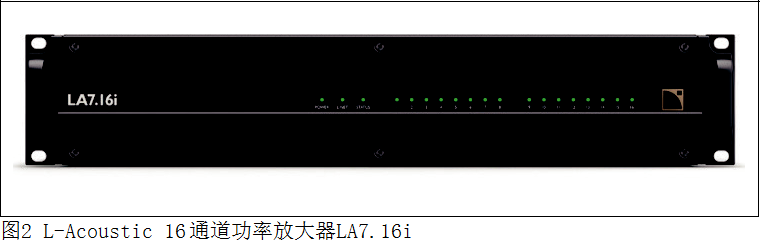
The matching power amplifier from the same brand for the L series speakers is the D-class 16-channel LA7.16i (Figure 2), which also adheres to the design goals of improving efficiency, reducing weight, and shrinking size. With a 2U chassis, it provides 16 independent DSP channels and 1300 W (8 Ω) power output each, and integrates L-SMART power management technology, which can dynamically match the real-time needs of the driven speaker system, featuring speaker management, system protection, and monitoring functions. It also provides a comprehensive set of system adjustment and calibration tools, making it highly suitable for multi-channel applications, distributed systems, or line array speaker systems. The LA7.16i power amplifier supports AVB input compliant with the Milan standard, and also includes AES/EBU and analog interfaces, allowing seamless redundant configurations as needed.
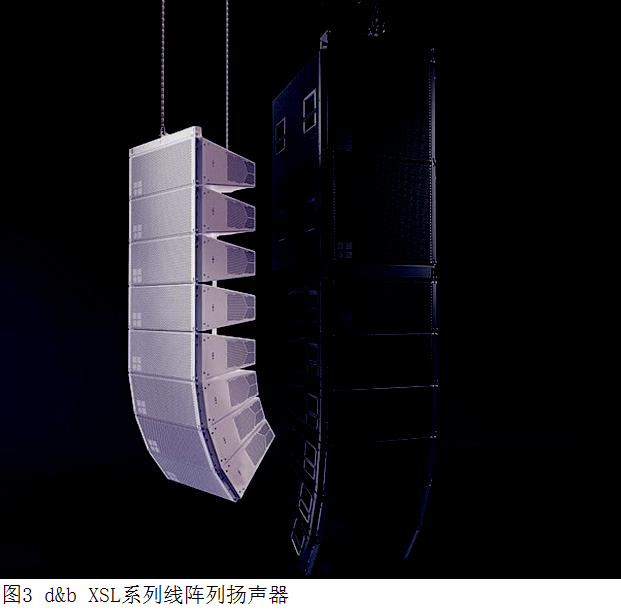
Germany’s d&b audiotechnik has launched the dual 8-inch three-way XSL series speakers (Figure 3) to further complement its SL line array speaker family. This speaker also focuses on reducing weight and increasing efficiency, with dimensions of 283 mm × 700 mm × 507 mm (H × W × D) and a weight of only 39 kg, yet achieving a high sound pressure output of 141 dB per unit. The single XSL full-range speaker adopts a three-way design, featuring 2 2-inch high-frequency compression drivers, 1 6.5-inch mid-frequency driver, and 2 8-inch low-frequency drivers mounted on the front. Additionally, by configuring 2 6.5-inch low-frequency drivers on the side of the cabinet and employing a unique cabinet acoustic design, the low-frequency sound energy can create phase cancellation behind the speaker while achieving constructive interference at the front, resulting in good directivity control across the entire frequency range, with the lowest controlled frequency down to 60 Hz. Meanwhile, the side low-frequency drivers effectively increase the sound radiation area of the front low-frequency drivers, providing greater energy output in the low-frequency range than the actual size of the drivers. This application advantage of full-range directivity control ensures more precise sound coverage, avoiding low-frequency diffusion that leads to muddled sound, thus providing clearer sound in the audience area while keeping the stage quiet and minimizing the impact of sound reinforcement on stage microphones and monitoring.
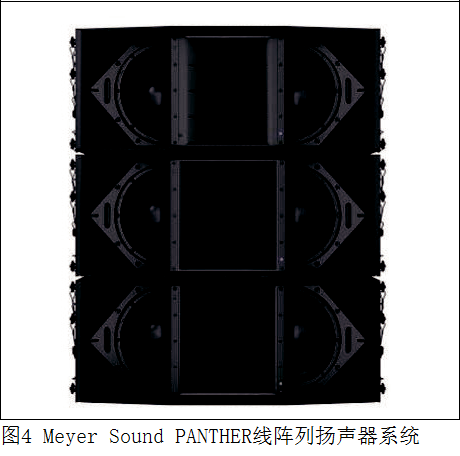
In line with the aforementioned trends of increasing efficiency and reducing weight, Meyer Sound has also made moves with its new flagship product, PANTHER (Figure 4). Through a two-way design, it effectively reduces the number of drivers within the cabinet and, using D-class amplification technology, keeps the weight of the active speaker at 68 kg, with dimensions of only 969 mm × 377 mm × 565 mm (L × H × D), yet achieving a maximum sound pressure output of 150.5 dB. The two-way design of PANTHER places higher demands on driver performance, thus it is equipped with 2 newly developed 12-inch long-stroke low-frequency cone drivers and 2 new 3-inch compression high-frequency drivers from Meyer Sound, achieving a frequency response range of 55 Hz to 16 kHz. Additionally, the two-way design minimizes phase inversion issues caused by the crossover, maintaining a good flat phase response at 68 Hz. The cabinet of PANTHER is constructed to IP55 protection standards, featuring analog audio input and MilanTM AVB network audio input, and includes a built-in network monitoring module, allowing telemetry data and RMS data of the entire system to be displayed simultaneously on a single screen via the monitoring software Nebra, greatly enhancing monitoring convenience. Furthermore, PANTHER can also be integrated with Meyer Sound’s existing system design, debugging, and management tools, such as MAPP 3D, GALAXY, Compass, and Spacemap Go.
In response to industry development and progress, domestic brand enterprises are also not falling behind or becoming complacent. Many domestic manufacturers, represented by Shenzhen IBO Audio-Visual Technology Co., Ltd., have launched numerous new products at this exhibition, with their core R&D logic also adhering to the overall principles of “good sound” and “good usability” through continuous innovation in structure, materials, and other aspects to enhance speaker performance, listening experience, and usability.
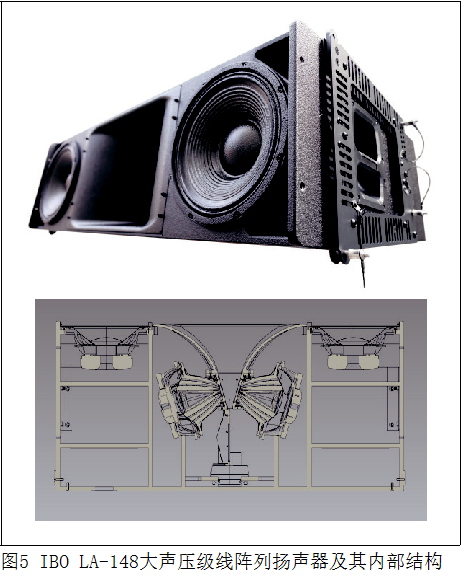
The domestically produced IBO LA-148 (Figure 5) is a particularly eye-catching product at this exhibition. This speaker features a three-way structure, utilizing 2 12-inch low-frequency drivers, 2 10-inch composite Kevlar mid-frequency drivers, and 2 3-inch blue titanium high-frequency drivers. Through IBO’s unique Linear Phase Technology (LPT), embedded phase plug technology (PWH), mid-frequency phase plug technology (MLP), and Symmetrical Cylindrical Wave Folding Horn Structure (SCFH), it effectively eliminates interference through phase plug path compensation, achieving acoustic coplanarity and equal phase coupling across high, mid, and low frequencies, and completing the dual cylindrical wave conversion of high and mid frequencies, thus providing a peak sound pressure level of 148 dB for the system while significantly enhancing the vertical coupling effect between line array speakers. Meanwhile, the carefully designed cabinet layout and waveguide structure condense all units into a cabinet width of 1254 mm, effectively reducing the size of the horn and improving transmission efficiency, making it easier for storage, transportation, and installation. Based on the excellent quality of the LA-148 speaker, it has been applied in several major domestic projects and has won the Outstanding Contribution Award for the 70th Anniversary Celebration of the Founding of the People’s Republic of China.
Notably, at this exhibition, the company launched its self-branded electronically adjustable directional speaker CLA-638 (Figure 6). This speaker is a three-way linear sound column, composed of 8 6-inch low-frequency drivers, 8 4-inch mid-frequency drivers, and 24 0.75-inch high-frequency drivers. Each low-frequency driver, along with one mid-frequency driver and three high-frequency drivers in front, forms a sound module. Through driver selection and arrangement, coaxial coupling of high, mid, and low frequencies is achieved, effectively optimizing the phase issues of numerous sound units within the module. Additionally, the built-in multi-channel D-class digital amplifier with an integrated DSP engine can independently control and drive each array unit. Coupled with dedicated Chinese version control software, it allows for flexible adjustment of the vertical coverage angle of the sound column, including vertical beam width, tilt angle, and center point position, with the adjustable range for beam vertical width being 12° to 90° and tilt angle adjustable from ±45°. It also features a beam side lobe suppression switch. Furthermore, this speaker can be decomposed into two independently controlled beams in the vertical direction through the control software. To further ensure system operational safety, this speaker provides both AES/EBU digital and analog audio input interfaces, allowing for real-time hot backup. The maximum peak sound pressure level of IBO CLA-638 can reach 136 dB, with a frequency response of 63 Hz to 22 kHz. As a three-way, high sound pressure level electronically controllable directional wide-frequency sound column speaker, its launch fills a domestic gap and further narrows the gap between domestic brand speakers and similar products worldwide.
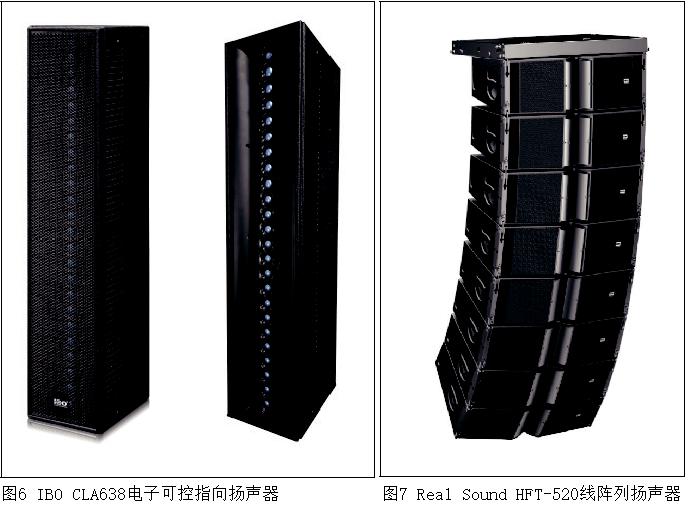
Shenzhen Yinen Sound Engineering Co., Ltd.’s Real Sound HFT-520 (Figure 7) is a three-way line array speaker that also follows the aforementioned design principles of increasing efficiency, reducing weight, and shrinking size. This speaker unit configuration includes 2×10-inch neodymium iron boron waterproof low-frequency drivers, 4×4-inch neodymium iron boron waterproof mid-frequency drivers, and 1×3-inch compression high-frequency driver, with cabinet dimensions of 271 mm × 738 mm × 484 mm (H × W × D) and a weight of 30 kg. Despite its compact size, it can provide a maximum sound pressure level of 142 dB and a smooth frequency response of 50 Hz to 20 kHz. Additionally, the HFT-520 features proprietary waveguide and horn designs, with adjustable horizontal directivity of 110°, 90°, and 70°, and can be selected asymmetrically based on actual applications. The core of its waveguide horn design is to ensure linear phase for high frequencies. The mid-low frequency structure design of HFT-520 also adheres to line array speaker design principles, with four high-power 4-inch mid-frequency drivers equipped with baffles to reduce the sound center distance of the four mid-frequency drivers, enhancing the upper frequency limit of mid frequencies without interference. The low-frequency section adopts a dual 10-inch reflex design, effectively extending the low-frequency limit, with customized Thiele-small parameters of the low-frequency drivers perfectly matching the cabinet and curved phase inversion tube, increasing the radiation impedance of the low frequencies.
2 Mixing Consoles and Main Control Equipment
For audio system main control equipment, the degree of involvement of modern information processing technology (IT technology) is increasing. The R&D and production goals are mainly focused on five dimensions: stronger processing capabilities, more application functions, easier operation, more segmented application scenarios, and higher cost-performance ratios.
Digital mixing consoles have evolved over nearly half a century and have now replaced analog mixing consoles as the industry mainstream. With the rapid development of information processing technology, the processing capabilities of mixing consoles are advancing daily, with current digital mixing console systems capable of handling over a hundred channels. Through the discrete layout structure of the console and interface chassis and network digital protocol transmission, a large mixing console system can even achieve transmission and processing of over a thousand channels on the same network. Furthermore, due to the enhanced processing capabilities of mixing consoles, the safety of their role as the core of system control processing has become increasingly important. Therefore, most mixing console manufacturers have developed corresponding redundant hot backup mechanisms to effectively ensure the safety of mixing console usage.
With technological advancements, the processing cores of digital mixing consoles have mostly upgraded from traditional DSP processing to FPGA (Field Programmable Gate Array) processing with more powerful computing capabilities. This has brought many functions that were previously difficult to achieve with analog mixing consoles, such as full-channel multi-node processing, built-in multiple reverb effects and other processors, while also improving sampling rates and sampling precision, further enhancing sound quality to be more “pleasant” and allowing sound engineers to mix more conveniently and quickly. Additionally, digital mixing consoles generally provide snapshot memory functions to store different states of parameters such as equalization, compression, effects, and channel levels under different scenarios, allowing for one-click switching of all processing parameters of the mixing console according to the performance process, especially suitable for multi-scenario applications (e.g., music festivals, musicals, operas, etc.), significantly reducing the workload of sound engineers and alleviating on-site pressure.
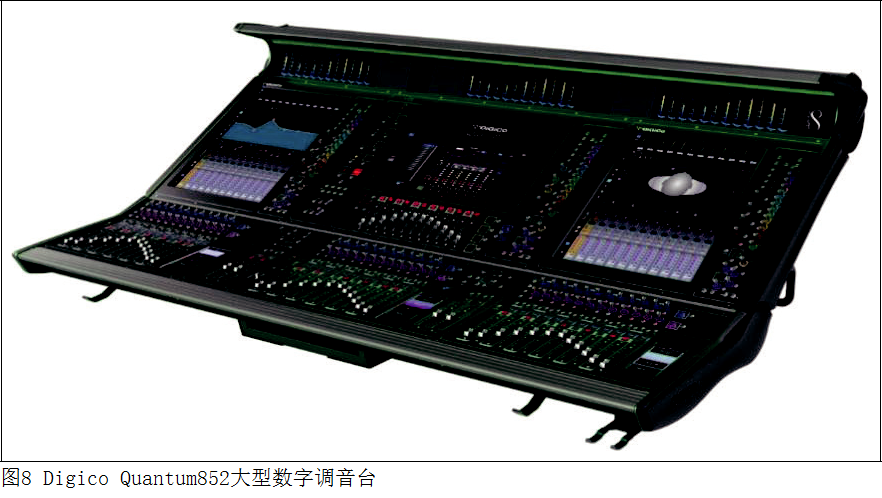
The latest DiGiCo Quantum852 mixing console (Figure 8) utilizes 5 large FPGA combinations, capable of processing a total of 384 channels. To further enhance operational convenience, this mixing console is equipped with 52 physical faders and 3 21.3-inch high-resolution LCD touch screens. This mixing console is very powerful, allowing users to choose from 34 different effects through the internal effects rack, while also adding up to 64 stereo effects, including 32-bit floating-point reverbs and up to 64 delays, harmonizers, and exciters. It also supports access to 48 groups of 32-band graphic equalizers, in addition to a Spice Rack that can handle up to 32 types of mono effects and 128 Mustard Processing channel processing strips that can be inserted at any time. The multi-node processing capability of this mixing console allows users to choose from processing before, equalization/dynamics before, equalization/dynamics during, before fader, or after fader for inserting the aforementioned processing functions and input positions, with a total of 384 node processors available, meeting almost all production scenario needs.
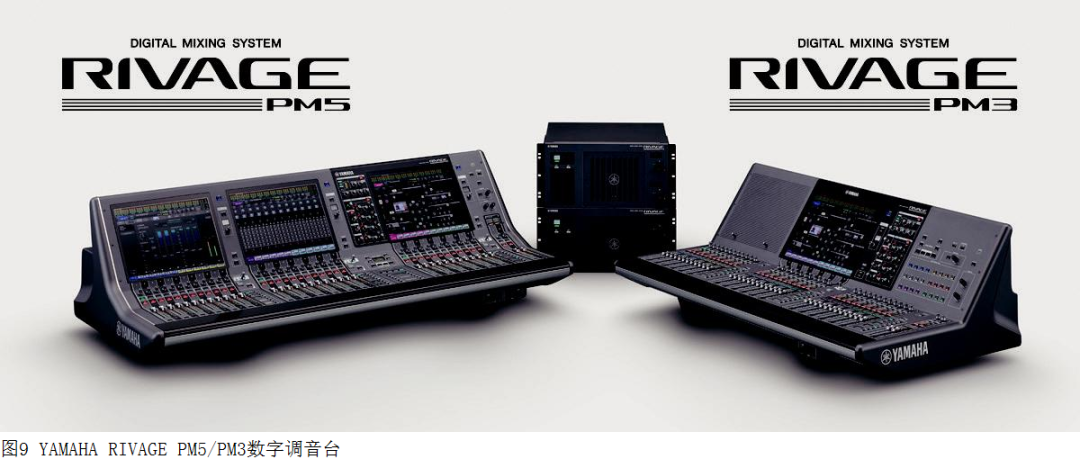
 Shanghai Guangyuan Electronic Technology Co., Ltd. showcased new products from the YAMAHA RIVAGE PM series mixing consoles, PM5 and PM3 (Figure 9). Compared to previous models in the same series, PM10, they further reduce size, weight, and cost to fill the market space below PM10. Although PM5 and PM3 are positioned in the mid-low-end market, their performance remains as excellent as their predecessor PM10. Both mixing consoles feature 38 physical faders and utilize Rupert Neve-designed microphone preamps, which have been recognized by many recording engineers for their natural compression and saturation. Additionally, the SILK processing feature in the microphone preamps offers two options: “RED” provides powerful support, while “BLUE” offers stable power. Furthermore, a continuously variable “TEXTURE” knob can adjust harmonic components for sound shaping, making it more compatible with the original sound source. The characteristics of the SILK processor also significantly impact the sound produced by channel EQ and reverb plugins. All PM series consoles are equipped with Dan Dugan automatic mixers, effectively enhancing the controllability of the mixing console. Sound quality processing has always been a strong point of YAMAHA digital mixing consoles, and the RIVAGE PM series offers users a variety of plugin options, including many classic models, such as Rupert Neve Designs’ Portico 5045, which is easy to operate and effectively suppresses background noise at the microphone input, enhancing the clarity of the music while significantly reducing the incidence of feedback.
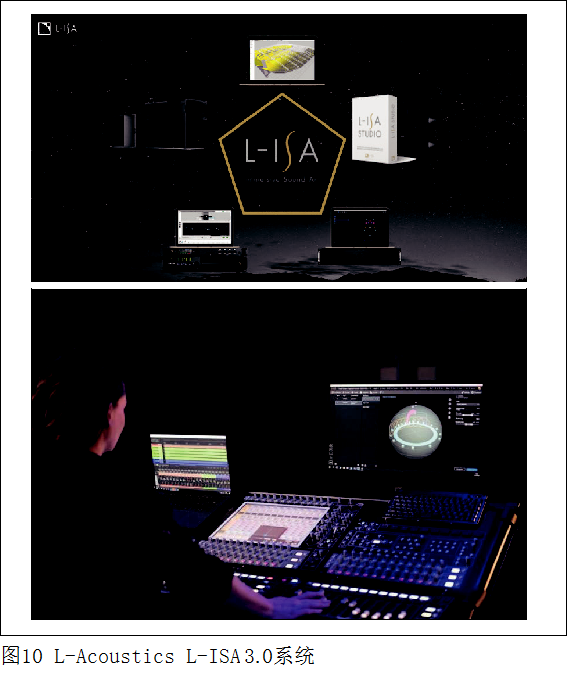
 In the ongoing optimization and reorganization of international brand mixing consoles, each with its own ingenuity, it is regrettable that domestic brands in the mixing console field still lack significant breakthroughs, especially in high-quality, high-application requirement mid to large-scale mixing consoles.In recent years, real-time immersive sound reinforcement technology has developed rapidly, and related application scenarios have become increasingly popular. Therefore, in addition to mixing consoles, real-time immersive sound processors, as the core control equipment for immersive sound reinforcement, have also entered a rapid development track. Unlike mixing consoles, in this field, in addition to internationally renowned brands continuously achieving results, domestic brands have also made their appearance at this exhibition.L-Acoustics’ L-ISA3.0 (Figure 10) is its latest immersive audio processing platform. To meet the needs of live performances, real-time dynamic processing has always been the core concept of L-ISA. The new FX engine allows for fully customizable control and behavior settings, which can be added to unlimited objects, enabling designers to create any type of reactive movement and trajectory to enhance creativity, thus providing more vitality to live mixing. Additionally, the new Stereo Mapper function in L-ISA3.0 can map existing stereo content to immersive speaker configurations without altering the artist’s original mix; another benefit of the Stereo Mapper is improved low-frequency coverage in the venue area. The completely updated snapshot engine in L-ISA3.0 further enhances snapshot accuracy and the range of content that can be stored in snapshots, allowing users to select any channel with processing, delay, reverb, and other processing parameters at any given time, providing stronger control and precision for spatial mixing in live production and studio applications. Furthermore, the newly launched Edit Mode feature visualizes the position of sound sources in each snapshot, making it easier for users to track the positions of objects in the soundscape over specific time periods. In addition, the new Preview Mode can be used both online and offline, allowing users to make immediate adjustments without interrupting or stopping operations. Moreover, L-Acoustics is further expanding the L-ISA ecosystem to allow for the installation of more third-party applications on the L-ISA control host to enhance integration with other systems, such as the ultra-low-latency network technology Mixhalo, enabling audiences to access multi-channel audio streams on their phones and headphones, including complete band mix content or solo mixes of guitar or drums, as well as the option to listen to the stereo mix provided by the L-ISA Processor.
 In response to the rapidly evolving immersive real-time sound reinforcement technology, domestic enterprises are also not falling behind and are catching up. Ningbo Yinwang Electroacoustic Co., Ltd.’s British brand CADAC has developed a set of immersive sound processing equipment with independent intellectual property rights after years of theoretical and technical research, using Ambisonics spherical harmonic function algorithm logic as the theoretical basis for spatial audio coding technology, employing HOA (Higher-Order Ambisonics) sound source point synthesis algorithm. This series of products, including CADAC MAP/IM/CP series immersive sound processors (Figure 11), fills a domestic gap to some extent. This series of products adheres to the ITU international telecommunications union immersive audio international standard technical system while being downward compatible with currently prevalent international standards such as 5.1, 7.1, and Atmos. It can flexibly process between 16 to 64 channels based on user scenario requirements and speaker layout conditions, with sound field restoration accuracy corresponding to HOA approximately at 3 to 7 orders.
3 Microphones and Peripheral Processing Equipment
This exhibition’s microphone exhibitors mainly focused on conference products, predominantly domestic brands. Overall, the conference microphones exhibited this year were relatively dull, traditional, and lacked highlights, but there were a few innovative and standout models, among which Shenzhen Taidian Industrial Co., Ltd. (TAIDEN) performed particularly well.
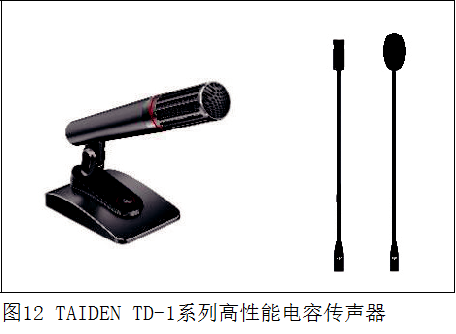
TAIDEN’s TD-1 series condenser microphones (Figure 12) are products specifically developed for high-quality conference scene pickup requirements, exhibiting outstanding performance. They feature a unique lightweight microphone design with a 22 mm large diaphragm, providing a wider frequency response range and smoother frequency characteristics, allowing the microphone to deliver clearer and brighter tones with higher sound reproduction fidelity and naturalness. The supercardioid polar pattern reduces the pickup of unwanted sounds from the sides or rear, fundamentally suppressing noise and improving pickup gain. It also includes a high-quality low-frequency circuit and features designs to prevent wind noise and vibrations. In terms of physical design, the microphone’s vertical tilt angle is freely adjustable, supporting different types of pickup heads to meet diverse application needs, and it includes 2 IO ports for integration with central control systems.
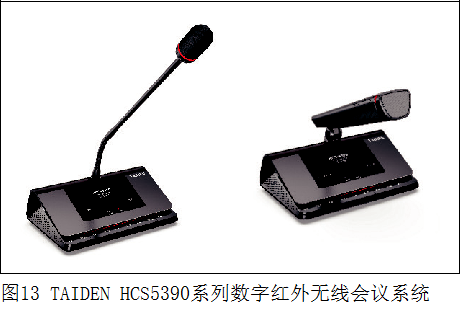
Additionally, TAIDEN’s latest digital infrared wireless conference system HCS5390 series (Figure 13) features a brand new minimalist design, combining aesthetics and practicality, with thoughtful design reflected in the arrangement of buttons and control panels, as well as the concealed voting button design. It offers comprehensive functions for discussion, voting, and 1+7 channel simultaneous interpretation, with broadcast-level sound quality, easy installation and use, and immunity to radio interference.
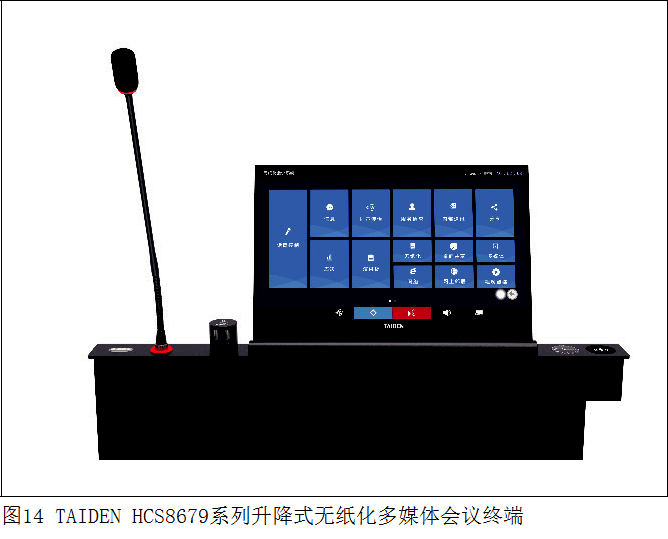
At this exhibition, TAIDEN also showcased the liftable paperless multimedia conference terminal HCS8679 series (Figure 14), which features a liftable structure design, equipped with a 15.6-inch 2560×1440 high-resolution touch screen, with an adjustable tilt angle between 0° and 35°. When raised, the screen automatically powers on, and when lowered, it powers off, conserving energy and being environmentally friendly. The microphone can also be independently adjusted for height to meet the personalized angle needs of participants. This is a paperless multimedia conference terminal that can achieve extremely simple storage, making the conference room cleaner and more aesthetically pleasing. Additionally, TAIDEN’s education system products were also highlights of this exhibition.
Enping Haitian Electronic Technology Co., Ltd. offers a variety of products, including digital and analog dual outputs, dual microphone parallel connections, etc. Enping Yisan Electronic Audio Equipment Co., Ltd. (Yisan E3) showcased a one-to-two or one-to-four wireless conference speaking system, with each microphone offering 60 frequency choices. Texas Yian Audio Electronics Co., Ltd. (Yian SEONJ) mainly exhibited wireless conference series products and is a long-established domestic manufacturer.
Due to the significant enhancement of processing capabilities in main control equipment, and considering that current power amplifiers also generally possess good signal processing capabilities, the survival space for peripheral processing equipment is becoming increasingly limited. This exhibition fully validated this point, with almost no manufacturers showcasing systematic peripheral processing equipment, only a few highly distinctive products making an appearance.
Dongguan Sanji Audio Technology Co., Ltd.’s TimeZero 2.2D sound field intelligent correction device is specifically designed for correcting the acoustic environment of sound system applications. It incorporates the Direc Live sound field correction algorithm, supporting 40-bit floating-point algorithms, and can effectively improve sound balance by intelligently analyzing and specifically correcting the room’s acoustic characteristics, reducing the impact of inherent adverse acoustic reflections (such as resonance) in the room, providing a more balanced and accurate sound performance.
4 Conclusion
From the overview of this exhibition, the following basic conclusions can be drawn.
1) The development of new products is primarily aimed at meeting the actual needs of specific application scenarios, with a greater focus on considerations at the system integration level, such as the miniaturization and lightweight of speakers; multi-node processing functions of mixing consoles and electronic control of vertical directionality of speakers, all aimed at better serving related application scenarios and facilitating system integration.
2) There have been no significant breakthroughs in professional audio technology and products; the introduction of new products mainly aims to improve product lines, enhance usability, and reduce costs.
3) The continuous penetration of digital technology and network technology in the professional audio field has further enhanced the signal exchange and processing capabilities of core products such as mixing consoles and power amplifiers, leading to the gradual disappearance of independent peripheral processing equipment, forming three main components of audio products: microphones, main control equipment, and playback equipment (including amplifiers).
4) Most mid to large digital mixing consoles have upgraded from traditional DSP processing to FPGA processing with more powerful computing capabilities, resulting in increasingly powerful processing capabilities and functions.
5) The powerful processing capabilities brought about by information processing technology have led to rapid development in immersive sound technology, with various real-time immersive sound processors accelerating updates and iterations, potentially providing new ideas for the creation of professional performance works or sound media installations.
6) Although domestic brands have made certain breakthroughs in electronically controllable vertical directionality, there remains a significant gap between them and international brands overall.
7) To further expand market space, domestic brands are increasingly focusing on product development and production centered around overall solutions to seek new profit growth points.
(Main authors: Wei Zenglai, Chen Jianhua)
— THE END —
Excerpted from “Performance Technology” 2023 Issue 3 2023 International Audio and Video Smart Integration Exhibition (Shenzhen) Professional Audio Research Expert Group“2023 International Audio and Video Smart Integration Exhibition (Shenzhen) Professional Audio Technology Development Research Report“.Reprint with attribution: Performance Technology Media. For more detailed content, please refer to “Performance Technology”.
(Except for original works, the articles, images, videos, and music used on this platform belong to the original rights holders and are used solely for industry learning and exchange, not for commercial purposes. The views in the text are independent opinions of the authors, and due to objective reasons, there may be improper use, such as failure to contact the original authors in a timely manner for some articles or parts of articles, or errors in author names and original sources. This is not a malicious infringement of the relevant rights and interests of the original rights holders, and we kindly ask the relevant rights holders for understanding and to contact us for prompt handling, jointly maintaining a good online creative environment.)
Related Reading

Subscribe to “Performance Technology” Magazine