Mastering Strings and Encoding in Python

Previously, we learned about Python data types and variables, and we also mentioned strings. Next, let’s explore more knowledge about strings and encoding. Strings Strings are a commonly used data type in Python, and they can be created using single or double quotes. To create a string, simply assign a value to a variable. For … Read more

Should You Learn Python 2 or Python 3?

Should You Learn Python 2 or Python 3?

Image source: from Instagram Before the advent of Python 3, Python was, in my eyes, a solid and reliable language, with a rich history, simple syntax, powerful features, and a wealth of libraries that left programmers from other languages in awe, exclaiming: “Life is short, I must use Python…” This situation persisted until the emergence … Read more

Encoding Issues Encountered When Printing Chinese Characters in Python

Encoding Issues Encountered When Printing Chinese Characters in Python

Beginners often encounter various encoding issues when printing Chinese characters. Here is a summary to help address these problems in the future.1. Issues with running the code import xlrd x1 = xlrd.open_workbook("E:\测试\内部开关整理.xlsx") print x1.sheet_names() The code above is simple, but it does not respond when clicked to run.Solution: Add the following line to the code: … Read more

Displaying Unicode Text Using Arduino

Displaying Unicode Text Using Arduino

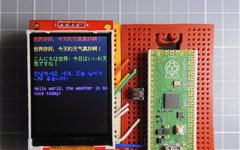
【Click the above「Blue Text」 to follow DF Maker Community and become a tech aesthetician together】 This week’s project is about how to use Arduino to display Unicode text.(Video demonstration at the end) Development Board Any Arduino development board that supports Arduino_GFX. Reference: https://github.com/moononournation/Arduino_GFX Step 1: Unicode and UTF-8 Unicode defines over 144k characters, covering 159 … Read more

Treating Bugs as Features? Linus Torvalds is Speechless…

Treating Bugs as Features? Linus Torvalds is Speechless...

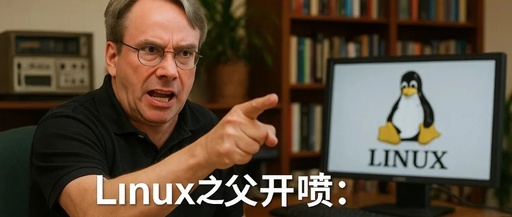
The Linux Kernel Mailing List (LKML) has erupted again. This time, it’s over an old issue that has existed for more than twenty years: Should file systems be case-sensitive? Linus Torvalds directly referred to it as a “huge mistake,” causing the technical discussion to explode. The issue originated from a patch for the Bcachefs file … Read more

Linus Torvalds Criticizes Case-Insensitive File Systems: A Major Mistake

Linus Torvalds Criticizes Case-Insensitive File Systems: A Major Mistake

Compiled by | Zheng LiyuanProduced by | CSDN (ID: CSDNnews) In the open-source community, Linus Torvalds’ outbursts often trigger a wave of “mini-earthquakes”. Recently, the father of Linux has once again fired back — this time targeting a long-standing issue in file system development: case insensitivity (i.e., not distinguishing between uppercase and lowercase characters). He … Read more

Evaluation of Domestic Development Board: Qinheng CH32V103 Reading Memory Card Font Display

Evaluation of Domestic Development Board: Qinheng CH32V103 Reading Memory Card Font Display

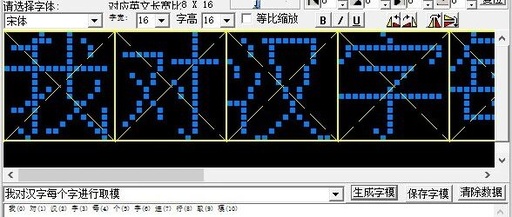
Thanks again to Qinheng for sending this CH32V103 development board, which integrates a simulation downloader, USB to serial converter, and is compatible with Arduino interfaces, making it very convenient to use.The FAT file system has evolved over the years (FAT, FAT12, FAT16, FAT32, exFAT) and is now widely used in small capacity storage media such … Read more

C++ Guide: Understanding the wstring Family Member – Wide Character String Type

C++ Guide: Understanding the wstring Family Member - Wide Character String Type

C++ Guide:<span>wstring</span> – Wide Character String Type 1. What is <span>wstring</span>? <span>std::wstring</span> is a wide character (wchar_t) string type provided by the C++ standard library. Unlike <span>std::string</span>, <span>std::wstring</span> is used to store Unicode characters, making it suitable for applications that require multilingual support, such as Chinese, Japanese, Korean, and other non-ASCII languages. 2. Underlying Data … Read more