The Clever Use of if and switch Statements in C Language

The Clever Use of if and switch Statements in C Language

The Clever Use of if and switch Statements in C Language In C language, selection structures are important tools for controlling the flow of program execution. They allow the program to execute different blocks of code based on different conditions. This article will detail two commonly used selection structures: <span>if</span> statement and <span>switch</span> statement, and … Read more

Solving Problems for Classmates | Issue 62: C++ Programming Part 3: Selection and Loop Statements

Solving Problems for Classmates | Issue 62: C++ Programming Part 3: Selection and Loop Statements

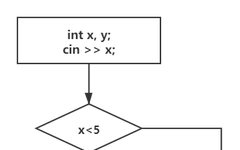
Introduction This article mainly introduces the basic usage and some considerations of selection and loop statements in C++. if Series Statements if Statement The if statement is used to determine whether to execute a certain piece of code based on a condition. Its syntax format is if(<expression>){ <statement>}</statement></expression> Look at the following code int x, … Read more

Detailed Explanation of Switch Statement in C Language

Detailed Explanation of Switch Statement in C Language

The switch statement in C is an alternative to the if-else-if ladder, allowing us to perform multiple actions based on different possible values of a single variable, known as the switch variable. Here, we can define statements in multiple cases for different values of the same variable. The syntax of the switch statement in C … Read more

Using Switch Statement in C Programming for Microcontrollers

Using Switch Statement in C Programming for Microcontrollers

The C language also provides another way for multi-branch selection using the switch statement, which has the general form:switch(expression){ case constant_expression1: statement1; case constant_expression2: statement2; … case constant_expressionn: statementn; default: statementn+1;}The semantics are: calculate the value of the expression. Then compare it one by one with the subsequent constant expression values. When the value of … Read more