The Three Programming Paradigms of Python: What Are the Differences?

The Three Programming Paradigms of Python: What Are the Differences?

Python is a fascinating language; the deeper you delve into it, the more you can appreciate its “multifaceted personality.” You can use it to write the simplest scripts, as well as for financial quantification, automation, AI engineering, or even to support a large backend project. The fundamental reason for this flexibility is simple: it is … Read more
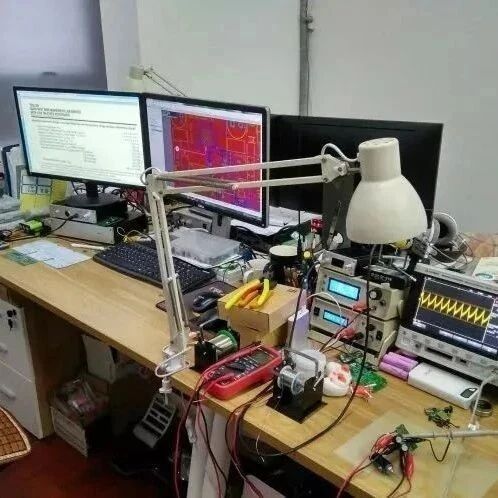

Why Choose C Language for Embedded Development?

Why Choose C Language for Embedded Development?

From the perspective of language characteristics C language has excellent portability and can run on various soft/hard platforms with different architectures. It is concise and compact, using a flexible syntax mechanism, and can directly access hardware. The languages that can directly access hardware include assembly and C language. Assembly is a low-level language that is … Read more

Rust is Not a Functional Language

Rust is Not a Functional Language

Rust is not a functional language There seems to be some confusion about whether Rust can also be classified as a functional language. This article aims to clarify this issue. To give away the conclusion in advance: Rust is not a functional language. This does not imply that Rust has any shortcomings: it excels in … Read more

Can Rust Replace C Language?

Can Rust Replace C Language?

Author | Evrone Planner | Xiao Zhi Rust is an ambitious project by the Mozilla Foundation, touted as the successor to C and C++. For a long time, some fundamental issues in C/C++ have remained unresolved, such as segmentation faults, manual memory management, risks of memory leaks, and unpredictable compiler behavior. The birth of Rust … Read more