Using C++ Atomic Variables

Using C++ Atomic Variables

Overview: Atomic variables are used in multithreaded programming to achieve synchronization without using mutexes, relying on hardware-supported atomic operations, which are generally more efficient than locks. Common Methods load(): Retrieves the value from the atomic variable. store(val): Stores the value val into the atomic variable. oldVal exchange(val): Stores the value val into the atomic variable … Read more

Implementing a Read-Write Spinlock in C++11 – Part 2 (Memory Order)

Implementing a Read-Write Spinlock in C++11 - Part 2 (Memory Order)

When implementing locks, it is necessary to ensure the memory order semantics of the lock: generally, an acquire memory order is required when acquiring the lock, and a release memory order is required when releasing the lock. This acquire-release semantics guarantees that memory read and write operations in the critical section do not get reordered … Read more

Detailed Explanation of C++ Multithreading Memory Model (Memory Order)

Detailed Explanation of C++ Multithreading Memory Model (Memory Order)

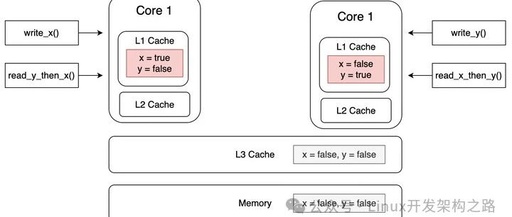
In multithreaded programming, there are two issues to pay attention to: one is data races, and the other is memory execution order. What is a data race? First, let’s look at what a data race is and what problems it can cause. #include <iostream> #include <thread> int counter = 0; void increment() { for (int … Read more