A Detailed Introduction to Microcontroller Pins
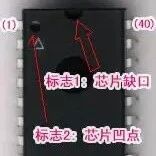
A Detailed Introduction to Microcontroller Pins

The AT89C2051 is a streamlined version of the 51 microcontroller, omitting the P0 and P2 ports, and featuring only 20 pins. However, it integrates a very useful analog comparator, making it particularly suitable for developing simplified 51 application systems. After all, when developing simple products, we often do not need all 32 I/O ports, making … Read more
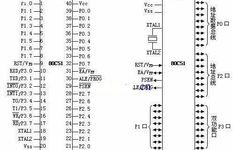
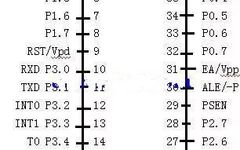
8051 Microcontroller Pin Diagram and Function Introduction

8051 Microcontroller Pin Diagram and Function Introduction

8051 Microcontroller Pin Diagram and Function Introduction Microcontroller Pin Diagram The 40 pins can be roughly divided into four categories based on their functions: power, clock, control, and I/O pins. ⒈ Power: ⑴ VCC – Chip power supply, connect to +5V; ⑵ VSS – Ground terminal; Note: When testing the microcontroller pin current with a … Read more

AT89C51 Microcontroller Pin Description and Diagram

AT89C51 Microcontroller Pin Description and Diagram

AT89C51 is a low-voltage, high-performance CMOS 8-bit microprocessor with 4K bytes of flash programmable and erasable read-only memory, commonly known as a microcontroller. This device is manufactured using ATMEL’s high-density non-volatile memory technology and is compatible with the industrial standard MCS-51 instruction set and output pins. By combining a multifunctional 8-bit CPU and flash memory … Read more

Analysis of Checkpoint 14.1 Answers in Assembly Language

Analysis of Checkpoint 14.1 Answers in Assembly Language

“Assembly Language”, 3rd Edition by Wang Shuang Chapter 14: Ports Checkpoint 14.1 (Page 267) (1) Program to read the content of cell 2 in CMOS RAM. (2) Program to write 0 to cell 2 in CMOS RAM. ================Reference Answers(1) Reference code is as follows: assume cs:codecode segment start: mov al, 2 ; Address and business … Read more

Microcontroller Control Technology Exam Paper and Answers (Set Two)

Microcontroller Control Technology Exam Paper and Answers (Set Two)

(Reference answers are attached at the end) 1. Multiple Choice Questions (Select one correct answer from the four options for each question and fill in the number of the correct answer in the parentheses.) 1. After the reset of the 8051 microcontroller, the stack pointer SP is initialized to ( ). A. 0x00 B. 0x07 … Read more

Microcontroller Parallel I/O Port Applications and C51 Programming Guide

Microcontroller Parallel I/O Port Applications and C51 Programming Guide

1. Basics of Microcontroller Parallel I/O Ports 1. Port Structure: P0 Port: Open-drain structure, requires external pull-up resistor; can be used as data/address bus or general I/O. P1-P3 Ports: Quasi-bidirectional I/O with internal pull-up resistors, default state is high level. Driving Capability: P0 port has strong current absorption capability, high level output requires external pull-up; … Read more

Simulating Standard UART Serial Port Using General I/O Ports

Simulating Standard UART Serial Port Using General I/O Ports

Frame The UART communication standard uses an 8-bit binary number as a frame, with the least significant bit first, transmitted bit by bit. To distinguish each frame, a 0 is used as a start marker before each frame, followed by a 1 as a stop marker. Before the stop marker, an optional “parity bit” can … Read more

Introduction to 80C51 Microcontroller Pins and Functions

Introduction to 80C51 Microcontroller Pins and Functions

The 80C51 microcontroller is a classic 8-bit microcontroller released by Intel many years ago. It is widely used in various embedded systems and integrates multiple functions such as CPU, memory, and I/O interfaces. It can connect and communicate with external devices through specific pins. This article will introduce the pins and functions of the 80C51 … Read more

C++ Device Drivers: How to Communicate with Hardware

C++ Device Drivers: How to Communicate with Hardware

Device Driver – The “Translator” Between Hardware and Software In the world of computers, hardware is like human limbs, responsible for executing various specific tasks; software acts like the human brain, issuing commands and processing data. The device driver is the crucial bridge connecting hardware and the operating system, playing an essential “translating” role. Whenever … Read more