Detailed Explanation of Double Pointers in C Language

As we know, pointers are used in C language to store the addresses of variables. Pointers can reduce the time to access variables. However, in C language, we can also define a pointer to store the address of another pointer. Such a pointer is called a double pointer (pointer to a pointer). The first pointer … Read more
C Language Structure Describing BMP File Format

Click the blue text to follow usThe structure of a BMP file is actually very simple, consisting of two structures + an optional color palette + bitmap data.The first structure is BITMAPFILEHEADER, and the second structure is BITMAPINFOHEADER. Then there is the optional color palette (an array of RGBQUAD). Finally, there is the bitmap data. … Read more

Implementing a Banking ATM Deposit and Withdrawal System in C

Implementing a Banking ATM Deposit and Withdrawal System in C

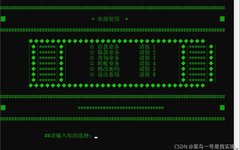
Click the blue textFollow us Source from the internet, please delete if infringing Bank ATM Deposit and Withdrawal System The business description of the bank ATM deposit and withdrawal system is as follows: The bank ATM deposit and withdrawal system can provide users with functions such as deposit, withdrawal, inquiry, transfer, and password modification. To … Read more

Function Calls in C Language

Function Calls in C Language

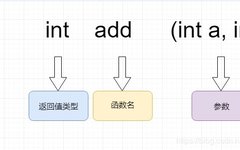
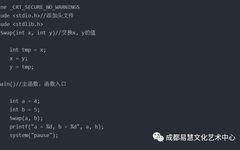
There are generally two ways to call a function: one is by value, where the formal parameters do not affect the actual parameters, and the other is by reference, where the formal parameters can affect the actual parameters. Passing by Value   Passing by value means passing the value of the actual parameter into the function … Read more

Creating a Perpetual Calendar in C Language

Creating a Perpetual Calendar in C Language

Perpetual Calendar:Source Code: #include <stdio.h> #include <stdlib.h> int year(int y){ // Determine if it's a leap year if ((y % 4 == 0) && (y % 100 != 0) || y % 400 == 0) return 366; // Leap year else return 365; // Common year } void printfStar() // Custom function { printf("*****************************\n"); } … Read more

18 Common Mistakes New C Programmers Make and How to Fix Them

Click the blue textFollow us Due to changes in our public account’s push rules, please click “View” and add “Star” to receive exciting technical shares as soon as possible. Source from the internet, please delete if infringing The biggest feature of C language is: powerful functionality, convenient and flexible to use.The C compiler does not … Read more

Detailed Explanation of Storage Classes in C Language

The storage classes in C determine the lifetime, visibility, memory location, and initial value of variables. There are four storage classes in C: Automatic External Static Register Storage Class Memory Location Default Value Scope Lifetime auto RAM Uninitialized Value Local Inside Function extern RAM 0 Global Declared anywhere in the program before the end of … Read more

Efficient Programming and Code Optimization in C (Part 2)

Efficient Programming and Code Optimization in C (Part 2)

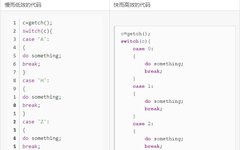
Click the blue words to follow usBinary interruption of code Use binary interruption instead of stacking the code in a single column, do not do it like this: if(a==1) { } else if(a==2) { } else if(a==3) { } else if(a==4) { } else if(a==5) { } else if(a==6) { } else if(a==7) { } … Read more

Common Techniques for Register Manipulation in C Language

Common Techniques for Register Manipulation in C Language

When assigning values to registers using the C language, bit manipulation methods of the C language are often required. Clearing a Specific Bit of a Register Assume a represents the register, which already has a value. If we want to clear a specific bit while keeping other bits unchanged, the code is as follows. // … Read more

Core Techniques of C Language

Core Techniques of C Language

For a C program, all its commands are contained within functions. Each function performs a specific task. There is a special function called main() — this function is the first one executed after the program starts. All other functions are sub-functions of main() (or processes associated with it, such as callback functions), and their function … Read more