Exploring the ARM Cortex-M Family

Exploring the ARM Cortex-M Family

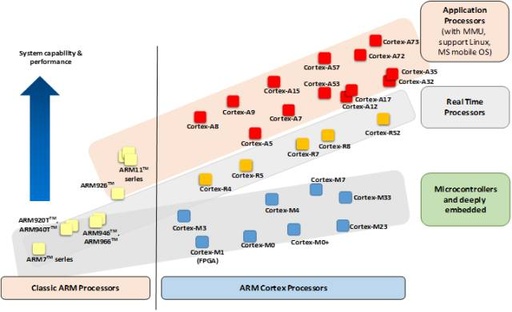
Introduction The author has been involved in embedded software development for nearly five years, primarily using ARM Cortex M core series microcontrollers. During these five years, thanks to the existence of C language compilers, I was able to develop without touching assembly language; however, it seems that I have missed some scenery and have not … Read more

Challenges of Porting Cortex-M Programs to RV32

Challenges of Porting Cortex-M Programs to RV32

Click the blue text above Follow us! 1 Introduction The open-source architecture processor RISC-V[1] has been increasingly applied in embedded systems, with several processor manufacturers releasing RV32 architecture MCU in recent years. In April 2019, SiFive[2] released Freedom E310; in February 2020, GigaDevice[3] released RV32 MCU GD32VF103; Qinheng Microelectronics[4] released CH32V, CH32X, and CH32L series … Read more

In-Depth Analysis of Cortex-M Processor Architecture Features

In-Depth Analysis of Cortex-M Processor Architecture Features

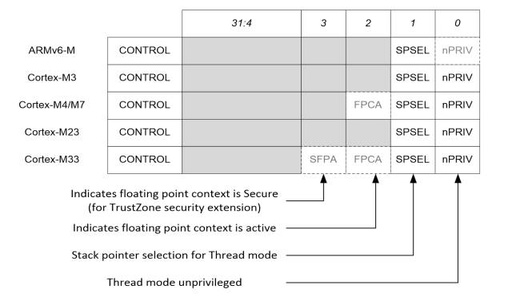
01 Programming Model The programming model of the Cortex-M processor family is highly consistent. For example, all Cortex-M processors support R0 to R15, PSR, CONTROL, and PRIMASK. Two special registers—FAULTMASK and BASEPRI—are only supported by Cortex-M3, Cortex-M4, Cortex-M7, and Cortex-M33; the floating-point register set and FPSCR (Floating Point Status and Control Register) are used by … Read more

Understanding Instruction Sets: The Significance of CPU Architectures in Computing

Understanding Instruction Sets: The Significance of CPU Architectures in Computing

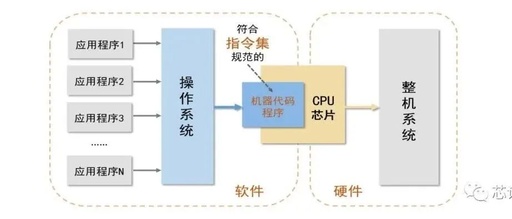
Source: Chip Theory Abstract: The previous articles from the WeChat account “Chip Theory” mentioned that there are many classification methods for chips, with varieties as numerous as the stars in the night sky. This article narrows the scope of chips to focus on high-end general-purpose chips, specifically CPUs. We will find that there are also … Read more

Latest Mobile CPU Performance Ladder Chart

Latest Mobile CPU Performance Ladder Chart

April 2024 Version of the Simplified Mobile CPU Performance Ladder Chart by Sesame Technology Simplified Mobile CPU Performance Ladder Chart Qualcomm Huawei Apple Samsung MediaTek Snapdragon 8 Gen3 Snapdragon 8 Gen2+Snapdragon 8 Gen2 _ A17 Pro A16 Exynos 2400 Dimensity 9300 Dimensity 9200+ Dimensity 9200 Snapdragon 8s Gen3 Snapdragon 7+ Gen3 _ A15 Dimensity 8300 … Read more

Accelerators in Embedded Systems: Hardware Acceleration Options

Accelerators in Embedded Systems: Hardware Acceleration Options

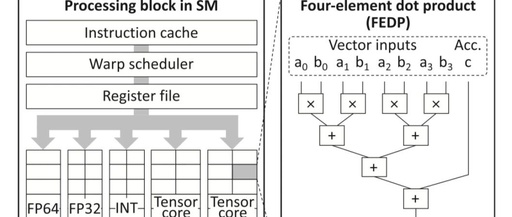
1. Hardware Acceleration Options There are many hardware options available for accelerating neural network computations in embedded systems. As mentioned in Section 2, processing solutions should vary based on the target application and the expected requirements of the embedded system, such as performance, energy, power, heat, reliability, cost, size, etc. Hardware options include traditional processing … Read more

Getting Started with ZYNQ: Asymmetric Multi-Core Processing (AMP)

Getting Started with ZYNQ: Asymmetric Multi-Core Processing (AMP)

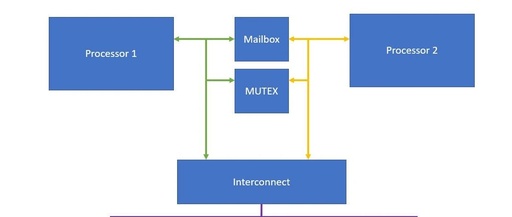
Getting Started with ZYNQ: Asymmetric Multi-Core Processing (AMP) In all the previous articles, we only used one ARM Cortex-A9 processor core (Core 0). However, the PS side contains two processor cores, and for many applications, we want to use both Zynq cores simultaneously for optimal performance. Using both Zynq processor cores for different tasks is … Read more