
Reported by Zhongjing Journalist Suo Hanxue, Beijing
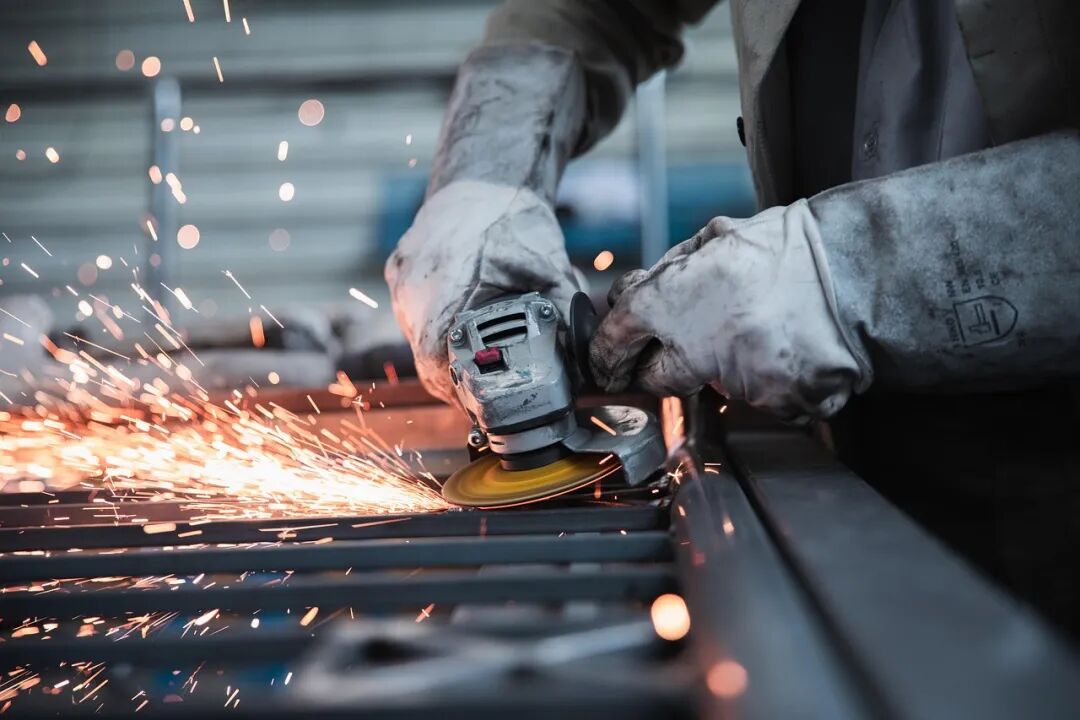
“Currently, the main workforce on construction sites is still composed of individuals born in the 60s and 70s, and it is rare to see those born in the 80s. Labor shortages have been our most pressing concern.” A representative from China Railway Construction Corporation’s overseas department stated at a forum hosted by the National Development and Reform Commission, “Now, innovative technologies such as artificial intelligence (AI) and robots are helping us address this issue.”
At present, the traditional infrastructure industry is injecting new momentum through digital transformation and artificial intelligence technology, which is expected to effectively alleviate the developmental challenges posed by structural labor shortages. “Replacing humans with machines” is no longer a concept but is actively occurring in the traditional infrastructure sector.
“Our company has a subsidiary that specializes in mining blasting operations, and it is currently utilizing remote control and artificial intelligence technology to conduct its work.” The aforementioned representative explained, “It may be hard to imagine that our construction company has a dedicated technology firm researching remote control technology.”
He further elaborated that this company, with only two to three hundred employees, focuses on mineral blasting. Now, technicians can monitor and command overseas blasting operations in real-time from a control room in Beijing.
On construction sites in Hong Kong and Macau, intelligent robots have also transitioned from concept to reality. Wall-painting robots equipped with 3D visual recognition and path planning capabilities can accurately complete high-altitude tasks; while bricklaying robots, through algorithm optimization, can increase daily bricklaying output to five times that of manual labor.
These scenarios fully demonstrate the irreplaceability of AI in repetitive and high-risk tasks. The popularization of intelligent construction technology not only fills the gap created by the “discontinuity of workers born in the 80s” but also promotes the industry’s transition from “labor-intensive” to “technology-intensive.”
A relevant person from the China International Contractors Association stated: “Currently, digitalization and artificial intelligence have a significant impact on the infrastructure construction industry; they can effectively reduce industry costs, improve efficiency, and enhance our overall competitiveness in the international market.”
The representative pointed out: “Our next effort will focus on empowering infrastructure construction through digital intelligence.”
He added: “In addition, we must vigorously explore new infrastructure fields such as computing power centers and digital intelligence centers, which represent a vast market development space for the future.”
Finally, he suggested: “We should promote the deep integration of artificial intelligence and traditional infrastructure, facilitate the advancement of technologies such as smart transportation, smart grids, smart cities, and smart construction sites, and share our advanced domestic practices in the international market to help developing countries bridge the digital divide and contribute to the development of artificial intelligence.”
(Editor: Hao Cheng, Review: Wu Kezhong, Proofreading: Zhai Jun)


Recommended Reading

Click for large image | More details on the Huawei chip case involving Zunpai leaking secrets! Employees used confidential information as a “token of loyalty” to join

Click for largeimage | Exposed: “The first programmer of Taobao” resigns! Worked at Alibaba for 25 years, with a fortune of 2.6 billion