Introduction by Antarctic Bear: In recent years, the use of 3D printing technology for the manufacturing and maintenance of military drones abroad has matured significantly. “Battlefield-grade” 3D printed drones are transitioning from research prototypes to practical applications, providing valuable references for domestic development.
The core advantages of 3D printed drones lie primarily in “localization, speed, and customization.” Through portable printing systems and unmanned delivery, drone systems can become self-sufficient on the battlefield, reducing reliance on traditional logistics concerning time and physical routes. In offensive and defensive equipment, 3D printing can further compress manufacturing cycles, save costs, and enhance replacement flexibility, especially suitable for continuously consumed swarm drones and disposable attack platforms.
From aerial reconnaissance platforms and underwater submersibles to rapid manufacturing stations and maintenance support systems on the battlefield, 3D printing technology is reshaping the forms and deployment methods of unmanned systems in future warfare in unprecedented ways.
In this article, Antarctic Bear has compiled a series of representative application cases from the past three years, systematically reviewing the latest practices and strategic value of 3D printed drones in the military field. The specific content is as follows:
1Completely 3D Printed Drone Engine “Rampart” for Rapid Local Production
In August 2025, American propulsion system manufacturer Beehive Industries launched a drone engine named “Rampart,” which is entirely manufactured using 3D printing technology. This innovative approach allows ISR (Intelligence, Surveillance, Reconnaissance) and tactical support drone systems to achieve rapid local production of engine modules on the front lines or at the site, reducing dependence on traditional supply chains and transportation costs while significantly shortening manufacturing delivery cycles. Compared to the complex processing and outsourcing processes involved in traditional engine production, Rampart can be manufactured remotely via digital files and printed and assembled on-site using portable 3D printing equipment, greatly enhancing the deployment capability and response speed of drone systems in high-intensity operational environments. It serves as a typical technological model of “micro-engine factories + instant supply” in the future warfare ecosystem.
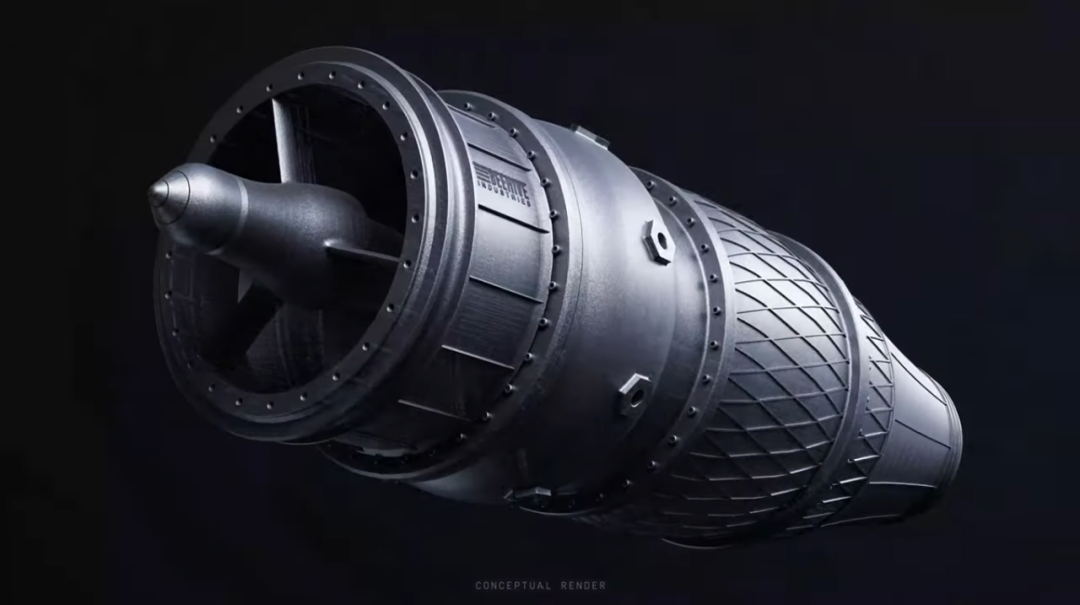
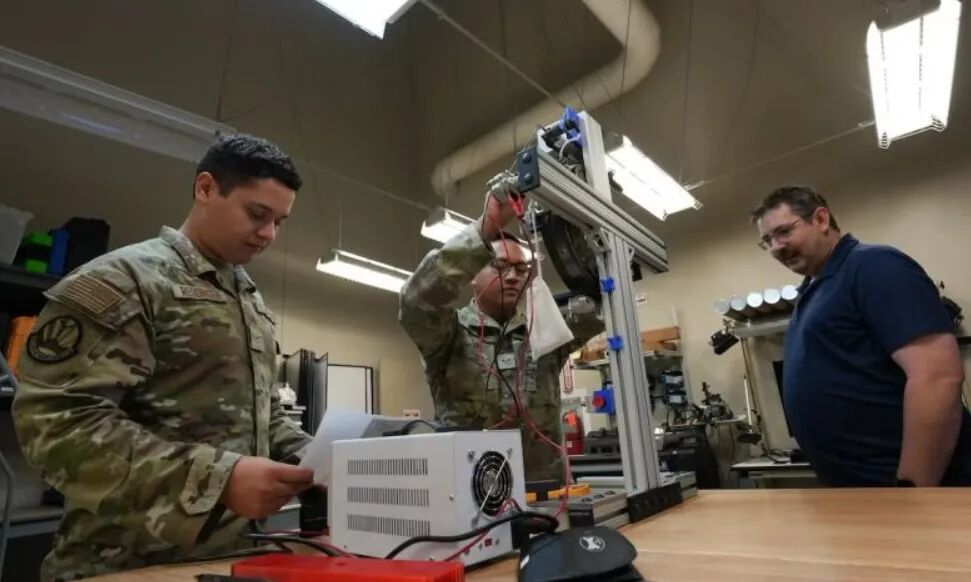
△Rampart, a 3D printed engine for unmanned combat aircraft. Image from Beehive Industries
2British Army Frontline Printing of FPV Attack Drones in Military Exercises
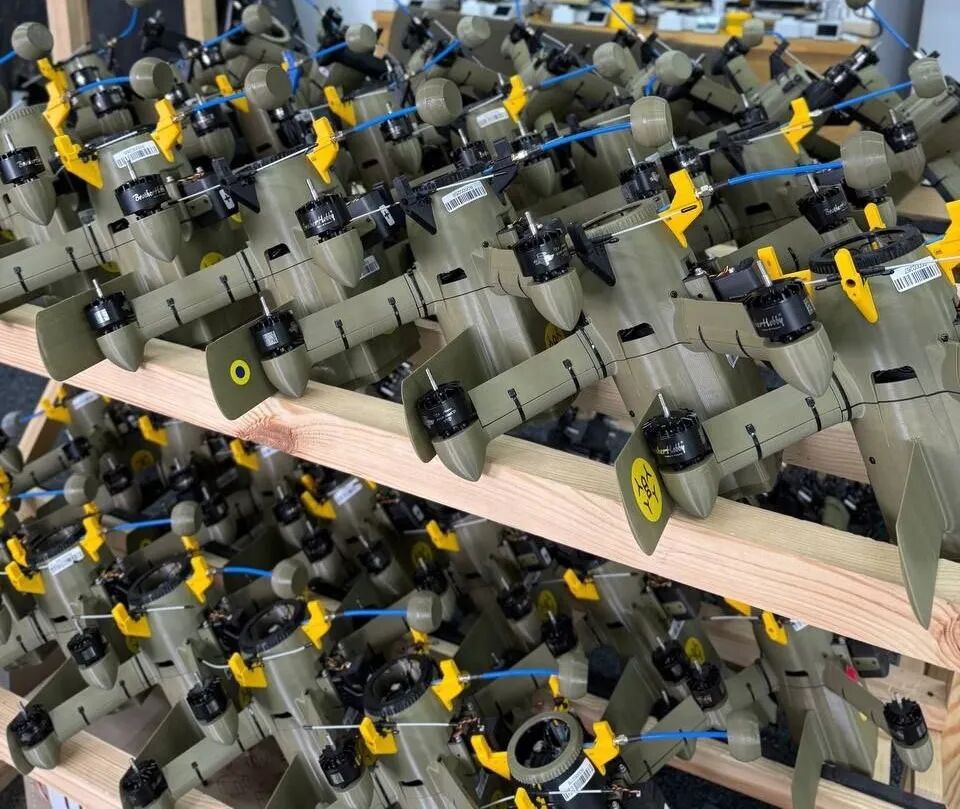
In early August 2025, the British Army used 3D printing technology for the first time to produce and deploy first-person view (FPV) attack drones during a recent military exercise. According to forum content, this operation was initiated by Captain Stephen Watts of the 3rd Battalion, The Rifles, where troops carried portable 3D printing equipment to print drone body components and assemble them on-site in a field operational environment, subsequently executing attack or reconnaissance missions. This demonstrated the troops’ capability to achieve “on-site manufacturing and rapid action” in tactical deployments, significantly enhancing the tactical response efficiency and deployment flexibility of drones, reflecting the high adaptability and application potential of additive manufacturing technology under combat conditions.
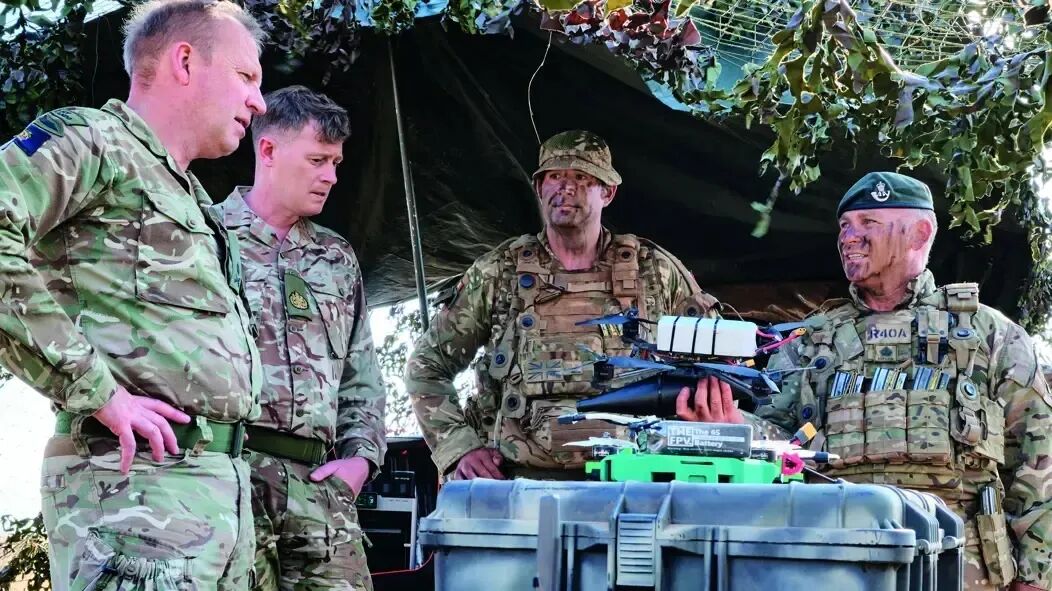
△A 3D printed drone, with each drone taking about four hours to print and assemble, backgrounded by the British Army’s Bambu Lab 3D printer. Photo from the British Army.
3Low-Cost 3D Printed Drone Challenges High-End Missile Interception Systems
In August 2025, Ukrainian drone manufacturer “Wild Hornets” developed a 3D printed drone—”Sting” interception drone, aimed at replacing the expensive “Patriot” missile system for interception tasks at an extremely low cost. This drone features a fully 3D printed body design, costing approximately 1,000 times less than traditional interception systems, while also providing tactical deployment flexibility. It can reach a maximum flight speed of over 250 km/h, carry a payload of up to 1 kg, and has an operational range exceeding 15 km. Through its high cost-effectiveness and customizable manufacturing approach, this platform enables Ukraine to maintain air defense capabilities even under resource constraints, achieving a key application breakthrough of “rapid manufacturing + tactical interception.”
△ The “Wild Hornets” 3D printed “Sting” drone
4Pacific Island Chain Frontline: US Military Deploys 3D Printing Support for Rapid Drone Repairs
In June 2025, the US Army introduced 3D printing equipment in multiple Pacific island frontlines, specifically for on-site manufacturing and maintenance of critical equipment such as drones. This allows troops to rapidly produce replacement parts or entire units in harsh environments without relying on complex remote supply chains, significantly enhancing sustained combat and emergency support capabilities. This measure effectively shortens equipment recovery times and strengthens the strategic reliability and operational continuity of high-demand drone systems, representing another important application of additive manufacturing technology in logistical support in remote war zones.
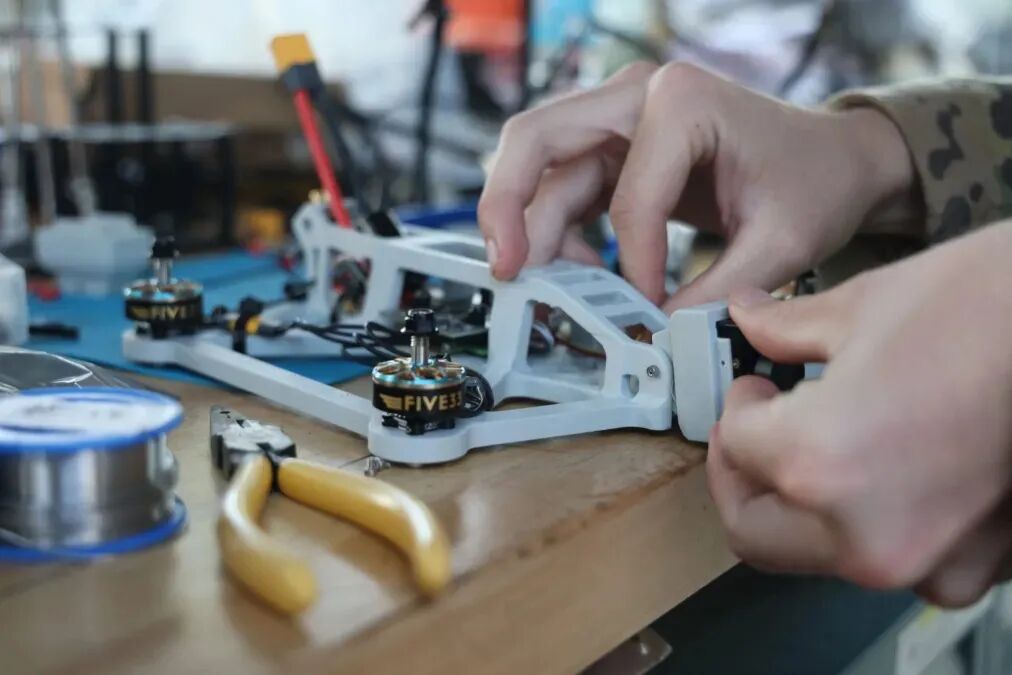
△ The 25th Infantry Division of the US Army deployed over 100 first-person view drones in the Philippines using 3D printing technology
5Underwater Exploration Expands Scenarios: 3D Printed ShearWater Submersible Drone
In April 2025, Dutch 3D printing service provider Royal3D launched a new underwater drone named ShearWater AquaticDrone. This drone’s body is manufactured using 3D printing technology, featuring high modularity and lightweight characteristics, effectively addressing waterproof, pressure-resistant, and control challenges in maritime environments. 3D printing not only accelerates the speed from design to physical production but also reduces the production costs and integration difficulties of complex underwater unmanned platforms. The modular design allows for quick component replacement, adapting to various underwater task requirements such as marine monitoring, shore-based reconnaissance, and pipeline inspection. The launch of ShearWater demonstrates that 3D printing technology has expanded from traditional aerial unmanned platforms to the marine field, providing a new technological path for enhancing cross-domain deployment capabilities of unmanned systems.
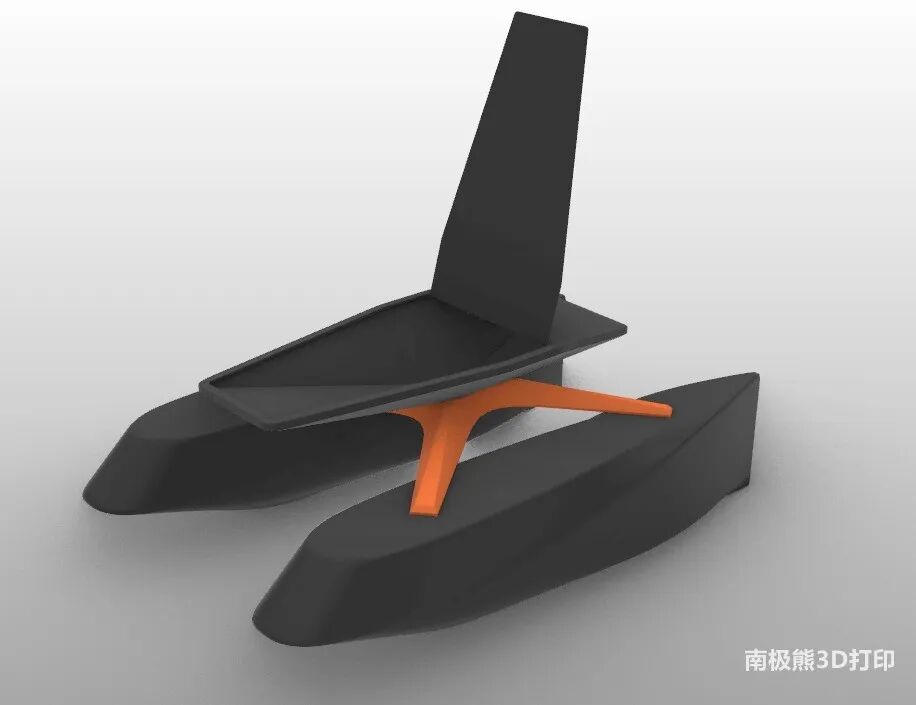
△ ShearWater underwater drone
63D Printers Assist in On-Site Maintenance Training for MQ-9 Reaper Drones
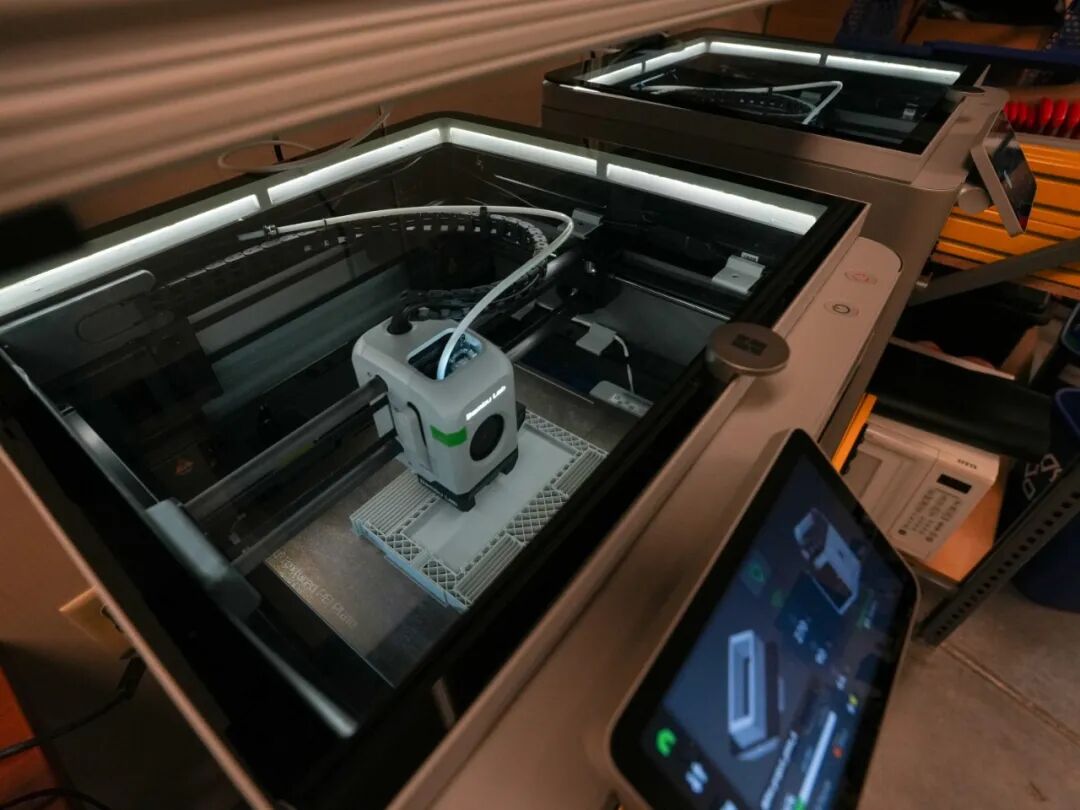
In early March 2025, the 432nd Wing at Creech Air Force Base in Nevada introduced two 3D printers, integrating them into the maintenance and training system for MQ-9 Reaper drones, driven by the MQ-9 AFETS team and maintenance group commanders. This additive manufacturing solution effectively addresses the constraints posed by the shortage of spare parts on training, significantly improving training efficiency and operational readiness speed. By digitally printing spare parts, components that originally cost up to $10,000 can be quickly printed on-site for around $15, achieving an innovative path of “training equals manufacturing,” significantly shortening maintenance response times and enhancing the skill levels of maintenance personnel.
7Firestorm Signs $100 Million Arms Deal, Launches 3D Printed Drone Mobile Base “xCell”
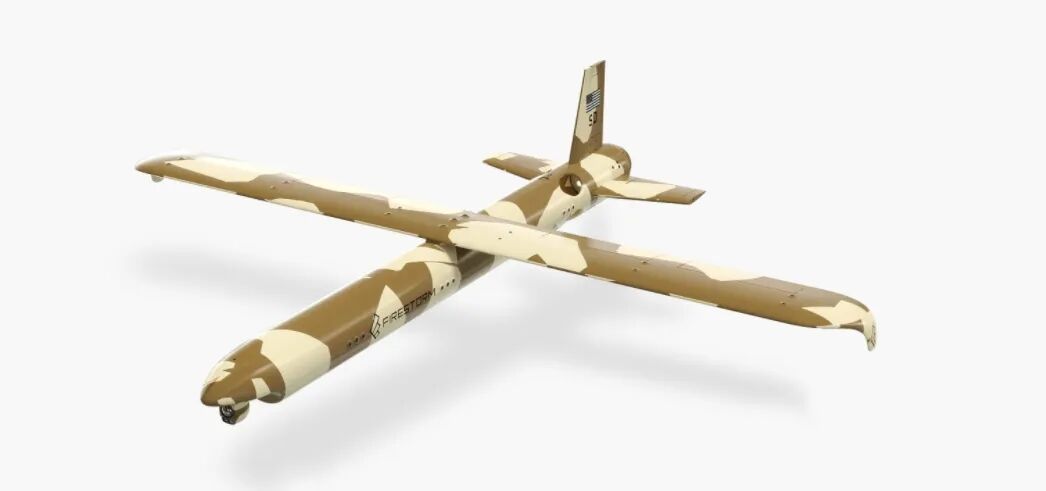
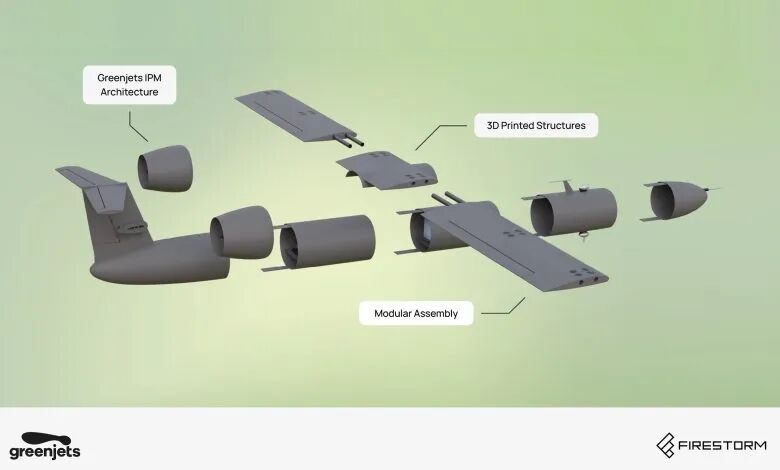
In February 2025, California drone manufacturer Firestorm Labs signed a $100 million contract with the US Air Force to develop 3D printed drones. The collaboration resulted in the launch of the xCell system, a semi-automated mobile additive manufacturing unit installed in a container, designed for on-site manufacturing of drone prototypes at the battlefield edge. This system can quickly print and assemble drone bodies and structural components on-site, freeing itself from the reliance on traditional centralized production for transportation and supply chains, significantly enhancing the speed and flexibility of tactical deployments. By deploying xCell, troops can customize drone prototypes as needed for missions and quickly put them into use, achieving on-demand manufacturing on-site, providing a practical and efficient solution for supporting unmanned platforms on future battlefields. This case demonstrates the high integration of mobile manufacturing facilities with drone production, representing a key application direction of 3D printing in defense logistics and tactical innovation.
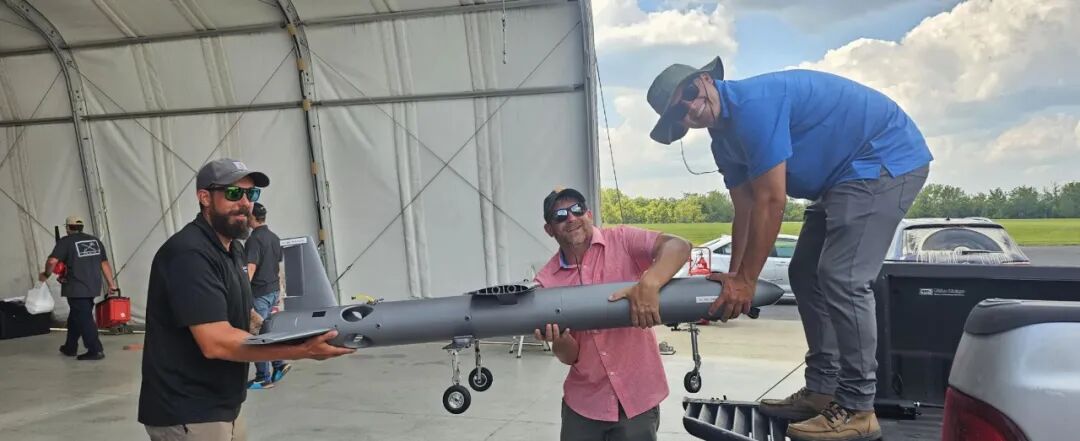
△ Firestorm’s Tempest drone participated in the T-REX 24-2 event
83D Printed Spare Parts Innovation in Maintenance Training for MQ-9 Reaper Drones
In January 2025, the 432nd Wing of the US Air Force received seed funding of $1 million, primarily aimed at developing new 3D printed military drone platforms. This funding was led by the venture capital arm of Lockheed Martin, aiming to accelerate the rapid production capabilities of drone structural components and complete units through 3D printing. This funding will enable Firestorm Labs to expand its printing manufacturing technology, optimize military platform designs, and enhance the efficiency of transitioning from prototype to deployable stages, indicating that 3D printing is becoming an important driver for the large-scale manufacturing of military drones. This case fully reflects the profound impact of combining technological innovation with capital promotion in the field of additive manufacturing for drones.
9GA-ASI Releases Fully 3D Printed Drone in the Air
In May 2024, General Atomics Aeronautical Systems, Inc. (GA-ASI) successfully released a fully 3D printed A2LE drone from the internal weapons bay of the GA-ASI MQ-20 Avenger stealth drone mothership over Dugway Proving Ground in Utah. This demonstration marks the result of collaboration between GA-ASI and Divergent Technologies, combining advanced aircraft design technology with adaptive production systems to support rapid, low-cost manufacturing. This achievement opens new possibilities for drone technology, promoting broader applications of drones in military and civilian fields.
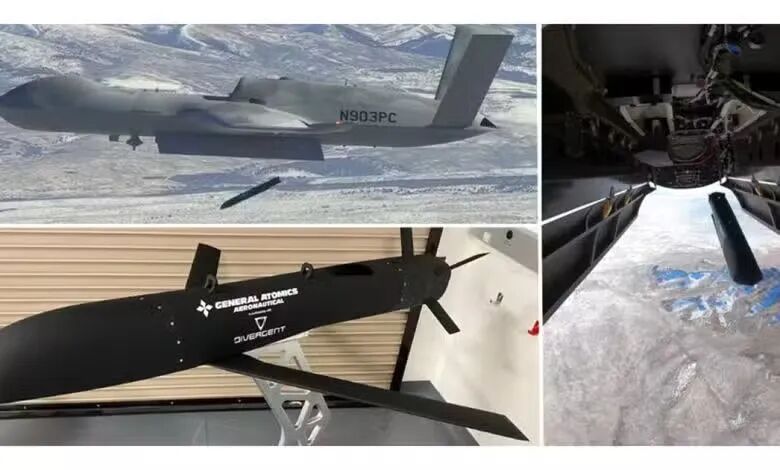
△ GA-ASI demonstrates the aerial release capability of the 3D printed A2LE drone
10Firestorm Labs Advances 3D Printed Drone Mass Production Capability with $12.5 Million Funding
In April 2024, Firestorm Labs successfully raised $12.5 million in seed funding, primarily aimed at developing new 3D printed military drone platforms. This funding was led by the venture capital arm of Lockheed Martin, aiming to accelerate the rapid production capabilities of drone structural components and complete units through 3D printing. This funding will enable Firestorm Labs to expand its printing manufacturing technology, optimize military platform designs, and enhance the efficiency of transitioning from prototype to deployable stages, indicating that 3D printing is becoming an important driver for the large-scale manufacturing of military drones. This case fully reflects the profound impact of combining technological innovation with capital promotion in the field of additive manufacturing for drones.
11US Aid to Ukraine: 3D Printed Drone Factory xCell
In March 2024, Firestorm Labs received $12 million in funding to establish containerized micro-drone production facilities for war zones like Ukraine, capable of producing a drone within 24 hours. Its flagship product, the Tempest drone, is lightweight and portable, with a maximum takeoff weight of 55 pounds and capable of carrying a 10-pound payload, suitable for various mission requirements. These drone factories utilize semi-automated technology, allowing for rapid deployment in remote areas while reducing the risk of detection by enemies. By decentralizing production, Firestorm Labs provides the military with flexible air support capabilities, ensuring a stable supply of drones in combat environments. Although 3D printing technology still faces challenges in large-scale production, its application potential in military operations is gaining attention, especially in terms of rapid response and adaptability.
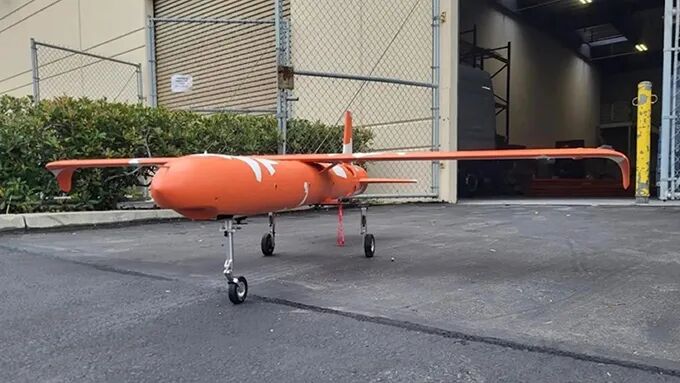
△ Firestorm Tempest drone, with the body capable of being printed within 24 hours
12US Air Force Research Laboratory Develops Continuous Composite 3D Printed Drone Wing Technology
In January 2024, the US Air Force Research Laboratory (AFRL) collaborated with 3D printing company Continuous Composites to explore the direct manufacturing of drone wings using continuous composite 3D printing technology to meet the demands for high strength, high toughness, and high flow materials. The drones utilize integrated composite monolithic panel forming, reducing the number of parts and improving structural integrity. Continuous Composites’ technology combines continuous fibers with thermosetting resins, allowing for rapid curing and manufacturing of anisotropic parts with customizable strength characteristics. This technology eliminates the need for traditional molds, reducing costs and delivery times, making it suitable for mass production and complex geometries.
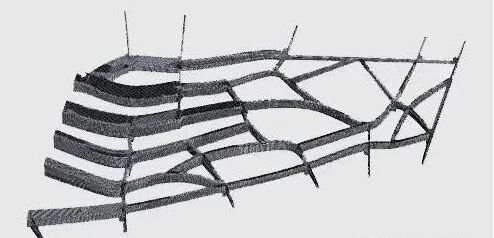
△ 3D printed drone wing beams and ribs
13Ukraine Tests 3D Printed Titan Drone with a Range of 400 Kilometers
In November 2023, Ukraine tested a 3D printed drone called “Titan Falcon” with a range of 400 kilometers, manufactured in collaboration with American and Ukrainian NGOs and German companies. The Titan Falcon features a flight endurance of up to 6 hours and a range of 400 kilometers. Equipped with a first-person view (FPV) camera for real-time monitoring, it can also be fitted with a 2.5-inch lens camera to enhance its reconnaissance capabilities. The project is led by Titan Dynamics, aiming to manufacture fixed-wing and vertical takeoff and landing (VTOL) aircraft. This German company focuses on improving efficiency, maximizing utility, and increasing the range of unmanned aerial vehicles (UAVs) while reducing manufacturing costs.
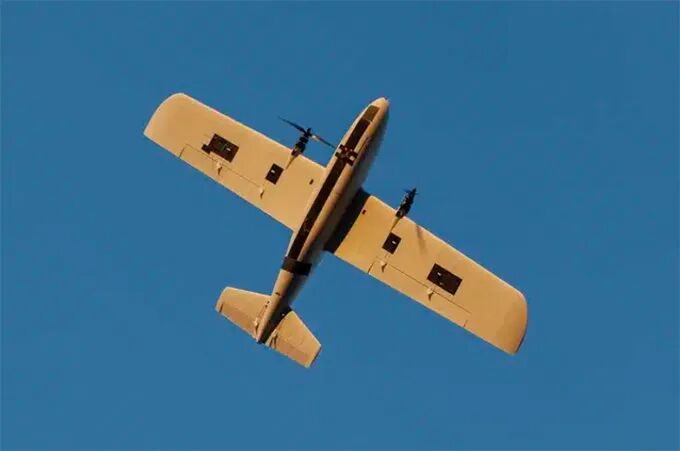
△ 3D printed drone aided by Germany for Ukraine
Conclusion
Through the above cases, it is evident that 3D printing technology is gradually breaking through the limitations of traditional manufacturing in materials, time, and space, providing strong support for the rapid response, modular construction, and multi-scenario adaptability of drones on the battlefield. Initially, the multi-faceted applications of 3D printed drones were seen in parts maintenance production, agriculture, aerospace, and other fields. However, due to the recent geopolitical tensions (most notably the impact of the Russia-Ukraine war), the application of 3D printed drones in military warfare has gained significant attention, with a sharp increase in application cases.
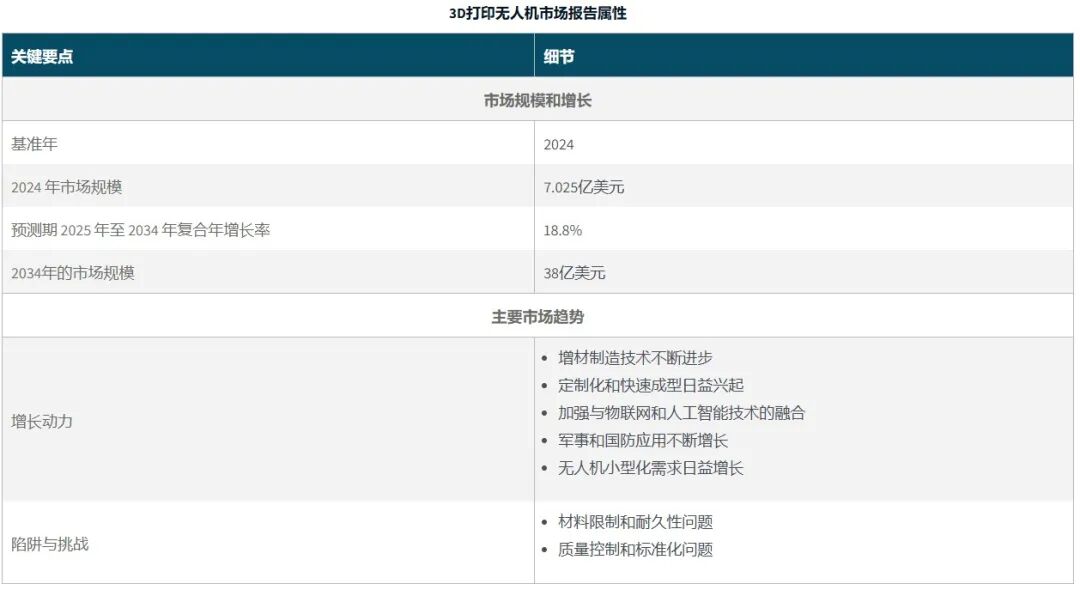
The GMI Global Market Research Report indicates that the 3D printed drone market is expected to grow by approximately 7.0-21% in 2024, with a peak nearing $3.8-3.9 billion. In the future, 3D printed drones are expected to achieve higher levels of intelligence, unmanned operation, and automated deployment, becoming a key technological force in modern warfare. This not only changes the logistics of warfare but also signifies a comprehensive transition of the military manufacturing system towards an era of “on-demand response and distributed manufacturing.”