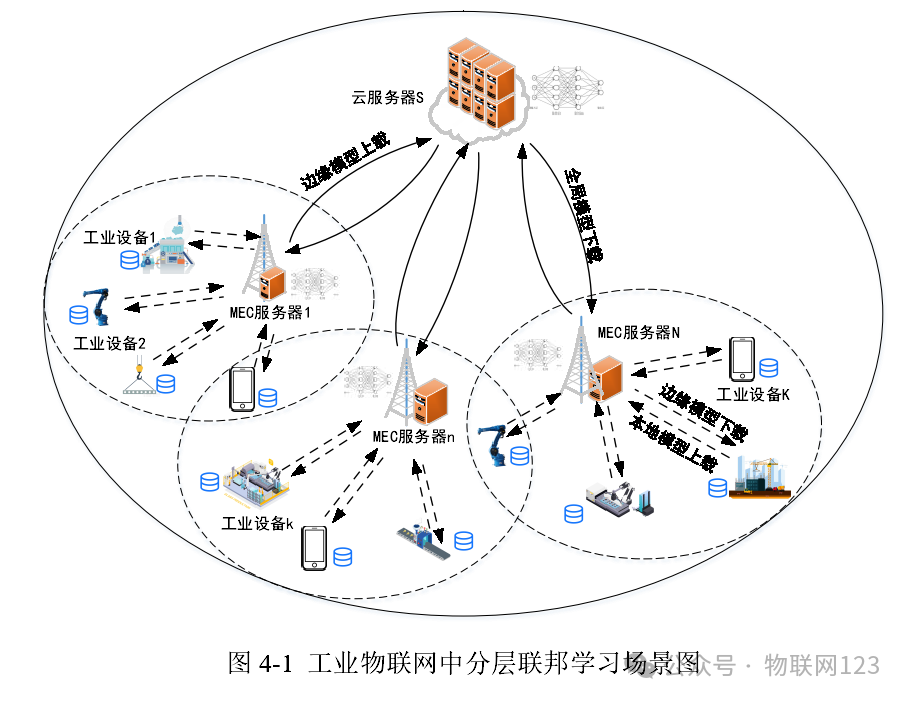
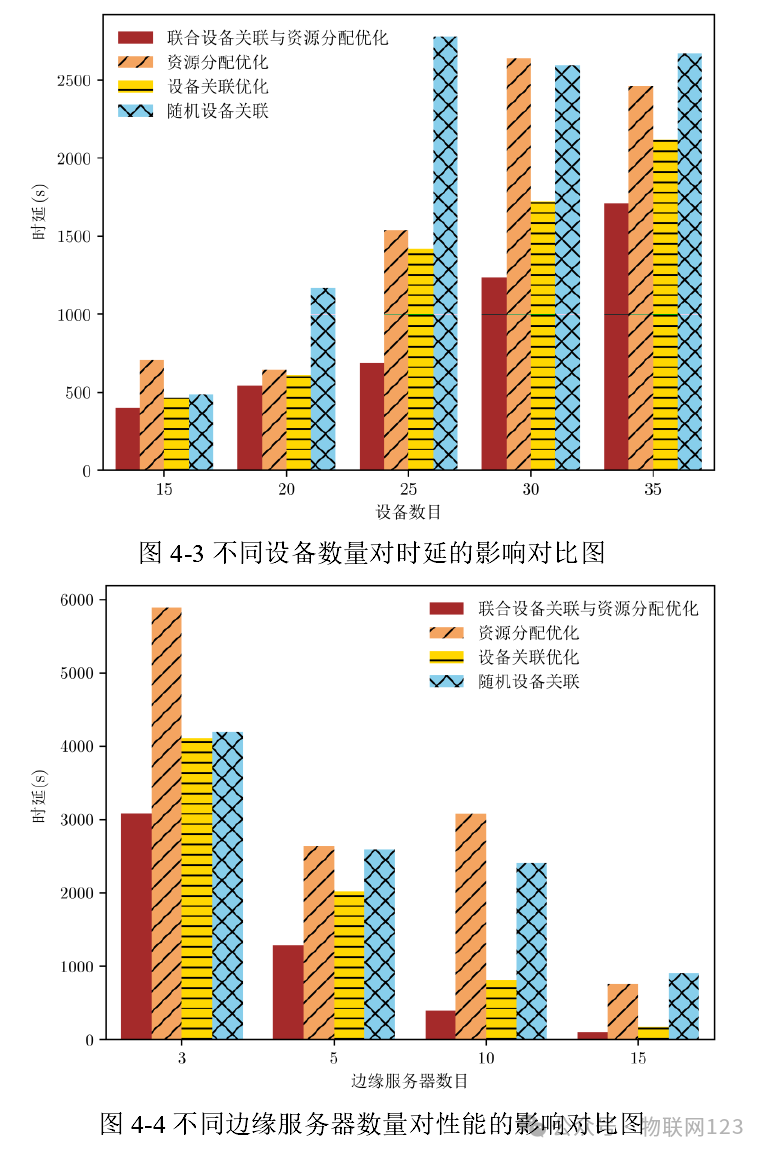
With the development of the Industrial Internet of Things (IIoT), massive industrial data is generated, urgently driving the application of Artificial Intelligence (AI) to fully unleash the potential of industrial data and enhance industrial service capabilities. Traditional centralized Machine Learning (ML) model training methods require devices to upload all their raw data, which raises privacy concerns. Therefore, in the Industrial Internet of Things, to fully utilize the data from multiple industrial devices for model training while protecting privacy, Federated Learning (FL) has become an efficient solution that has garnered widespread attention in both industry and academia. However, the limited communication and computing resources in the Industrial IoT, the limited computational capabilities of industrial devices, and the strict real-time requirements for processing large amounts of industrial data pose significant challenges for device selection and resource allocation in training. Thus, designing efficient device selection and resource allocation methods has become a key scientific issue that needs to be addressed in the research of Industrial IoT based on Federated Learning architecture. Against this backdrop, Ji Xiuchao from Shandong Normal University focused on researching resource allocation methods for Industrial IoT based on Federated Learning, proposing a cost-effective device selection and bandwidth allocation method based on Federated Edge Learning (FEEL), as well as a resource allocation method for edge computing-enabled Industrial IoT device association based on Hierarchical Federated Learning (HFL). The main research contents are as follows:(1) In response to the challenges of heterogeneous industrial IoT devices, limited channel bandwidth resources, and energy constraints of devices during long-term Federated Learning processes, a cost-effective device selection and bandwidth allocation method based on Federated Edge Learning is proposed, achieving a trade-off between model training quality and system resource costs. First, a comprehensive analysis of the impact of device selection and bandwidth allocation on actual costs in the Industrial IoT during the Federated Edge Learning process is conducted, modeling the total system cost function as the difference between total computational communication costs and the benefits brought by the total training data volume; secondly, considering the device’s latency and long-term energy consumption constraints, a long-term average unified cost minimization problem is established; finally, considering the difficulty of directly solving long-term problems, a device selection and bandwidth allocation method based on Lyapunov optimization is proposed, which utilizes Lyapunov optimization theory to transform the long-term cost minimization problem into a series of short-term drift plus cost minimization problems, and then designs an iterative algorithm to solve the device selection and bandwidth allocation decisions for each round. Simulation results show that compared to existing methods, the proposed method achieves better performance in average cost minimization. Additionally, under different datasets and data distributions, the Federated Learning model accuracy and convergence speed of the proposed method outperform other methods.(2) Due to the limited number of devices that each server can access in the Federated Edge Learning framework, leading to poor Federated Learning performance, author Ji Xiuchao further studies the resource allocation method for Industrial IoT based on Hierarchical Federated Learning to enhance Federated Learning performance. Addressing the insufficient computational capabilities of devices in the Industrial IoT and the limited computational and communication resources of edge servers, a resource allocation method for edge computing-enabled Industrial IoT device association based on Hierarchical Federated Learning is proposed. First, leveraging Mobile Edge Computing (MEC) technology, a comprehensive analysis of the impact of device association, computational offloading, and transmission power on learning efficiency is conducted, and the device computational offloading process and Hierarchical Federated Learning process are systematically modeled, modeling the system latency as the maximum of the sum of offloading, computation, and communication latencies among all devices; secondly, under the constraints of offloading ratio, transmission power, and device association set, a system latency minimization problem is established; finally, to solve this problem, a divide-and-conquer principle is applied, dividing it into a resource allocation problem under given device associations for each server and a device association problem for all edge servers, and by using convex optimization methods, a device association and resource allocation method is designed to obtain the optimal device association and resource allocation strategy. Simulation results show that the proposed method has lower complexity; compared to other optimization methods, the proposed method demonstrates better performance in reducing system latency.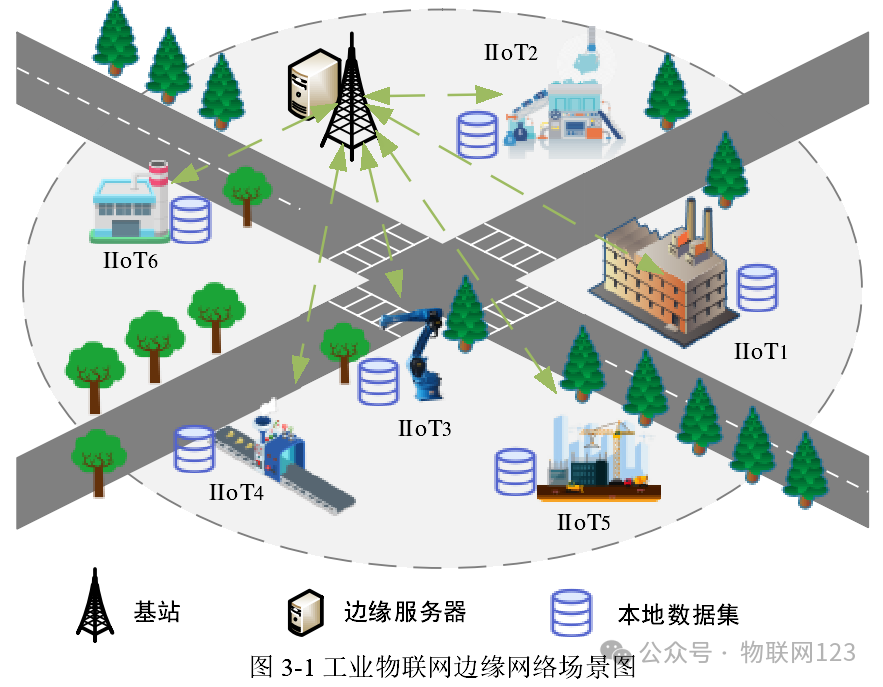
 References:[1] Ji Xiuchao. Research on Resource Allocation Methods for Industrial IoT Based on Federated Learning [D]. Shandong Normal University, 2023.
|
Disclaimer: The images and text used in this article are reprinted. If there are any copyright issues, please inform us immediately, and we will confirm and delete the content based on the proof materials you provide. The content of this article reflects the author’s personal views and does not represent the views or positions of IoT 123. |
Special Reminder:
IoT Professional CommunicationGroup We welcome individuals related to the IoT industry to join, and we also welcome various industry experts, seniors, and influencers to join. In the group, aside from not being able to post sensitive content, pornographic content, and it is not recommended to send promotional content multiple times, other topics can be freely discussed~——Communication QQ Group 724511126, Friends who wish to join the group, please note: Name – Organization – Research Direction (without notes, please forgive us for not passing), and will be invited to join the group after editor review!