NB-IoT, or Narrowband Internet of Things, is an impressive IoT technology.
Regarding the Internet of Things, I would like to start with two interesting applications…

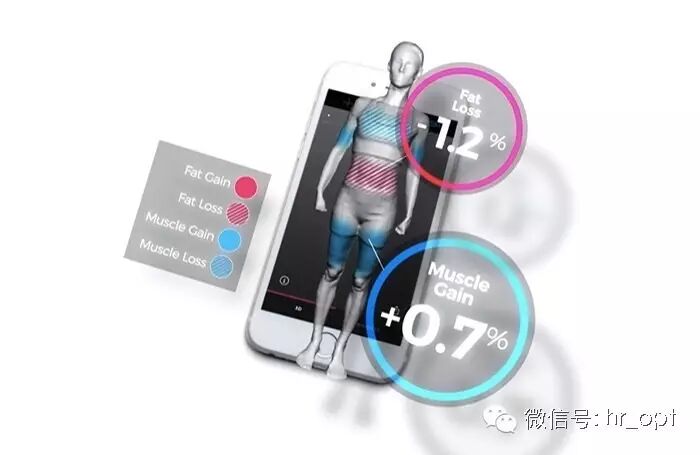
This is not a restricted broadcast. This is the 3D fitness mirror launched by Nake Labs, which tracks your body changes through 3D scanning.

This smart fitness mirror, named Naked, creates a 3D model by scanning the body, records body changes, and sends data to a mobile app for analyzing your fitness results.
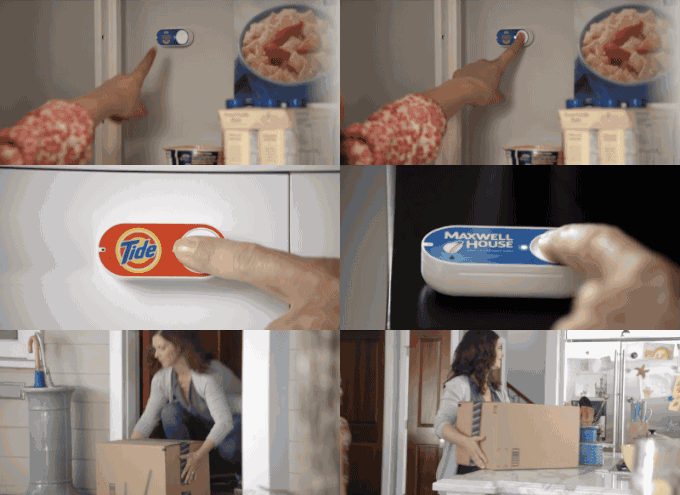
Then there’s Amazon’s infamous “one-click order” button…

This device is called the Dash Button, a plastic button that can be stuck around the house. For example, if you stick one on your washing machine and find that the detergent is out, you just press the button to place an order, and the delivery arrives quickly… Shopaholics can’t handle it…
The above two IoT applications both use WiFi communication technology.
There are many wireless communication technologies for the Internet of Things, mainly divided into two categories: one is short-range communication technologies like Zigbee, WiFi, Bluetooth, and Z-Wave; the other is LPWAN (Low-Power Wide-Area Network), which refers to wide-area communication technologies.
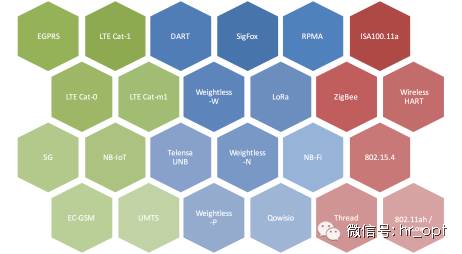
LPWA can be further divided into two categories: one operates in unlicensed spectrum, such as LoRa and SigFox; the other operates in licensed spectrum, including 3GPP-supported 2G/3G/4G cellular communication technologies like EC-GSM, LTE Cat-M, and NB-IoT.
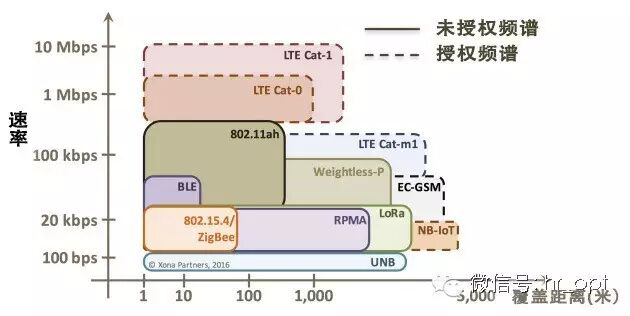
The interconnection of all things is a major trend and an inevitable development, with various IoT technologies emerging.
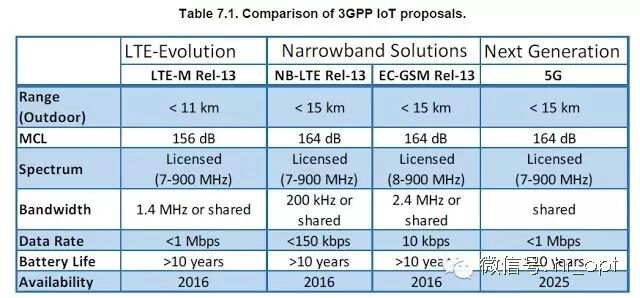
In the face of various emerging IoT technologies, 3GPP mainly has three standards: LTE-M, EC-GSM, and NB-IoT, which are based on LTE evolution, GSM evolution, and Clean Slate technology, respectively.
● LTE-M
LTE-M, or LTE-Machine-to-Machine, is an IoT technology based on LTE evolution, referred to as Low-Cost MTC in R12 and LTE enhanced MTC (eMTC) in R13, aimed at meeting the needs of IoT devices based on existing LTE carriers.
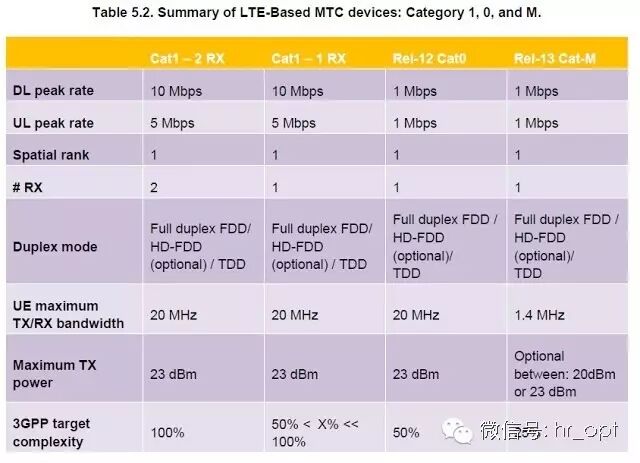
Those familiar with LTE UE categories will not be surprised. To adapt to IoT application scenarios, 3GPP defined the minimum rate UE device as UE Cat-1 in R11, with an uplink rate of 5 Mbps and a downlink rate of 10 Mbps. To further accommodate the low power and low rate requirements of IoT sensors, in R12, 3GPP defined a lower-cost, lower-power Cat-0, with uplink and downlink rates of 1 Mbps.
● EC-GSM
EC-GSM, or Extended Coverage GSM technology.
The rise of various LPWA technologies has highlighted the disadvantages of traditional GPRS applications in IoT. In March 2014, the 3GPP GERAN #62 meeting proposed a research project titled “Cellular System Support for Ultra Low Complexity and Low Throughput Internet of Things,” which suggested migrating narrowband (200 kHz) IoT technology to GSM, seeking a coverage range 20 dB greater than traditional GPRS, and proposed five major goals: improving indoor coverage performance, supporting large-scale device connections, reducing device complexity, reducing power consumption, and reducing latency. In 2015, the TSG GERAN #67 meeting report indicated that EC-GSM had met these five goals.
GERAN (GSM EDGE Radio Access Network) is the abbreviation for the GSM/EDGE wireless communication network (Radio Access Network). GERAN is led by 3GPP and mainly formulates GSM standards. Since early cellular IoT technologies were based on GSM, many IoT projects were initiated by GERAN.
With the development of technology, cellular IoT communication needs to be redefined, which we metaphorically call the “clean-slate” approach, similar to the saying “cleaning the house before inviting guests,” leading to the emergence of NB-IoT. Since NB-IoT technology is not based on GSM and is a clean-slate approach, the work of cellular IoT has shifted to the RAN group. GERAN will continue to study EC-GSM until the R13 NB-IoT standard is frozen.
● NB-IoT
In August 2015, 3GPP RAN began to initiate research on a new air interface technology for narrowband wireless access, called Clean Slate CIoT, which covers NB-CIoT.
NB-CIoT was jointly proposed by Huawei, Qualcomm, and Neul, while NB-LTE was proposed by manufacturers such as Ericsson and Nokia.
NB-CIoT proposed a completely new air interface technology, which involves significant changes to the existing LTE network, but NB-CIoT is the only cellular IoT technology among the six Clean Slate technologies that meets the five major goals proposed at the TSG GERAN #67 meeting (improving indoor coverage performance, supporting large-scale device connections, reducing device complexity, reducing power consumption, and reducing latency), especially since the communication module cost of NB-CIoT is lower than that of GSM modules and NB-LTE modules.
NB-LTE is more inclined to be compatible with existing LTE, with its main advantage being ease of deployment.
Ultimately, after intense negotiations at the RAN #69 meeting in September 2015, it was agreed that NB-IoT can be considered a fusion of NB-CIoT and NB-LTE.
Here is a quote from the 3GPP RAN meeting report regarding cellular IoT technology:
The Internet of Things (IoT) is an important technology for the future. Although 3GPP has MTC (Machine Type Communication) related technologies in R12/R13, its basic approach is to optimize existing LTE technologies and architectures, rather than to design a new one specifically for IoT characteristics. In contrast to the optimization approach of MTC technology, the Cellular Internet of Things (CIoT) technology project suggests a new design specifically for IoT characteristics, which does not necessarily need to be compatible with the existing LTE technology framework.
To simply understand the process of advancing IoT standards, let’s summarize two proposals from Huawei:
● RP-150709: “Views on specification for a Cellular IoT system in RAN,” Huawei
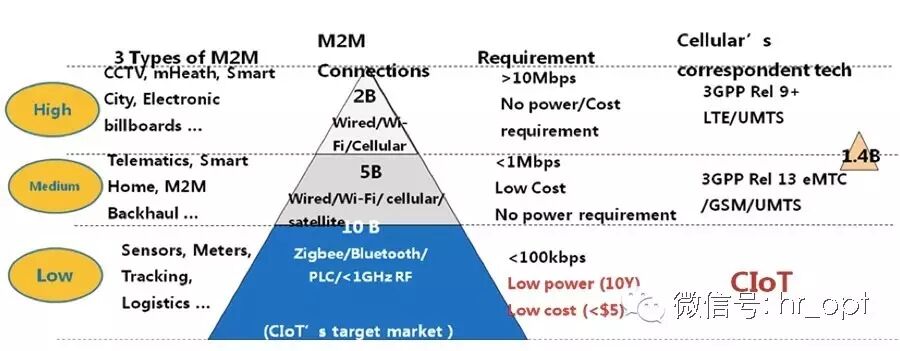
Huawei believes that, as shown in the above image, existing mobile communication technologies like LTE are more suitable for applications requiring high speeds, such as smart cities; some low-speed technologies like WiFi can be applied to smart homes; for other applications requiring extremely low speed, low cost, and low power, such as smart metering and sensor tracking, CIoT technology is particularly suitable, with the highest number of terminals.
Currently, there are two major directions for promoting CIoT: one is the continuous improvement of technologies based on the GSM system, and the other is the proposal for a completely new (Clean Slate) CIoT technology design.
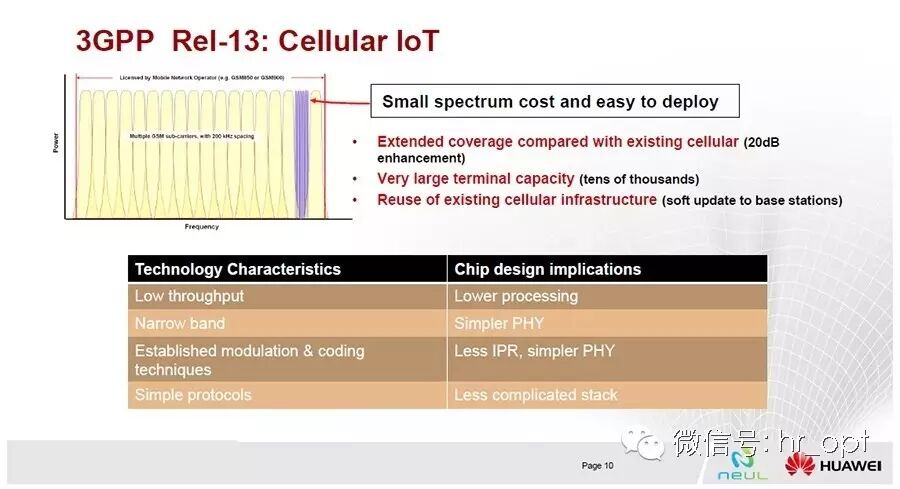
Huawei suggests that working groups RAN1 to RAN4 should include the new CIoT technology in their work projects and quickly list it as an R13 work item.
● RP-151359: “NB-CIoT – Deployment Scenarios,” Huawei
This is Huawei’s proposal for three application scenarios of NB-CIoT:
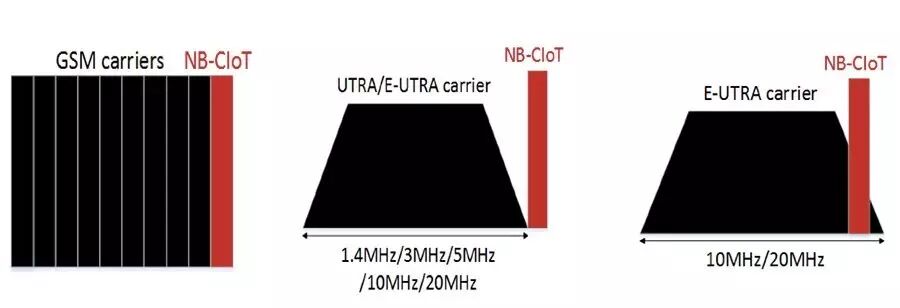
In the image, the left diagram shows the deployment of CIoT using GSM carriers, moving some carriers originally providing GSM services to CIoT; the middle diagram shows the deployment of CIoT independently from the existing network system, each using independent spectrum without interfering with each other, which is the simplest deployment method, but CIoT requires its own spectrum; the right diagram shows CIoT coexisting with the existing LTE system, utilizing the weaker edge signal strength of the LTE spectrum for CIoT deployment. The advantage is that CIoT does not need its own spectrum, but the disadvantage is that there may be interference with the LTE system. However, if the distance between CIoT and the nearest LTE subcarrier is more than 200 kHz, the coexistence interference can be effectively controlled.
Regarding the differences between NB-CIoT and NB-LTE, you can refer to the previous images if interested…
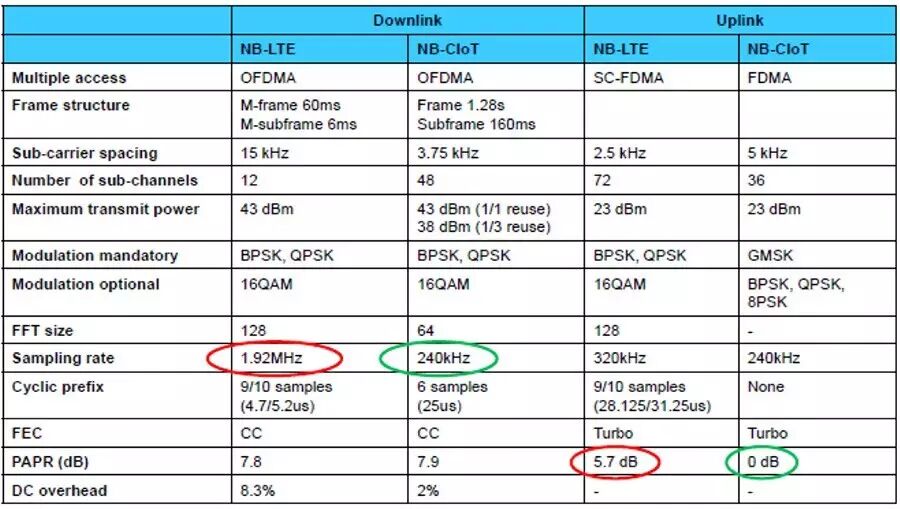
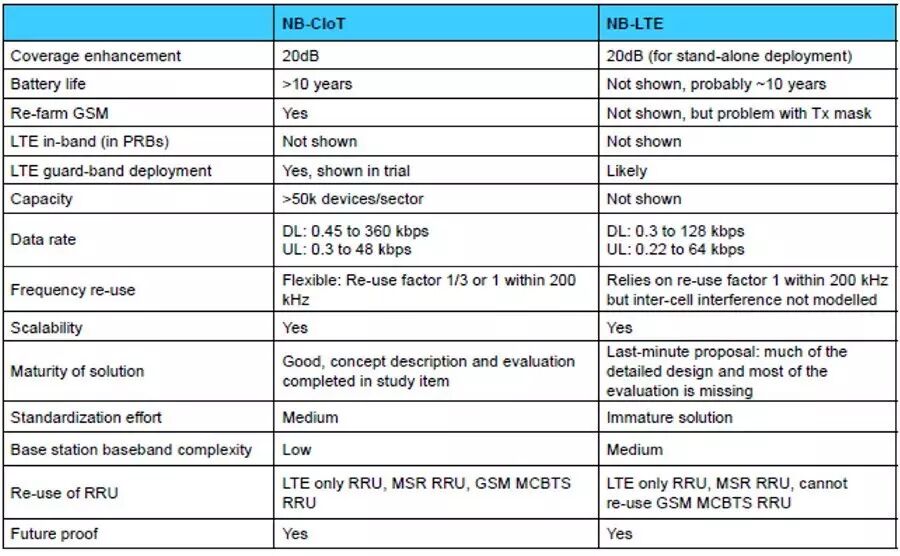
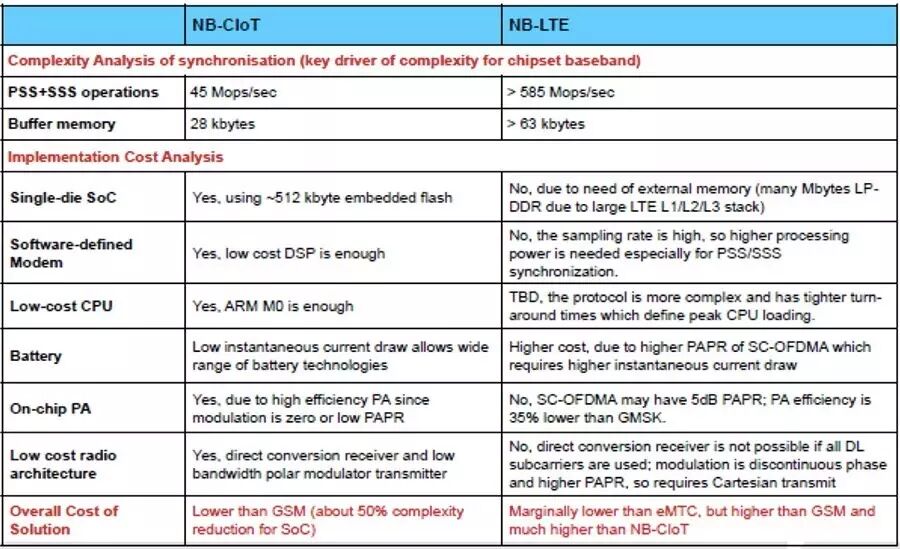
With so many IoT technologies, the competition is certainly fierce. Besides the rivalry between NB-CIoT and NB-LTE, there’s also the competition between NB-IoT and LTE-M, as well as the competition between cellular IoT technologies under 3GPP and other LPWA technologies…
Some say that the emergence of the NB-IoT standard will shatter technologies like Sigfox and LoRa, as operators supporting NB-IoT will have a larger customer base than those using Sigfox and LoRa technologies.
Fans of Sigfox and LoRa technologies disagree, arguing that NB-IoT has not yet been commercially deployed, and for the next few years, technology costs will remain high. This is indeed a problem; my refrigerator cost 699 yuan, and if I install a $20 communication module, it becomes a smart IoT refrigerator, raising the price to 730 yuan, which I definitely wouldn’t buy. Don’t ask me why? Because I’m poor!
However, it is said that communication module costs can drop below $5, which we should look forward to. Moreover, IoT applications are quite broad, including smart parking, bicycle anti-theft, vehicle networking, smart cities, smart buildings, environmental monitoring…
Finally, we will introduce ten other major IoT communication protocols…
But honestly, I really don’t want to write anymore~~~
Let’s chat next time! Feel free to leave comments and corrections; don’t be too polite, I’m very nice (and tough)!
Image sources: Huawei, 4G Americas, Xona Partners, etc.
Contact email for network optimization freelancers: [email protected]
Long press the QR code to follow

On the road of communication, let’s walk together!