 This article is reprinted from News Broadcast
In recent years, China has made remarkable achievements in the field of robotics, becoming the world’s largest consumer market and producer of robots.
In the first quarter of this year, the production of industrial robots and service robots in China reached 149,000 units and 2.604 million units, respectively, representing year-on-year growth of 26% and 20%. The China Electronics Information Industry Development Research Institute’s CCID Consulting predicts that during the 14th Five-Year Plan period, the scale of China’s robotics industry is expected to grow to around 400 billion yuan.
The “Smart Future – Nanny Robot Conference” organized by the Central Radio and Television Station was launched today (29th).What new releases are there at the event? One-click to start the “Nanny Robot Mobilization”!

What is a Nanny Robot?
What skills does it possess?
At the event, the “Nanny Robot Industry Trend Report” was released. Zhang Li, director of the China Electronics Information Industry Development Research Institute, stated that a nanny robot is an intelligent system with autonomy and embodiment, designed to replace human caregivers in performing tasks such as care assistance, health monitoring, daily services, and social companionship.
Chen Luping, director of the Electronic Information Research Institute of the China Electronics Information Industry Development Research Institute, mentioned that generally, robots are divided into two main categories: industrial robots and special robots. Among special robots, there are service robots, military robots, agricultural robots, etc., with nanny robots falling under the category of service robots.
What skills do nanny robots possess?
For example, cooking. The “Photon” chef from Hubei Guanggu Dongzhi can make a sandwich using precise algorithms. Slicing, spreading, stacking…The “Photon” has delicate force control, and its multi-joint robotic arm moves smoothly.
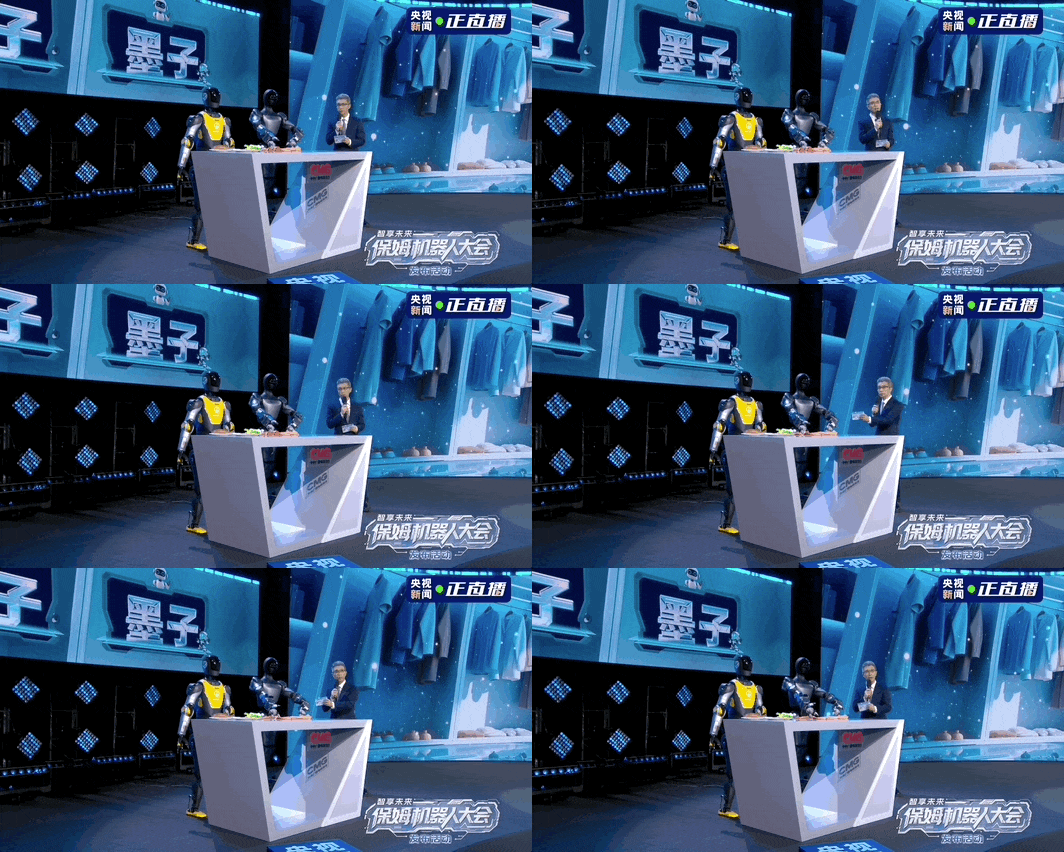
For example, clothing storage. The “Mozi” robot from Qianxun Intelligent is an expert in clothing storage. Due to the different materials and wrinkles of clothes, folding clothes has unpredictable elements. The “Mozi” can successfully handle soft and variable clothing, showcasing its excellent capabilities in dynamic perception and complex operations.
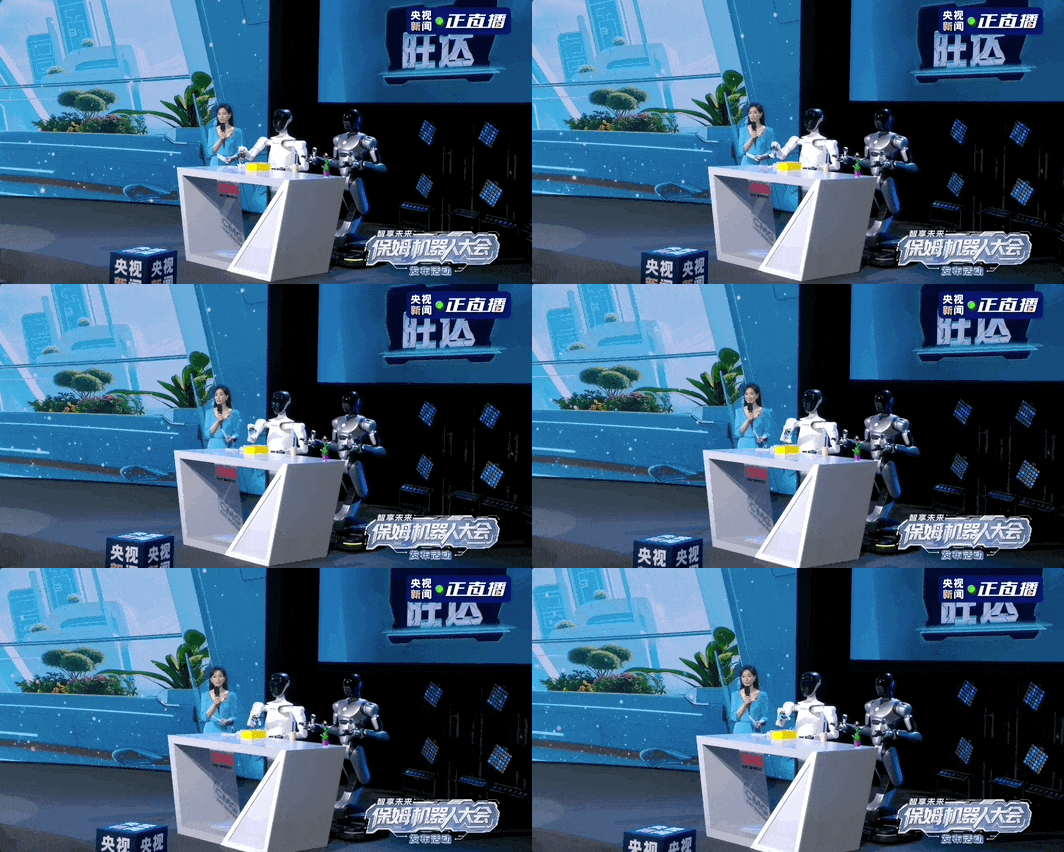
For example, cleaning. The “Wanda” from Suzhou Youliqi is a cleaning expert. It is equipped with flexible tactile sensing technology, allowing it to perceive the material and shape of objects like a human finger, accurately identifying and cleaning various desktop clutter, demonstrating strong environmental perception and object recognition capabilities.
For example, performing magic tricks to provide emotional value. The “Aibao” from Shenzhen Zhifang is equipped with an advanced perception system, capable of being “quick-eyed and quick-handed”, seeing clearly and grabbing accurately. Moreover, “Aibao” has strong learning abilities, learning new magic tricks in just half a day. Staff members said, “We hope everyone sees that robots not only help with some manageable household chores but also perform small magic tricks during dull moments, providing some emotional value.”
These robots are multi-skilled, from automatically planning routes to clean floors, to delivering food between tables, to providing emotional support through conversation, each action showcases the hard-core strength of Chinese manufacturing.

Nanny Robots
Four Major Application Tracks
This “Smart Future – Nanny Robot Conference” focused on four major application tracks: smart health care, smart home, family education, and community management. How are the applications being implemented?
-
Smart Health Care
The dual-arm robot from Hebei University of Technology is a guardian of smart health care, capable of steadily lifting a 90-kilogram elderly person and helping them turn over, with flexible tactile sensors making its movements gentle.
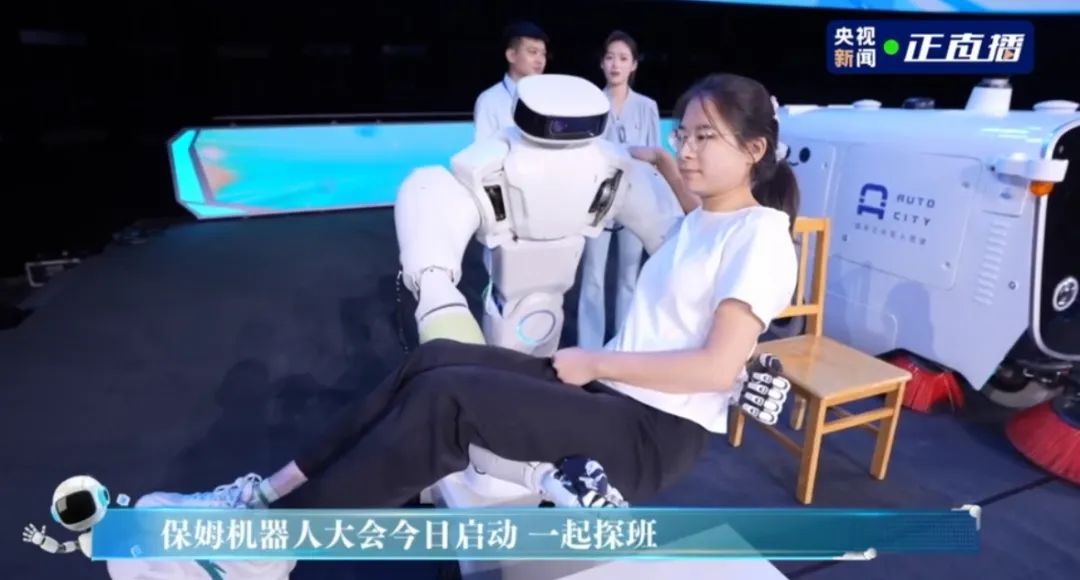
In a community in Chengdu, Sichuan, the smart health care manager “Yangyang” from Zhongke Source has become a star caregiver for the elderly. “Yangyang” has three main functions: immediate emergency call in case of a fall, timely medication reminders, and providing emotional value, upgrading the quality of life in old age.

-
Smart Home
Home appliances are becoming increasingly intelligent. Haier has been laying out in the field of intelligence for many years and is moving towards an era of “unmanned household chores”.
The Haier “AI Eye” series products can not only truly “see” but also “understand”. For example, the smoke stove can recognize hundreds of types of pots and the overflow state of pot lids, helping you monitor cooking; washing machines can not only recognize empty drums and clothing clumping but also remind color mixing and adapt the best washing mode…
Haier Group Chairman and CEO Zhou Yunjie stated that developing household service robots should focus on three keywords: first is scenario, which is to build rich scenarios for smart homes, as real scene data flow is the “protein” for training AI; second is ecology, promoting ecological co-creation without boundaries; third is evolution, where humans teach robots what a home is, and robots reshape human life.
-
Family Education
The family education companion expert “Alpha Egg” from iFLYTEK is small but knowledgeable, proficient in reciting ancient poems, teaching English, and telling idiom stories. It can intelligently recognize tens of thousands of picture books, read in both Chinese and English, and stimulate thinking with AI questions.
-
Community Management
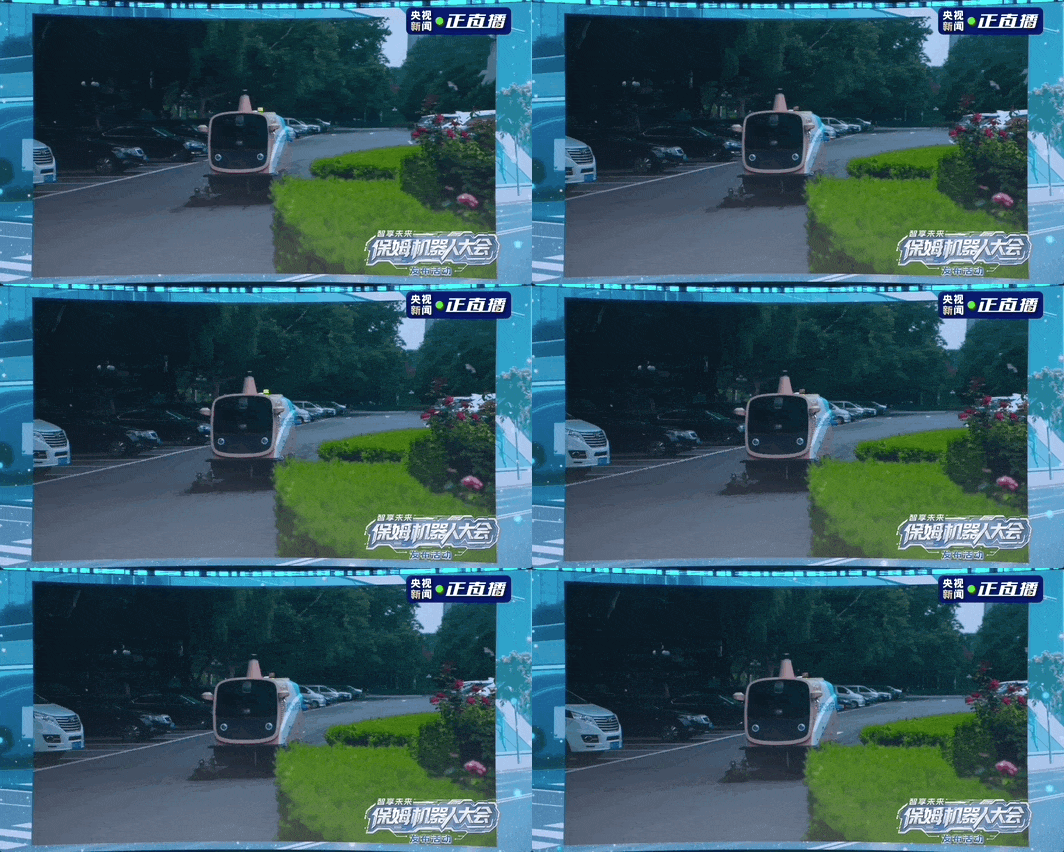
The community management robot from City Light is called “Hulu Guangguang”, which can understand complex environments and even perform high-difficulty actions such as edge cleaning at zero distance.

Nanny Robots
Challenges to Overcome
Zhu Songchun, director of the Beijing General Artificial Intelligence Research Institute, stated that human society is entering the intelligent era, with numerous intelligent agents entering our daily lives. For robots to truly serve humans, they need to overcome two key technical challenges: physical intelligence and social intelligence. Physical intelligence is the core technical support for robots to perform physical interactions such as serving tea, shaking hands, and hugging, while social intelligence allows robots to accurately understand human needs and intentions, truly being empathetic and responsive.
Zhang Li, director of the China Electronics Information Industry Development Research Institute, stated that currently, the demand for elderly care services is increasing, and people are raising their quality of life requirements. The demand for nanny robots is mainly concentrated in scenarios such as smart health care, smart homes, family education, and life services. With continuous technological breakthroughs, the development of nanny robots will also enter a new stage, evolving to exhibit significant characteristics such as multi-source perception, autonomous decision-making, human-machine collaboration, and self-evolution.
-
Multi-source perception refers to the ability of nanny robots to comprehensively understand complex environments;
-
Autonomous decision-making refers to the transition of nanny robots from simply following human instructions to learning to think and make decisions on their own;
-
Human-machine collaboration refers to the more stable actions of nanny robots, working better and more harmoniously with humans;
-
Self-evolution refers to nanny robots becoming increasingly “understanding” of human habits through interaction with humans and continuously adjusting their behaviors.
Zhang Li proposed that the market development of nanny robots shows three major trends:
-
The market scale continues to expand, with China’s “nanny” services reaching globally, and domestic nanny robots being exported overseas, achieving good results in the international market;
-
Application scenarios are expanding and integrating, with all-around “nanny” connectivity, where one nanny robot can connect multiple scenarios such as homes, institutions, and communities;
-
Companies are competing in niche markets, with star “nanny” robots emerging, and several “craftsmen” appearing for specific tasks.
Robots are also contributing to the development of smart cities. In Shenzhen, Guangdong, there are “thinking” traffic lights, power-generating buildings, and drones delivering goods; in Chengdu, Sichuan, over 40 embodied intelligent products are approaching the elderly; in Qingdao, Shandong, local efforts are focused on implementing scenario-driven actions, laying out around family, health care, and marine fields, and delving into underwater robots; in Suzhou, Jiangsu, nanny robots are entering supermarkets, hotels, office buildings, and households, becoming important assistants in production and life. “Cyber partners” are everywhere around us.
From humanoid robot half-marathons to robot mech fighting competitions and the World Robot Football League… the performance of robots continues to refresh history. In the future, there may be more and more nanny robots entering our lives.
Images of EFG▼ Recommended Reading