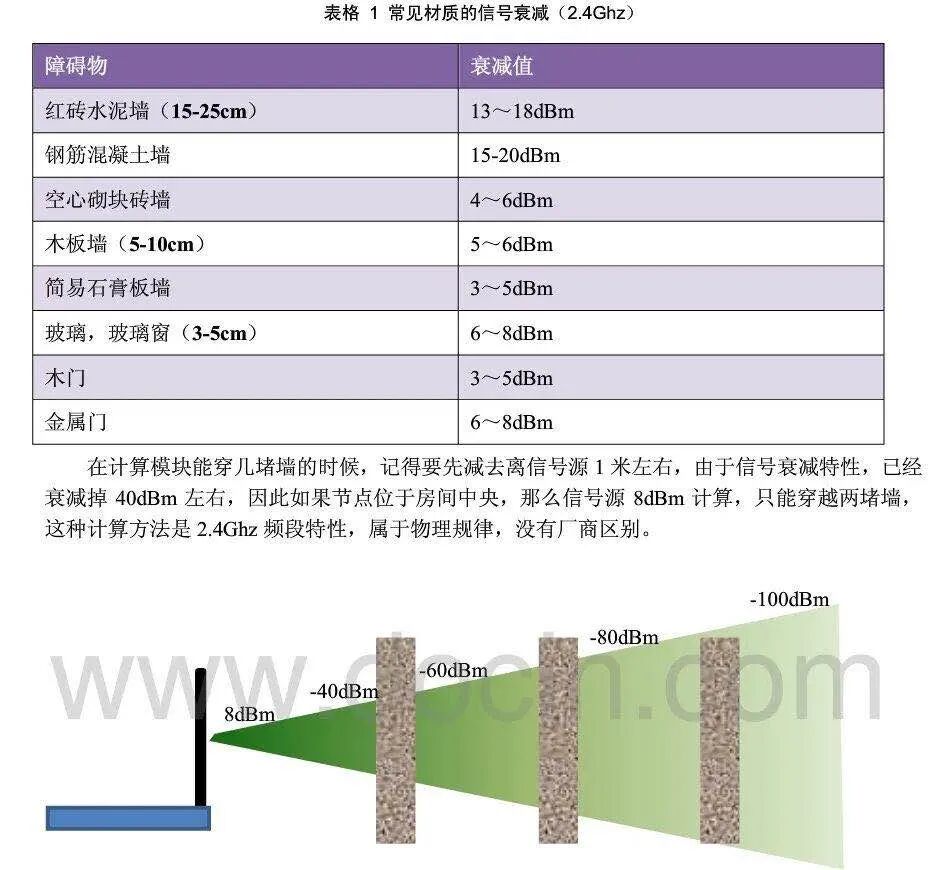
 Developers of smart home devices are closely monitoring the foundational technologies of the new generation Zigbee 3.0 wireless standard, from gateways to hardware development. The perfect application of this technology in smart lighting, door locks, thermostats, and other home automation devices has sparked lively discussions. This article compiles ten common questions and answers regarding the development of Zigbee 3.0 applications to help designers quickly grasp relevant design and verification techniques. Feel free to click “Read the original text” for reference. Does spread spectrum perform better than fixed frequency in complex environments? Is there a frequency hopping plan for Zigbee in the future?Spread spectrum is indeed more stable than non-spread spectrum in complex environments. The principle behind the stability of spread spectrum technology is that the signal undergoes two correlation operations at the receiving end. In contrast, co-frequency interference noise only undergoes one correlation operation, becoming a pseudo-noise with very low power. The specific level of reduction depends on the spread spectrum parameters. Spread spectrum technology has a stronger noise resistance capability than frequency hopping technology, but this comes at a cost—lower communication efficiency. The combination of spread spectrum and frequency hopping is not practically meaningful, and Zigbee does not have such a plan. Typically, frequency hopping is used to ensure communication quality by quickly switching between different channels while avoiding interfered channels. Theoretically, channel migration in Zigbee applications is feasible and technically achievable. However, Zigbee networks usually operate in asynchronous communication states, and the migration of working channels takes a long time, significantly impacting the battery life of devices. Therefore, it is not recommended to use it in rapidly changing and complex environments. What is the relationship between the signal penetration of Zigbee in the 2.4G frequency band and the thickness of indoor walls? What is the critical value?The wavelength of 2.4G is approximately 12.5cm. Does this mean that if the wall thickness exceeds 12.5cm (some buildings have walls 40cm thick), it cannot penetrate or will it attenuate? If so, how does it attenuate, and how does it penetrate walls? Is there a difference between penetrating through peaks or valleys? Please clarify the gateway positioning issues under different wall thicknesses. For theoretical explanations of wireless signal transmission distance, please refer to https://pdfserv.maximintegrated.com/en/an/AN5142.pdf. The positioning of the gateway should depend on the specific environment and the materials of surrounding objects. The ideal position should be at the center of the network coverage area with clear space around it. Additionally, besides the attenuation caused by the penetrating materials, signal reflection and the movement of surrounding objects can significantly affect signal transmission. Different countries and regions have corresponding mandatory regulations limiting the maximum transmission power of wireless signals. Therefore, the transmission power cannot be arbitrarily increased during product design. For example, according to the latest regulations in China (Announcement No. 52 of the Ministry of Industry and Information Technology of the People’s Republic of China and its annex on the directory and technical requirements for low-power short-distance radio transmission equipment), the maximum transmission power limit for devices operating in the 2400-2483.5MHz range is 10mW (e.i.r.p), or 10dBm. To improve the reliability of Zigbee network transmission, in addition to increasing transmission power and enhancing receiving sensitivity within regulatory limits, it is more important to reasonably arrange routing devices to fully utilize the characteristics of the Zigbee mesh network for effective signal coverage. The attenuation of common building materials for 2.4GHz signals is roughly as shown in the following image (sourced from the internet for reference).
  Is the antenna efficiency, gain, and communication distance the same when the same antenna is used in different products? Does the product casing affect the antenna?Even if the antenna size design is identical, if the PCB material parameters used in different products differ, the board sizes vary, and the placement of components near the antenna differs, as well as the design or area of the reference ground plane, then the antenna efficiency and gain will certainly differ, which may directly affect communication distance. Additionally, factors such as the material of the product casing and the position of mounting screws can also impact antenna performance. The above hypothetical question refers to PCB antennas, but the same reasoning applies to other finished antennas. Do different antennas affect power consumption?This needs to consider two aspects. First, if the resonant point of the antenna deviates from 2.4G, and the antenna impedance differs significantly from the standard 50 ohms, it may directly lead to higher power consumption in the chip’s RF transceiver module. Secondly, even if the resonant points and impedance matching indicators of two antennas are good, differences in efficiency and gain may still result in different communication effects. If a product using a poorly performing antenna is at the critical distance, it may experience increased power consumption due to retransmissions and re-routing operations. Is there a good solution for devices at the single-hop critical distance being unstable and frequently re-routing, leading to packet loss?This is indeed a common issue, as every device has its own transmission/reception performance limits and thus its own single-hop critical distance. The phenomenon described in the question can cause network communication issues and may also lead to increased power consumption for ZEDs. Here is a solution to this problem: increase the LQI standard during the device join/rejoin process, ensuring that the join/rejoin success distance is less than the single-hop critical communication distance. This way, during network setup and debugging, devices will be maximally prevented from operating at the single-hop critical distance. Can multi-protocol chips send and receive SubG and Bluetooth or Zigbee simultaneously?The physical layer is time-sliced, but from the application layer perspective, it appears to send and receive simultaneously. How many Zigbee 3.0 certified products are currently available in China, and how many brands do they cover?Currently, the number of Zigbee 3.0 products certified by members in China has reached nearly 200, covering over 30 brands, including Lida Xin, Tuya, Xiaomi, Yunding, Jiuzhou Optoelectronics, Aqara, Shendi, Haimen, and Tiandu Lighting, etc. For specifics, you can check the certification product list on the Zigbee Alliance official website: https://zigbeealliance.org/classic-product-search/. How to avoid wireless interference between WiFi and Zigbee, especially in dynamic scanning situations?The handling methods include both hardware and software aspects, detailed in the document (https://www.silabs.com/documents/public/application-notes/an1017-coexistence-with-wifi.pdf)
- Hardware design should ensure that the wireless signal isolation between WiFi and Zigbee is greater than 6dBm.
- Reduce onboard signal interference; the hardware design of the wireless section needs optimization, such as adding shielding, and ensuring the antenna polarities differ by 90 degrees.
- Software includes adding status signals, priority judgments, and other coordination signal lines.
How to quickly build a large-scale Zigbee network?Recommended methods include:
- Optimize the network topology, increase routing nodes, and expand signal coverage area.
- Increase the success rate of joining the network by extending the joining time and broadcasting multiple times.
- Set up a local whitelist on the gateway to speed up device joining.
What are the advantages of Zigbee compared to NB-IOT?Both technologies have their advantages in their respective application scenarios. Zigbee is more suited for short-range local networks, and in this regard:
- Zigbee is a mesh network, and its stability can be enhanced through multi-path methods, which also reduces the energy consumption of each node (no need for higher transmission power), making it more adept at low-power applications.
- Zigbee operates as a local network, so it can function locally without cloud support.
- Zigbee has a standard application layer, enhancing interoperability among devices from different manufacturers.
ExploreSilicon Labs full range ofZigbee solutions: https://cn.silabs.com/wireless/zigbee Original link: https://mp.weixin.qq.com/s/9TC-xK-KJJZYHjorxOCuiQ You can also scan the following QR code to follow Silicon Labs’ social media platforms