BYD has completely ramped up its pace, often accompanied by a series of solid data. In the first half of this year, the penetration rate of new energy vehicles in China reached 55.7%, while the market share of joint venture brands in the 200,000 to 300,000 yuan range fell below 30%; meanwhile, the combined sales of BYD’s Dynasty and Ocean series reached 1.403 million, a year-on-year increase of 26.6%. Against this backdrop, the 2025 Han family has taken the lead with the “Yunnian-C” designation, with an official starting price of 189,800 yuan, while the Han DM-p Yunnian flagship version is priced at just 249,800 yuan. The price is now comparable to that of the Camry 2.5L hybrid, so what problems can the newly launched Yunnian-C solve?
First, we must acknowledge a fact: before 2022, active suspension systems were almost exclusively found in high-end models like the Mercedes-Benz E-ACTIVE BODY CONTROL and Audi AI Active Suspension, with costs that were exorbitantly high. Therefore, Chinese brands generally relied on springs + CDC (Continuous Damping Control) to compete, always having to choose between comfort and roll suppression. This is the current situation.
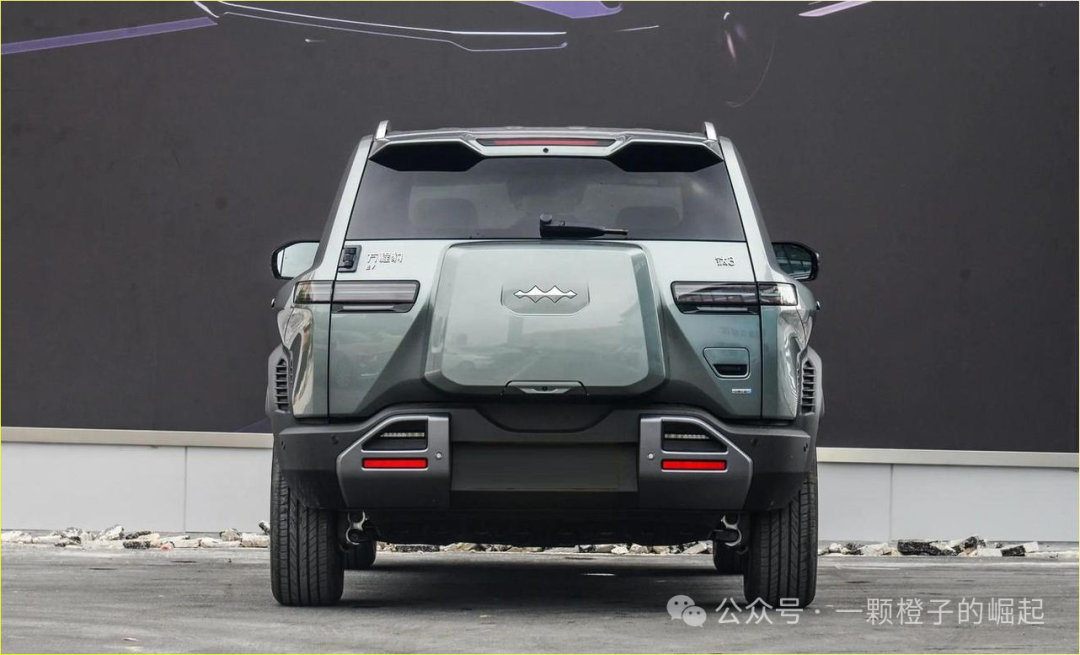
The problem analysis is not complicated: users’ perception thresholds for comfort are rising. The monthly sales of the BYD Han once exceeded 32,000 units, but complaints about “rear seat bumps” and “brake dive” have never ceased. To continue expanding in the mid-to-large sedan market, BYD must present a solution that is energy-efficient, cost-effective, and offers a significantly improved experience.
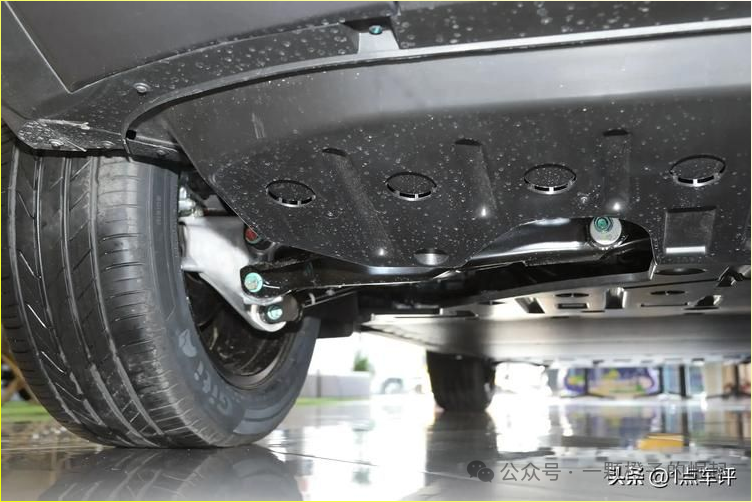
The solution is here! The core of the Yunnian-C is continuously variable damping + four-wheel height control. The official claim is a “5 ms adjustment cycle,” meaning it can complete a damping output update in just 0.005 seconds, shortening the time by 50% compared to traditional CDC. Coupled with a dual-motor all-wheel drive system, the system can reduce acceleration lift by 27%, emergency braking pitch by 22%, and cornering roll by 17%. These figures are based on real measurements compared to the Han Champion version without the Yunnian-C, not just estimates.
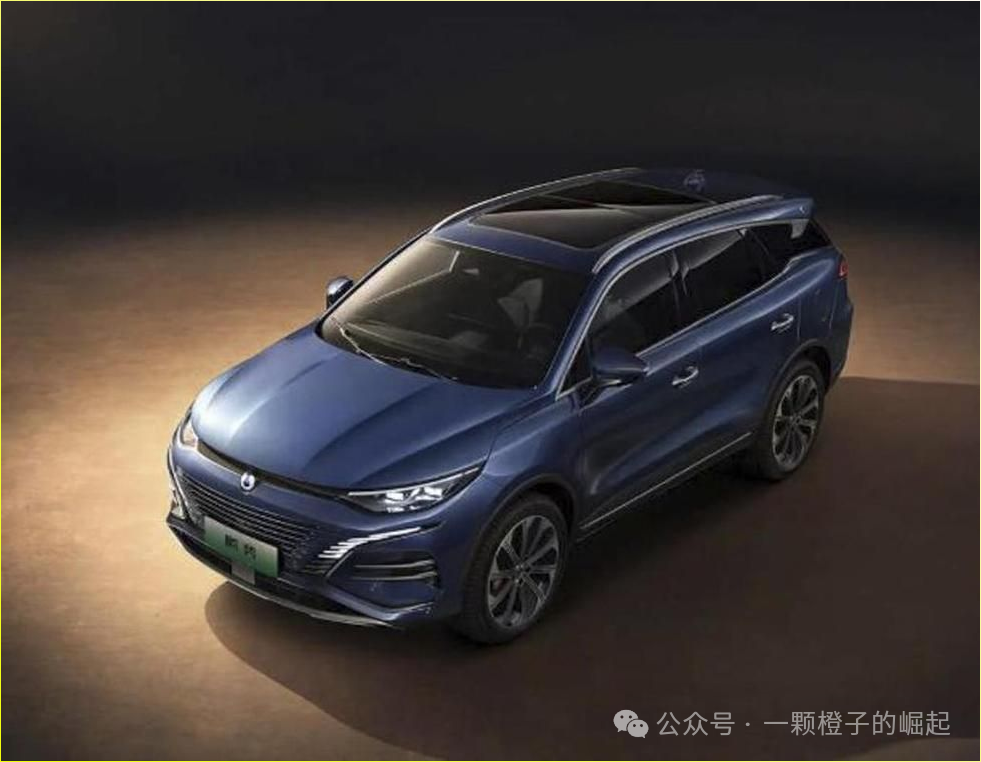
Breaking down the product strength requires a detailed look:
Power: The new DM-p still uses the 1.5T engine dedicated to the Xiaoyun plug-in hybrid + EHS 220 combination, with a total system power of 426 kW and a 0-100 km/h acceleration time of 4.9 s. The pure electric range is 215 km (CLTC), and the DC fast charging time from 30% to 80% is 22 min. These hard metrics easily outperform the Cadillac CT6 2.0T’s 6.9 s.
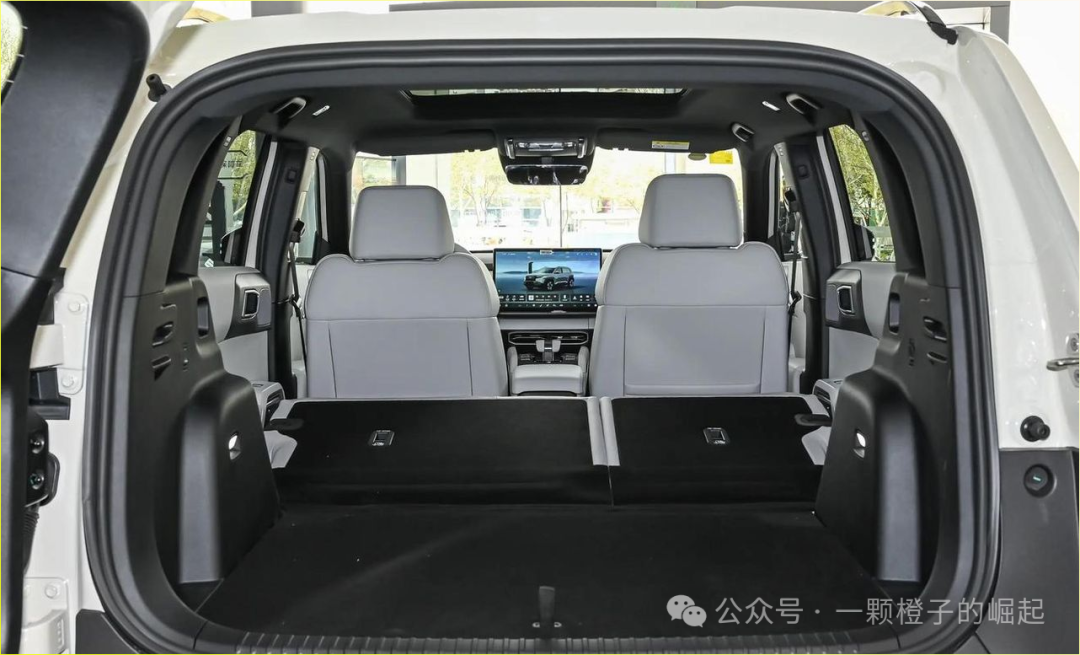
Chassis: The Yunnian-C retains a maximum 500 mm/s damping adjustment speed redundancy within the ECU. When the millimeter wave or camera detects a speed bump, it softens the suspension 0.1 seconds in advance, and immediately hardens after passing over it. Therefore, passengers in the rear seat will noticeably feel that the “soft front and hard rear” posture has been smoothed out. BYD even demonstrated a single-side collision lift, where the vehicle transfers the impact to the longitudinal beam area within 0.15 s, showcasing their utmost effort, or one could say they are going all out!
Dimensions: The vehicle measures 4980×1910×1495 mm, with a wheelbase of 2920 mm. While this is not exaggerated for a mid-to-large sedan, the wheelbase is 105 mm longer than that of the similarly priced Accord, providing two additional fistfuls of legroom in the rear, making it easy to cross one’s legs.
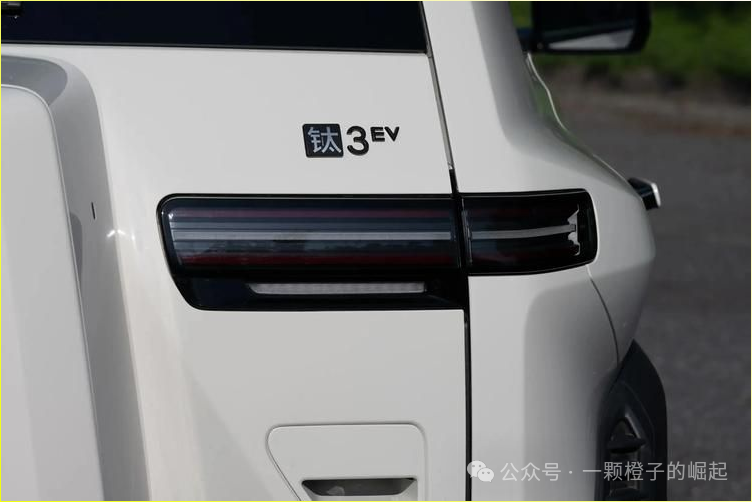
Interior: It features the DiLink 100 OS, with a fully digital instrument panel of 10.25 in and a central control 15.6 in rotating screen. The 8155 chip provides a dynamic UI frame rate of 90 fps and millisecond-level voice wake-up; compared to the old 662 chip, the vehicle’s performance score has improved by 210%. Notably, the damping control switch for the Yunnian-C has also been integrated into the central control, with comfort/sport/custom modes easily accessible, and there is potential for more granular customization through future OTA updates.
Space and Quietness: Official tests show that at a steady speed of 60 km/h with a full charge, the interior noise is 54.1 dB, nearly on par with the BMW 5 Series; when the SOC drops below 20%, the frequency of engine engagement increases, raising the noise to 57.8 dB, but thanks to the active suspension mitigating vibrations, the experience remains smooth. This still outperforms the Audi A6L 55 TFSI’s 60 dB.
Finally, returning to the market perspective: the Yunnian-C has brought the originally million-level active body control down to below the 250,000 yuan range, and it is a large-scale production, not just a symbolic gesture. BYD’s move clearly aims to firmly grasp the “comfort discourse power” in its hands; if joint venture brands continue to cling to traditional hydraulic + passive damping, they may find themselves thoroughly pressed to the ground. So, what are your thoughts on this combination of “Yunnian-C + fourth-generation DM-p”?