Are You Really Using the Multimeter Correctly?
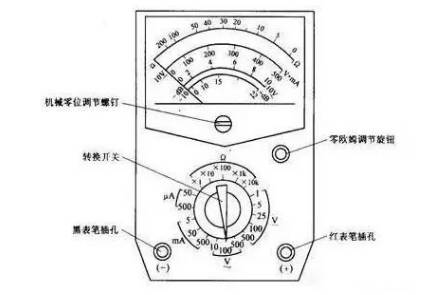
A multimeter, also known as a multifunction meter, is an essential measuring instrument in electrical and electronic fields. It is primarily used to measure voltage, current, and resistance, making it a versatile and multi-range measuring device. Generally, a multimeter can measure DC current, DC voltage, AC current, AC voltage, resistance, and audio levels. Some models can also measure AC current, capacitance, inductance, and many other electrical parameters.
Correctly using a multimeter not only allows for quick and accurate fault location but also prevents damage to electrical devices and the multimeter itself.
Below, I will briefly introduce nine common methods for using a multimeter:
1. Check the range before measuring; do not measure without checking.
When using a multimeter for measurement, always double-check the type of electrical parameter and range, and ensure the switch is set to the correct position.
2. Do not change the range during measurement; switch to the off position after measuring.
During measurement, do not arbitrarily turn the knob, especially when measuring high voltage (e.g., 220V) or high current (e.g., 0.5A), to avoid arcing and damaging the switch contacts. After measuring, return the range switch to the Off position.
3. The dial should be level; readings must be aligned.
When using a multimeter, it should be held level, and the line of sight should be directly aligned with the pointer (this is not necessary for digital meters).
4. Choose an appropriate range; the needle should deflect more than half.
When selecting a range, if the size of the measured value is unknown, start with a larger range and gradually switch to a smaller range based on the deflection angle until the pointer deflects to about two-thirds of the full scale.
For digital multimeters, continuously adjust to smaller ranges until the appropriate range is reached.
5. Measure resistance without power; discharge before measuring capacitance.
It is strictly prohibited to measure resistance in a live circuit. When checking large capacitors on electrical devices, discharge the capacitor before measuring.
6. Zero the meter before measuring resistance; zero again when changing ranges.
When measuring resistance, first set the switch to the resistance setting, short the two probes, and adjust the zero potentiometer so that the pointer points to zero ohms before measuring. Each time the resistance setting is changed, the ohm zero point should be readjusted.
7. Remember the black is negative; the black lead connects to the “+” inside the meter.
The red probe is positive, and the black probe is negative, but in the resistance setting, the black probe connects to the positive terminal of the internal battery.
8. Measure current in series; measure voltage in parallel.
When measuring current, the multimeter should be connected in series with the circuit; when measuring voltage, the multimeter should be connected in parallel across the circuit.
9. Do not reverse polarity; develop a habit of using one hand.
When measuring current and voltage, pay special attention to ensure that the red and black probes are not reversed, and always develop a habit of using one hand for safety.
Appreciation
Recommended Highlights
Do you know my ideal?
What are the precautions for construction of building drainage pipelines?
Analysis of common quality issues in installation engineering—Electrical Engineering Edition
Excellent practices in electromechanical installation engineering—Equipment Installation Edition
A comprehensive guide to reserved and embedded construction processes in electromechanical installation engineering!
What load can 1.5, 2.5, 4, 6 square wires carry? How much current?