Interpretation of Google C++ Style Guide Series Part 2 (Scope)

Link to Previous Issue:Interpretation of Google C++ Style Guide Series Part 1 (Header Files) 2.1 Namespaces Except for a few special cases, code should be placed within a namespace, which should have a unique name that includes the project name and may optionally include the file path. The use of <span>using namespace foo</span> is prohibited, … Read more

A Child’s C++ Diary at Age 8: (2) Code Framework

C++Code Framework The code framework: Speaking ofC++, it has a dedicated framework to contain it, which is essentially a small box that holds the code. So what does theC++ code framework look like? (Below is) #include &lt;iostream&gt; // Export toolbox using namespace std; // Namespace int main(){ // Main function return 0; // End statement … Read more

Linux chroot Sandbox and Isolation Mechanisms

Linux chroot Sandbox and Isolation Mechanisms In Linux system administration and development, the chroot (Change Root) sandbox and isolation mechanisms are the foundation for building secure and stable environments. chroot originated in the Unix era to restrict process access to the file system, while modern isolation mechanisms such as namespace, cgroups, and seccomp further extend … Read more

Detailed Explanation of Using Directive in Multi-Function C++ Programs

Using the using Directive in Multi-Function Programs In C++ programs, the <span>using</span> directive is used to introduce names from a namespace, allowing us to use these names directly without needing to prepend the namespace each time. In multi-function programs, how to reasonably use the <span>using</span> directive is an important programming practice issue. Four Methods to … Read more

Fundamental Concepts of C++: Header Files, Namespaces, and Line Break Output

Fundamental Concepts of C++: Header Files, Namespaces, and Line Break Output

Header Files C++ provides various header files, each containing the essential functionalities required for the program to work correctly. We have already seen the input-output handling related to the <iostream> header file in the first C++ program. #include &lt;iostream&gt;using namespace std;int main(){ cout &lt;&lt; "Hello world!"; return 0;} #include is used to add standard or … Read more

C++ Namespaces: Say Goodbye to Naming Conflicts

C++ Namespaces: Say Goodbye to Naming Conflicts

When developing projects in a company, team collaboration is common. Sometimes, while writing code, you define a function called test for testing purposes, but when you pull your colleague’s code, it throws an error because they also defined a test function. This kind of awkward situation, where ‘great minds think alike’, is easily encountered in … Read more

C++ Namespaces: A Tool for Organizing Code and Avoiding Conflicts

C++ Namespaces: A Tool for Organizing Code and Avoiding Conflicts

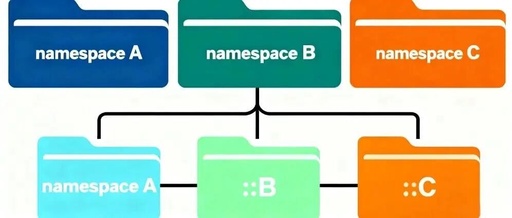
What is a Namespace? A namespace is an important mechanism in C++ for organizing code and avoiding naming conflicts. It allows grouping code elements (such as variables, functions, and classes) into different naming areas, thus preventing name collisions between different libraries or code modules. The Standard Library and the std Namespace The C++ Standard Library … Read more

Embracing Modern C++: Moving Away from Legacy Headers to New Features and Namespaces

Embracing Modern C++: Moving Away from Legacy Headers to New Features and Namespaces

In the process of standardizing and developing C++, the standards committee made significant reforms to the header file system to distinguish it from C and introduce new features. Continuing to use legacy header files not only appears outdated but also means you cannot utilize many safer and more powerful new features. This article aims to … Read more

C Language Program 07: Displaying a Pyramid Shape with Spaces and Asterisks

C Language Program 07: Displaying a Pyramid Shape with Spaces and Asterisks

The pattern of the pyramid is actually an isosceles triangle. We take the number of lines displayed in the program as the height, using n to represent the number of lines, with the top layer as the first layer, incrementing downwards to the second layer, third layer, fourth layer, and so on, until the i-th … Read more

Comprehensive Analysis of Variable Scope in C++: Visibility Rules from Local to Global

Comprehensive Analysis of Variable Scope in C++: Visibility Rules from Local to Global

Variable scope is a very important concept in C++, determining the visibility and lifecycle of variables within a program. Understanding variable scope is crucial for writing correct and efficient C++ programs. 1. Overview of Variable Scope In C++, variable scope refers to the range within which a variable can be accessed in a program. C++ … Read more