Analysis of CSP-J/S and GESP C++ Competition Formats: A Must-Read Guide for Parents of Informatics Olympiad Participants
Dear parents,
Recently, many parents have inquired about how their children can participate in the Informatics Olympiad. What are the differences between CSP-J/S and GESP C++? Today, based on the official documents from the China Computer Federation (CCF), I will outline the characteristics of these two competitions for your reference.
1. CSP-J/S: The “Gateway” to the Informatics Olympiad
CSP-J/S (Non-Professional Software Ability Certification) is an entry-level competition under the Informatics Olympiad (NOI) system organized by CCF, divided into Entry Level (Group J) and Improvement Level (Group S), suitable for upper-grade elementary to high school students.
1. Competition Characteristics
- Two Rounds of Assessment:
- First Round (Preliminary): Written exam assessing computer fundamentals, C++ syntax, and simple algorithms, with a total score of 100 points, and each province sets its own qualifying line.
- Second Round (Semi-Final): On-site programming, 3.5 hours to complete 4 programming problems, each worth 100 points, using the OI competition format (i.e., no real-time feedback on scores after submission, with the final submission being the determining score).
- Award Evaluation:
- National unified benchmark, with provinces dynamically adjusting quotas based on results.
- Approximately 20% receive first prize, and outstanding participants may advance to the NOIP (National Youth Informatics Olympiad).
2. Educational Impact
The awards from the CSP-J/S semi-finals may be used as a selection reference for science and technology specialty students during transitions from elementary to middle school and from middle to high school.
2. GESP C++: Programming Ability Level Certification
GESP (Programming Ability Level Certification) is also organized by CCF but focuses more on programming ability assessment, suitable for students aged 6-18 to progressively improve.
1. Competition Characteristics
- Graded Exams:
- Levels 1-4 (Basic): Assessing knowledge of variables, loops, arrays, etc.
- Levels 5-8 (Advanced): Involving algorithms such as dynamic programming and graph theory, aligning with the content of CSP-J/S semi-finals.
- Exam Format:
- Offline computer-based testing, 2 hours for levels 1-4, 3 hours for levels 5-8, including multiple-choice, true/false, and programming questions.
- Programming questions use the IOI competition format (multiple submissions allowed, with real-time score feedback).
- Skipping Levels:
- A score of ≥90 in a single level allows skipping to the next level (e.g., scoring 90 in level 1 allows skipping to level 3).
- Teacher recommendations can also allow skipping levels, but failure will affect the recommendation eligibility.
2. Relationship with CSP-J/S
- Preliminary Exam Exemption Policy:
- GESP C++ level 7 with ≥80 points can exempt from the CSP-J preliminary exam, and level 8 with ≥80 points can exempt from the CSP-J/S preliminary exam (limited to once).
- Preparation Value:
- Content from levels 5-8 overlaps with the knowledge points of CSP-J/S semi-finals, serving as pre-competition training.
3. How to Choose?
- If the goal is clear (aiming for NOI): It is recommended to prepare directly for CSP-J/S, as it is directly linked to NOIP and provincial selections.
- If gradual improvement is needed: Start with GESP, using graded exams to assess ability before transitioning to CSP-J/S.
- If time is limited: GESP exams are held more frequently (4 times a year), suitable for periodic testing; CSP-J/S is held only once a year and requires advance planning.
4. Conclusion
Whether it is GESP or CSP-J/S, children need to solidly grasp programming fundamentals, and parents should not rush the process. It is advisable to choose a suitable path based on the child’s interests and abilities. If there are any questions, please refer to the CCF official website (www.ccf.org.cn) or consult the school’s informatics coach.
(The data in this article is sourced from CCF official announcements and historical competition documents; please refer to the latest notifications for any policy changes.)
Source | Transferred from the internet
Statement | Except for original articles from the Bojia Robotics Club headquarters, all articles shared and reposted online are for the purpose of promoting children’s programming education in China, for learning and exchange only, not for commercial use, and will be credited. If the original authors of the articles or photos have any objections, please contact customer service for prompt handling or removal. Thank you for your support.
【Previous Highlights Article Guide】Click the image below


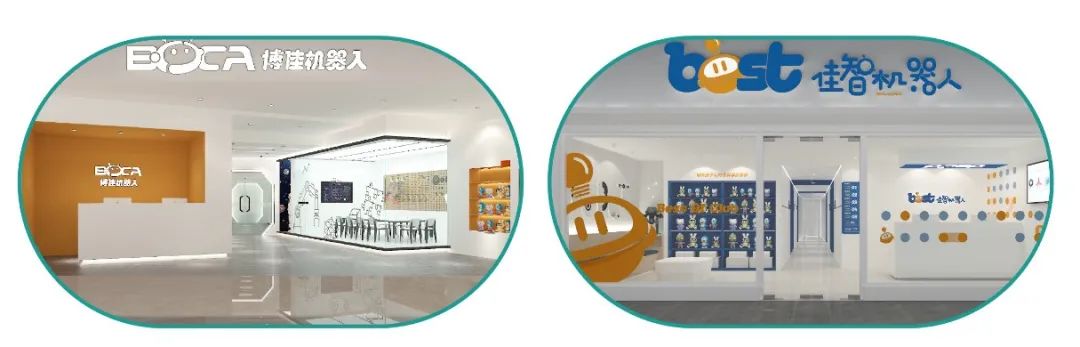
 01Bojia Science EducationBojia Science Education was established in April 2009, dedicated to the research of robotics educationfor over a decade!It has been committed to the comprehensive quality development, intellectual development, and innovative education in robotics for youth aged 3-16. With strong teaching staff, robust R&D capabilities, and standardized teaching management.Bojia Science Education has two major brands—Bojia Robotics and Jiazhi Robotics, which have establishednearly 200robotics clubs inover 400cities nationwide, providing educational services to over400,000students, bringing knowledge and joy to children’s growth!
— THE END —

Welcome everyone to like +“Looking”
Let us be seen by more people!👇