The United States leads the world in chip design capabilities, with companies like Apple, Qualcomm, and NVIDIA unmatched in chip design quality. However, the manufacturing segment has long relied on Asian companies such as TSMC and Samsung.
This “strong design, weak manufacturing” pattern has gradually hollowed out the U.S. chip industry—no matter how good the design is, it is difficult to implement without stable foundry support.
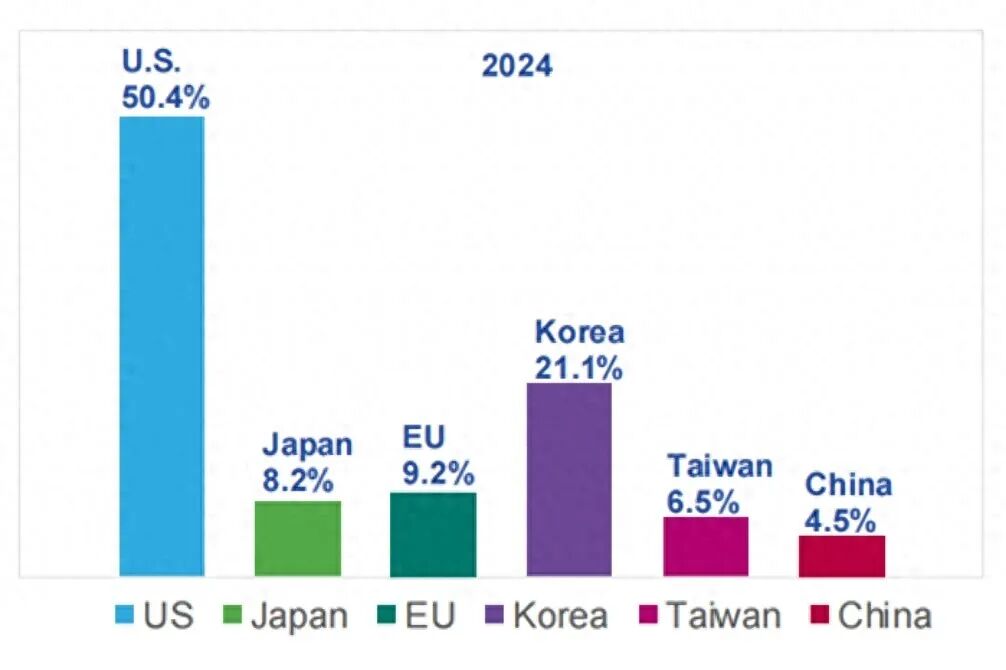
To change this situation, both the Biden administration and the Trump team have made revitalizing domestic chip manufacturing a key task. Biden has introduced a multi-billion dollar chip subsidy plan, while Trump has pressured companies to build factories in the U.S. through tax increases.
A typical example is TSMC: this company, originally based in Taiwan, has had to invest in building 5nm, 3nm, and 2nm chip factories in Arizona, with total investments soaring to $165 billion, setting a record for the largest foreign investment in U.S. history.
However, after TSMC’s U.S. factory officially began production, a key issue emerged: the costs are too high. AMD’s CEO Lisa Su recently stated that chips sourced from the U.S. factory are 5% to 20% more expensive than those from the Taiwan factory. This data has caused a stir in the industry—many chip products have profit margins of less than 20%, and only a few high-end chips can maintain higher profits. The significant increase in costs means that chips from U.S. factories are “unaffordable” for most customers.

Why are chips made in the U.S. so expensive? TSMC’s founder Morris Chang had predicted that the cost of building factories in the U.S. would be 200% higher than in Taiwan, with subsequent operating costs being 20% to 40% higher. These additional expenses include more expensive land, equipment transportation costs, and efficiency losses due to a lack of skilled workers. Ultimately, these costs are passed on to the customers.
Even more embarrassingly, despite the high costs, the production capacity of U.S. factories has not yet fully met expectations. Currently, the Arizona factory mainly produces 5nm and 4nm chips, while more advanced 3nm and 2nm production lines are still under construction. In contrast, TSMC’s factories in Taiwan have already achieved mass production of 3nm chips, and 2nm technology is in the sprint stage. This dual disadvantage of “higher costs and slower technology” significantly undermines the competitiveness of U.S. factories.

For the U.S., this “reshoring movement” in the chip manufacturing industry is facing severe challenges. The government is using subsidies and policies to attract companies to build factories, but market rules are ultimately hard to defy—when costs far exceed what customers can bear, even the most advanced factories will struggle to receive orders. As industry insiders have said: “The U.S. can build beautiful chip factories, but getting global customers to pay high prices is ultimately not a long-term solution.”
From TSMC’s case, it can be seen that the essence of competition in the chip manufacturing industry is a competition of supply chains and costs. The U.S. wants to quickly “catch up” through administrative means but overlooks that the semiconductor industry requires decades of accumulated supply chains and talent systems. When AMD’s chip costs rise by 20% due to U.S. manufacturing, it may also serve as a reminder: revitalizing the chip manufacturing industry requires more than just money and policies.