 Click the blue text above to follow us immediately
When children express a desire to learn programming, Python and graphical programming (Scratch or Kitten) may be the first choices. However, today we will discuss a seemingly “hardcore” yet immensely promising option—C++. It is not only the “key to success” in informatics competitions but also the crucial key to unlocking the core of computer science. Learning C++ provides children with far more than just lines of code!
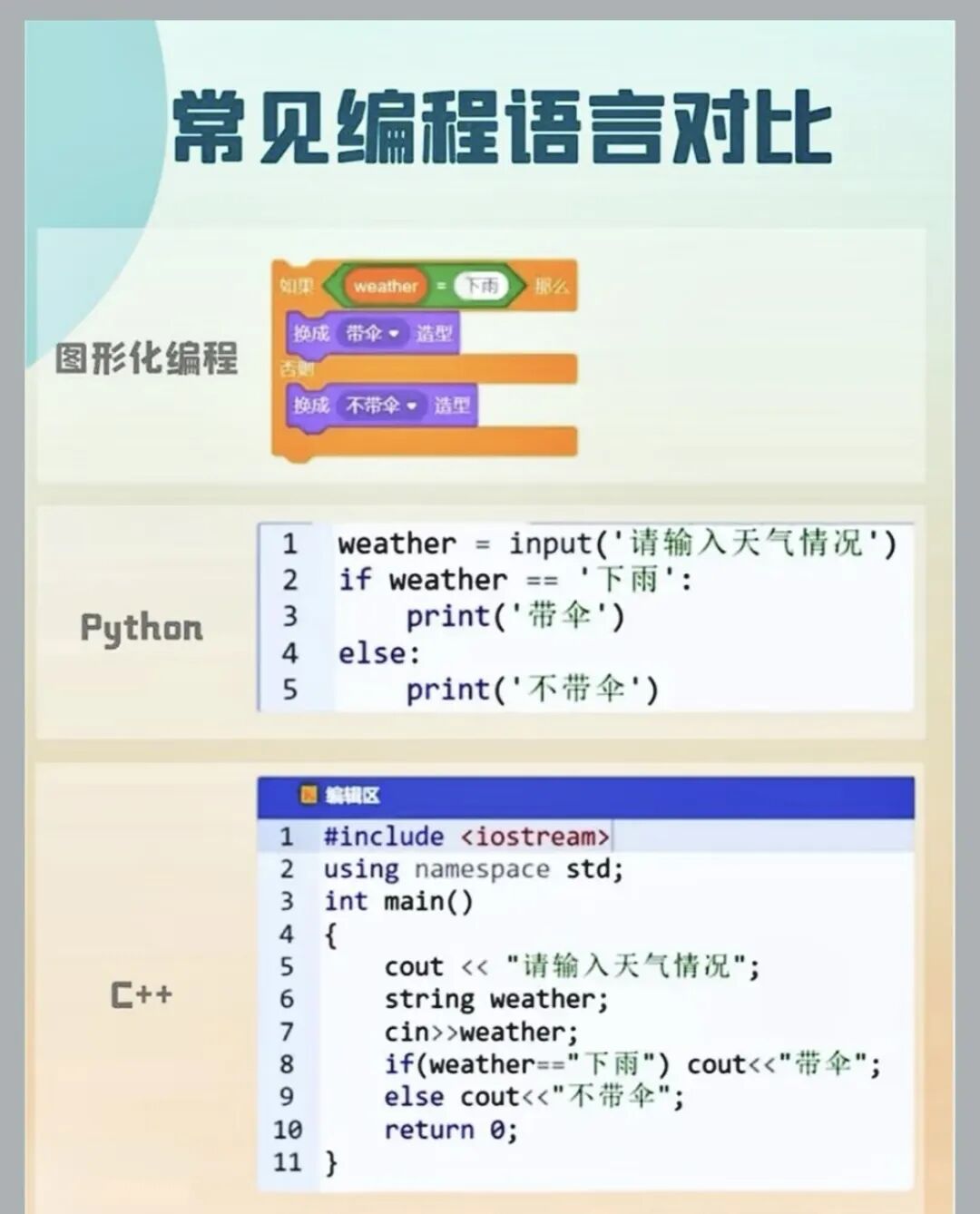
1. Debunking Misconceptions: Is C++ Really “Inaccessible”?
When C++ is mentioned, many parents’ first reaction might be: “It’s too difficult! Can my child learn it?” “Isn’t that something for college students or engineers?” This concern is understandable, but it does not represent the full picture.
· Where is the “difficulty”?? C++ is indeed a relatively low-level language, closer to computer hardware, requiring an understanding of concepts like memory management and pointers. This demands stronger logical thinking and abstract reasoning from learners.
· Where is the “ease”? For teenagers with a foundation in logical thinking and some mathematical ability (usually in upper elementary or middle school), mastering the core syntax and basic applications of C++ is entirely feasible under scientific guidance and a gradual learning path. Many excellent young programmers start learning C++ at this stage and shine in informatics competitions.
Key Point: “Difficulty” is not a barrier but a stepping stone. It is precisely this challenge that can deeply cultivate children’s core abilities.
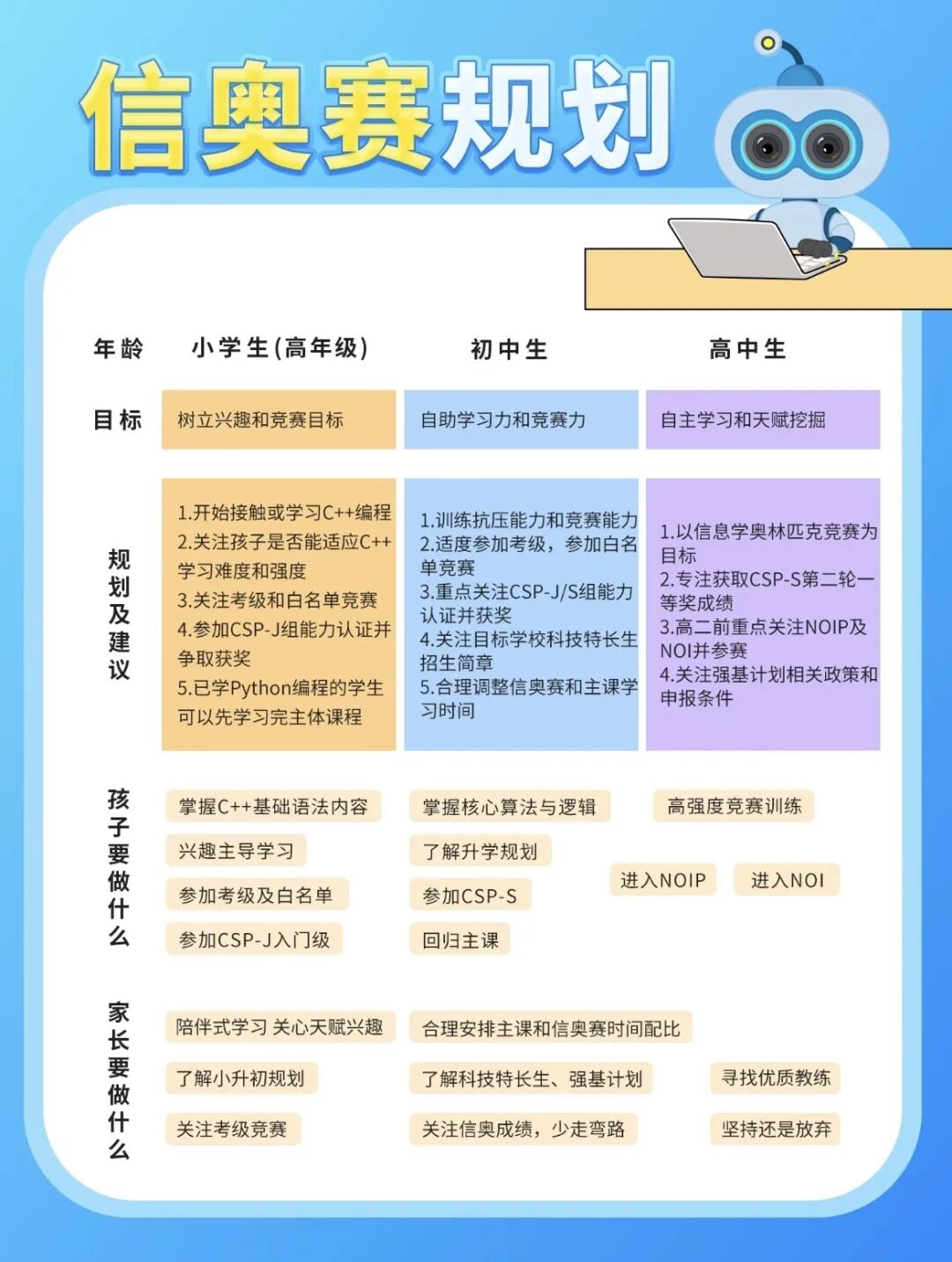
2. What “hardcore” skills can teenagers gain from learning C++?
ChoosingC++ means children will gain far more than just programming language skills:
1. A profound understanding of computer principles:
· Learning C++ is like disassembling a precision machine. How memory is allocated, how data is stored, how the CPU executes instructions… these low-level concepts become less mysterious. Children can truly understand how programs “run” on computers, establishing a solid view of computer systems. This depth is hard to replace when learning other high-level languages (like Python, Java).
2. Strong logical thinking and problem-solving abilities:
· C++ requires rigor and precision. A single semicolon or bracket error can cause a program to crash. This kind of “obsessive” precision greatly enhances children’s attention to detail, organization, and logical reasoning abilities.
· Solving complex algorithm problems (like informatics competition questions) requires breaking down large problems, designing optimal solutions, and debugging errors. This process is an excellent training ground for higher-order thinking and resilience.
3. A solid foundation in algorithms and data structures:
· C++ is one of the best practice languages for understanding and implementing classic algorithms (sorting, searching, graph theory, etc.) and data structures (arrays, linked lists, stacks, queues, trees, graphs, etc.). Implementing these fundamentals in C++ helps children understand their performance and applicable scenarios, laying an incredibly solid foundation for computational thinking and paving the way for future learning in any computer science knowledge.
4. A stepping stone to top competitions and prestigious schools:
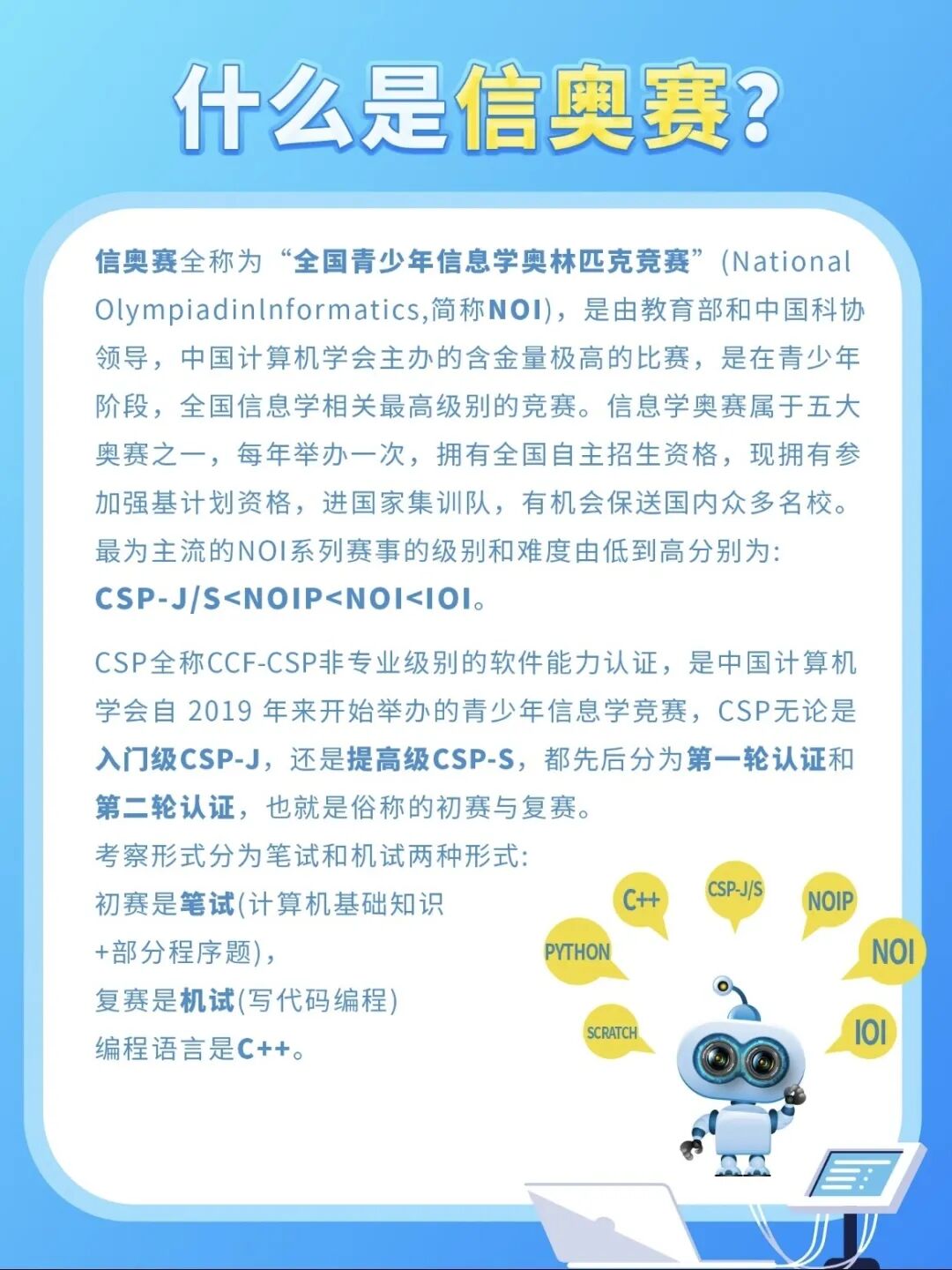
· This is a very practical advantage. The official designated language for the National Youth Informatics Olympiad (NOI) and its leagues (NOIP/CSP) is C++ (with some allowing C). Achieving excellent results in these competitions significantly benefits children in their academic pursuits (especially in top universities’ computer science, artificial intelligence, and related majors), serving as an important leverage in foundational programs and comprehensive evaluation admissions.
5. Early preparation for future competitiveness:
· C++ remains an irreplaceable pillar in high-performance computing, game development, operating systems, embedded systems, financial systems, and large infrastructure. Mastering C++ means children have a key pass to enter these high-tech fields when choosing their majors or careers, with a more comprehensive tech stack and greater potential.
 Teaching C++ to Youth: A Scientific Path is KeyLetting children learn C++ is not about diving straight into “thick books”. A scientific approach is crucial:01Build a solid foundation:
· Interest first: Cultivate interest through graphical programming (Scratch, Kitten) or Python to establish basic programming concepts (variables, loops, conditional statements).
· Mathematics and logic: A solid foundation in mathematics (especially algebra and logic) is a booster for learning C++.
02Gradual entry:
· Choose appropriate resources: Look for C++ introductory courses or books designed for teenagers, emphasizing clear explanations of foundational concepts (variables, data types, operators, control flow, functions).
· Start with console programs: Initially focus on programs that input and output in the command line window, avoiding complex graphical interfaces that can distract attention.
· Emphasize hands-on practice: “Learning by Doing” is key. Write and debug numerous small programs to reinforce syntax and understanding of concepts.
03Dive into core concepts:
· Arrays and strings: Understand batch processing of data.
· Advanced functions: Parameter passing (value passing, reference passing), scope.
· Structures/classes (introductory): Understand data encapsulation (an introduction to object-oriented thinking).
· Pointers (core difficulty): Requires patient guidance, using numerous diagrams and simple examples to understand memory addresses and the concept of indirect access. This is the essence of C++ and a key differentiator of ability.
04Challenge algorithms and data structures:
· After mastering basic syntax, gradually introduce basic algorithms (sorting, searching) and data structures (linked lists, stacks, queues). Practice with introductory informatics competition problems.
· Participate in competitions:CSP-J/S (formerly NOIP popular/improved groups) is an excellent platform to test learning outcomes and enhance abilities.
05Continuous improvement:
· Learn to use the Standard Template Library (STL) (like vector, map, sort, etc.) to improve programming efficiency.
· Explore more complex algorithms and data structures, reading excellent open-source code snippets.
Advice for Parents
Assess interest and ability: Observe whether your child has a sustained passion and some talent for logic, mathematics, and problem-solving. Forcing learning is ineffective.
Seek professional guidance: Choose experienced teachers or quality course platforms that understand the cognitive characteristics of teenagers to avoid children becoming frustrated due to improper methods.
Lower expectations and focus on the process: Learning C++ is a marathon, not a sprint. Focus on the improvement of children’s thinking abilities and problem-solving progress, rather than short-term quick results.
Provide support and encouragement: Difficulties will arise during the learning process (especially with pointers and complex algorithms). Parents’ patient companionship, moral support, and help in finding solutions are crucial.
Balance development: Programming is an important skill, but it is not everything. Ensure that children have ample rest, physical activity, and other hobbies.
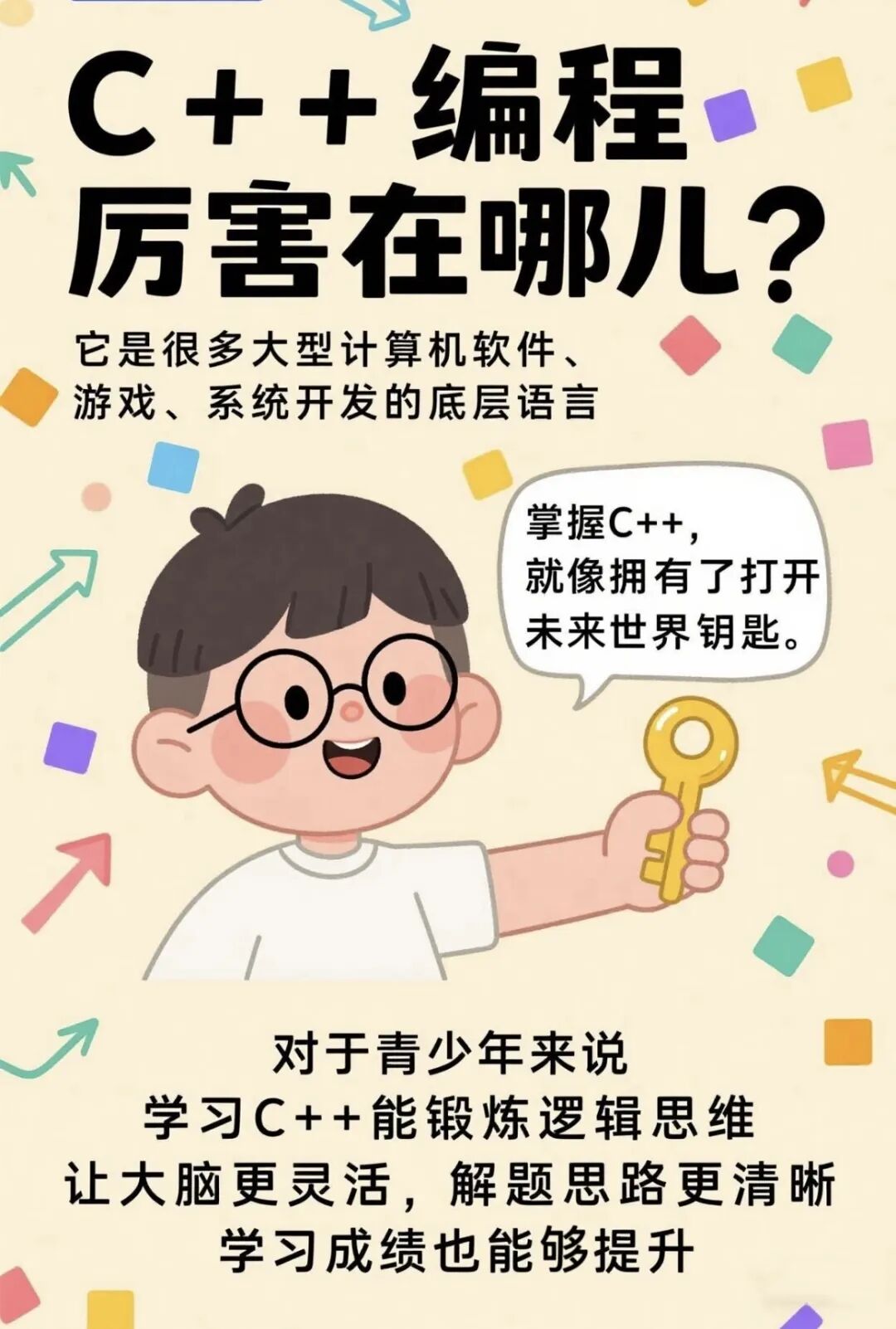
C++ may not be the most “friendly” language for programming beginners, but it is undoubtedly the most solid and profound path to the realm of computer science. It is like a sharp chisel that can carve out children’s rigorous logic, deep insight, strong problem-solving abilities, and resilience in the face of complex challenges. These “hardcore” skills will accompany them throughout their lives, allowing them to stand out in a technology-driven era, regardless of whether they become programmers.
When children master C++, they not only learn a language but also gain the “superpower” to understand the underlying logic of the digital world. This ability is a significant gift for their future.
 Scan to enter the Douyin store
Interesting courses are all here
Image source: Internet (infringement will be deleted)
Editor: Zhu Keyi
Initial review: Zhang Yuanwei
Final review: Zhang Shengjun
Final review: Zhong Youdi
Contact number: 19079788003 15007078657
(WeChat same as above)
Address: 5th Avenue Phase II, Building 2, 3rd Floor, No. 5 Baihu Supermarket, Qinjian Road, Zhangjiang New District, Ganzhou City (Thinking Star Training Programming Cat Experience Center)