News 1: The Nova Lake-S chip has officially entered tape-out, utilizing TSMC’s N2 process
Intel is preparing to launch the Panther Lake processor this year, which will definitely use Intel’s 18A process. As for the Nova Lake expected to be released next year, although there has been much information about the specifications of this processor, the manufacturing process has not been conclusively determined. Some say it will use Intel’s 14A, while others suggest TSMC’s N2P. It is likely that Intel has not yet made a decision and plans to try both.
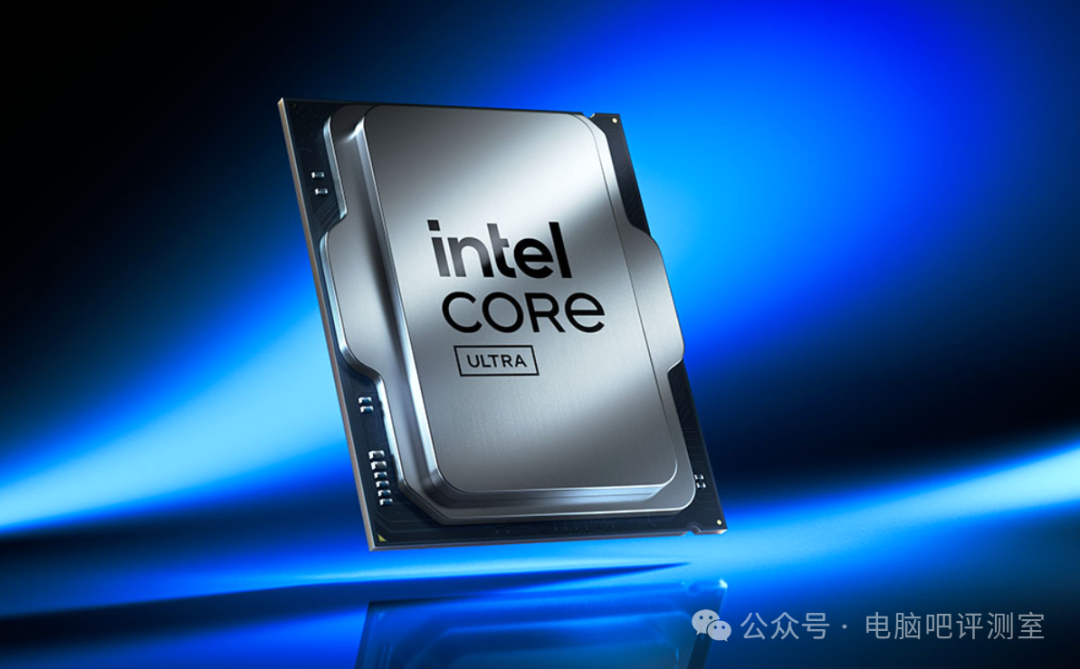
According to SemiAccurate, Intel’s Nova Lake-S processor has officially entered tape-out at TSMC’s wafer fab, producing some compute modules using the TSMC N2 node. However, this does not mean that Nova Lake-S will definitely use the TSMC N2P process, as it is a modular product. Until the final design is settled, the manufacturing process for each module can be freely combined. There is a significant possibility that they have also internally tape-out some samples using Intel’s 14A for comparison to see which process yields better results. It is also possible that TSMC’s N2P is kept as a backup in case their own 14A process encounters issues, or if production costs are too high, or if internal capacity cannot meet market demand. A reliable backup plan is essential, as Nova Lake must be delivered on time in the second half of 2026.
It will take several months from tape-out to the final product. After the chip is tape-out, it will be powered on and tested in Intel’s labs, running various tests to determine the chip’s performance under different conditions, and more importantly, to check for bugs in the chip design. Generally, power-on testing takes a few weeks to a month, and mass production will begin a few months later. After that, it will take another two to three months for production and shipping, which means Nova Lake-S is most likely to be released in the third quarter of 2026.
Nova Lake-S will be equipped with up to two compute modules, with a maximum of 52 cores, including 16 P-cores, 32 E-cores, and 4 LP E-cores, using the LGA 1954 interface, supporting DDR5-8800 memory. The GPU module will adopt the Xe3 Celestial architecture, while the display and media engine will use the Xe4 Durid architecture, making it a very interesting product.
Original article link: https://www.expreview.com/100670.html
As the time approaches, Intel’s next-generation CPU product Nova Lake has finally received new information. It is reported that the Intel Nova Lake-S chip has officially entered tape-out. Previously, there were multiple channels indicating that this chip might be based on Intel 14A or TSMC N2P, and along with this tape-out news, there is information about compute units manufactured using TSMC’s N2 node. However, even if the tape-out is based on TSMC N2P, it does not mean that the final product will definitely use TSMC’s process, as there remains the possibility of small batch tape-out followed by a change in manufacturing process for mass production. It is still too early to draw conclusions.
News 2: Intel is preparing Nova Lake-AX, enhancing integrated graphics performance with numerous Xe3 cores
Intel is advancing the development of Nova Lake, planning to release it in 2026. It features a tile-based design, with P-Cores and E-Cores upgraded to Coyote Cove and Arctic Wolf architectures, supplemented by LP E-Cores for background task management. Additionally, it will be equipped with Xe3 architecture integrated graphics, based on the Celestial design.
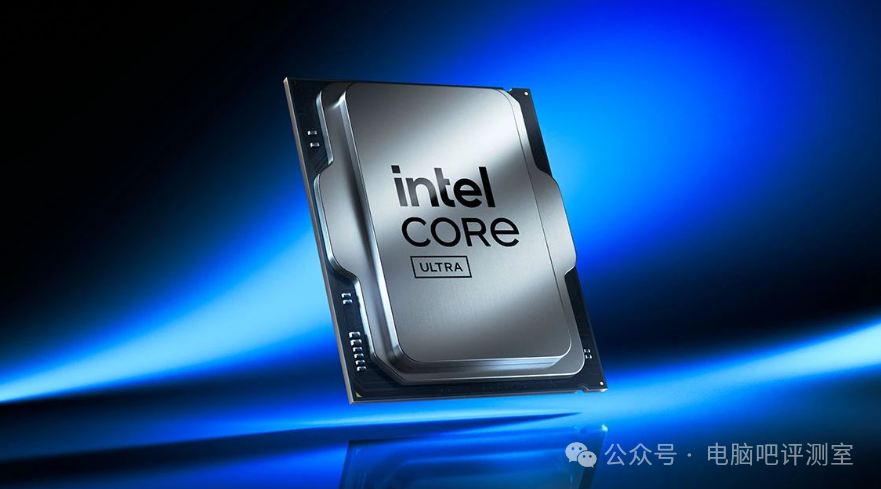
According to Wccftech, Intel is preparing Nova Lake-AX, a SoC for high-end laptops, featuring 52 cores and numerous Xe3 cores. Nova Lake is divided into several designs, including Nova Lake-S for desktops, Nova Lake-H, and Nova Lake-HX for laptops, with Nova Lake-AX debuting later.
Nova Lake-AX utilizes Intel’s second-generation Foveros packaging technology, stacking two compute modules to achieve a configuration of up to 16P+32E+4LPE. Additionally, a separate cache module will be included, providing over 100MB of last-level cache, similar to AMD’s 3D vertical cache (3D V-Cache) technology, which meets the needs of the compute modules while also catering to the integrated graphics. Rumors suggest that Nova Lake-AX will feature 20 to 24 Xe3 cores, leveraging the cache module to further enhance performance.
Intel aims to provide a truly high-performance APU experience with Nova Lake-AX, challenging AMD’s long-standing dominance in this segment. Industry insiders indicate that if Intel’s plans succeed, it will be their most aggressive product in the mobile space to date.
Original article link: https://www.expreview.com/100745.html Previously, there were reports that Intel’s next-generation products would include a Nova Lake-Halo chip to compete with AMD’s Medusa Halo. However, the latest news indicates that this Halo-level chip may not use such a straightforward naming convention, but instead adopt a new suffix—AX. It is rumored that Nova Lake-AX will feature numerous Xe3 cores, enhancing both integrated graphics and NPU performance, which aligns with AMD’s strategy for Medusa Halo. Considering that Intel may even have X3D ready for Nova Lake, it is very likely that they will fully compete with AMD.
News 3: A Cold Shower: Intel and AMD’s Next-Gen Flagship Mobile Platforms May Not Launch
On July 17, news from X platform insider Raichu (@OneRaichu) provided additional specifications for the rumored “Halo” level flagship platform Nova Lake-AX, but this leaker statedthat in their view, Nova Lake-AX will not be launched.

It is said that the envisioned Nova Lake-AX will be equipped with an 8P + 16E + 4LP-E CPU,384EU scale Xe3P architecture integrated graphics, similar to AMD’s already launched “Strix Halo” witha 256bit memory bus, supporting LPDDR5x memory at 9600/10667 MT/s.
Another insider, HXL (@9550pro), expressed a similar view regarding AMD’s Zen 6 generation flagship mobile platform Medusa Halo, stating that it has disappeared from the roadmap.

The potential cancellation of Nova Lake-AX and Medusa Halo may be influenced by the poor commercial performance of the “Strix Halo” platform:
Currently, devices using the “Strix Halo” processor are priced relatively high, with consumer adoption only in niche markets that are difficult to reach with discrete GPUs (such as x86 gaming tablets like ROG幻X). In the lightweight AI workstation SoC solution dimension, the memory bandwidth of LPDDR-based solutions is limited, and the software ecosystem support for Intel and AMD hardware is far inferior to that of NVIDIA.
Original article link: https://m.ithome.com/html/868854.htm
Of course, there are also pessimistic reports suggesting that due to the poor commercial performance of the current generation Strix Halo, the next-generation flagship integrated graphics from Intel and AMD may very well be stillborn. Judging by the information released, having such a large integrated graphics scale appear in the mobile space presents certain challenges, both in terms of commercial viability and implementation costs. Perhaps the mobile sector is not suitable for the re-emergence of ultra-large integrated graphics. However, speculation aside, we still hope that Intel and AMD can produce ultra-large integrated graphics as a form of self-breakthrough.Welcome to join
Computer discussion group: 386615430
Official review group of Computer Bar: 798545305
Follow Bilibili @ Computer Bar Review Room
Note: This article is reprinted from the internet (links above). Any images or logos appearing in this article belong to their legitimate owners; this article is for informational purposes only. If there is any infringement, please leave a comment in this article. Quoting the content and views of this article does not represent the views of the Computer Bar Review Room.