The Philosophy of Execution and the Interpreter in Python
The Philosophy of Execution and the Interpreter in Python

The Philosophy of Execution and the Interpreter in Python At the surface of a language, there is syntax and structure; at the deeper level, there is execution and time. The execution model of Python is not a technical detail, but a reflection of the language’s philosophy. It determines how Python understands code, how it constructs … Read more

Learning Python from Scratch

Learning Python from Scratch What is Python? Python is a high-level, object-oriented programming language that has become one of the most popular programming languages in the world today due to its simple and readable syntax and powerful capabilities. Python was conceived and created by Dutch programmer Guido van Rossum during Christmas in 1989, with the … Read more

Life is Short, I Use Python – A Wubi Query Program in Ten Lines of Code

Life is Short, I Use Python - A Wubi Query Program in Ten Lines of Code

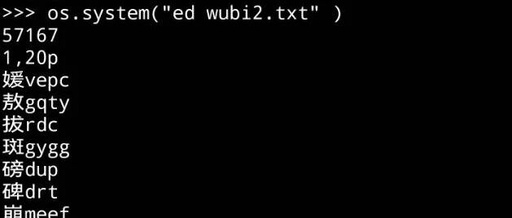
Recently, I have been learning Wubi typing. On one hand, it is to make up for the regret of not learning it well thirty years ago (when I was young, I only memorized the Wubi mnemonic). On the other hand, as I age, my physical strength is not what it used to be, and typing … Read more

Data Types and Variables in Python

Data Types and Variables in Python

Python is a dynamically typed language, meaning you do not need to declare the type of a variable when defining it; the interpreter automatically determines the type based on the assigned value. 1. Numeric Types Type Description Example int Integer (positive, negative, zero) 10, -5, 0 float Floating-point number (decimal) 3.14, -0.01 complex Complex number … Read more

Understanding Variables and Data Types in Python: A Comprehensive Guide

Understanding Variables and Data Types in Python: A Comprehensive Guide

Hello everyone! Welcome to the third article in the “Python from Zero to Mastery” series. Today, we will explore one of the most fundamental and important concepts in Python programming—variables and data types. Python is known for its concise and elegant syntax, and the variable system is a prime example of this elegance. Unlike many … Read more

Reasons Why AI Does Not Use C Language

Reasons Why AI Does Not Use C Language

1. Prioritizing Development Efficiency The simplicity of Python: Python’s syntax is close to natural language, and the amount of code is usually only 1/5 to 1/10 of that in C. For example, to implement matrix multiplication: # Python result = numpy.dot(matrix_a, matrix_b) In contrast, C requires manual memory management, loops, and pointers, significantly increasing code … Read more

Performance Revolution! Enhancing Python Key Algorithm Efficiency with C Extensions

Performance Revolution! Enhancing Python Key Algorithm Efficiency with C Extensions

Performance Revolution! Enhancing Python Key Algorithm Efficiency with C Extensions At three o’clock that morning, the CPU usage of the online server suddenly soared to 95%, and the alarm message woke me from my sleep. When I opened my laptop, I found that the data processing module I had restructured a few days ago was … Read more