Embedded Linux: Why Is Thread Synchronization Necessary?

Embedded Linux: Why Is Thread Synchronization Necessary?

Click the aboveblue text to follow us The core purpose of thread synchronization is to ensure that multiple threads can operate on shared resources in an expected manner, preventing data inconsistency issues. Shared resources refer to variables or data structures that multiple threads may read or modify simultaneously. For example, if there is a global … Read more

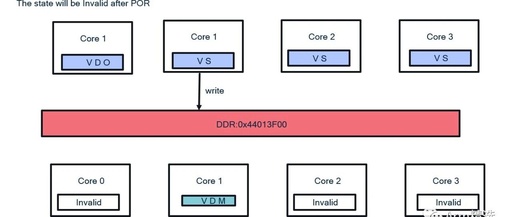
Armv8 Cache Coherency Solution: MOESI Protocol

Armv8 Cache Coherency Solution: MOESI Protocol

Click the card below to follow Arm Technology Academy This article is organized by the WeChat public account Arm Selected, and mainly shares the related content of Armv8 Cache Coherency Solution: MOESI protocol. 1. MOESI State Definitions The Armv8 architecture uses the MOESI protocol to maintain data consistency between multiple cores. The MOESI protocol describes … Read more

ARMv8 Cache Coherency Solutions: MOESI Protocol

ARMv8 Cache Coherency Solutions: MOESI Protocol

1. MOESI State Definitions The ARMv8 architecture uses the MOESI protocol to maintain data consistency across multiple cores. The MOESI protocol describes the state of a shared cache line in L1 Data Cache as follows: M, Modified, Unique Dirty, only exists in the current cache (unique) and the data in this cache line is different … Read more

Data Consistency in AI Systems – 24 Chip

Data Consistency in AI Systems - 24 Chip

In the previous article: AI System – 22 Introduction to AI Chip Storage, various storage types were discussed, but when the Core accesses data, it often encounters data consistency issues, which have already been successfully identified as common sources of errors in software, especially the inconsistencies seen between heterogeneous cores and multi-core data inconsistencies, leading … Read more

Embedded Linux: Memory-Mapped I/O

Embedded Linux: Memory-Mapped I/O

Click the above blue text to follow us In Linux systems, Memory-Mapped I/O is an advanced I/O mechanism designed to provide direct access to files by mapping them into the process’s address space. Through this method, data can be accessed directly via memory without the need for system calls to transfer data, thereby improving file … Read more

PLC Data Consistency: Transaction Processing Mechanism to Ensure Operational Atomicity!

PLC Data Consistency: Transaction Processing Mechanism to Ensure Operational Atomicity!

PLC Data Consistency: Transaction Processing Mechanism to Ensure Operational Atomicity! Introduction Hello everyone! Today we are going to discuss a crucial yet often overlooked topic in industrial automation — PLC data consistency. Imagine, when your production line is executing a critical operation, and suddenly there is a power outage, what happens to the data?Don’t worry! … Read more